Author Archives: smarcia12

Positive Coaching Book

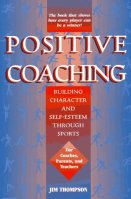
Positive Coaching: Building Character and Self-esteem Through Sports written by  Jim Thompson. One of the best books I’ve read on coaching. He defines and gives light to the strategy of positive coaching. It’s written as if you are talking to an old friend. Very easy, personal, enjoyable read for anyone interested in the coaching field. It is so insightful I think it should be a requirement for all coaches! Check it out!

660331

 Positive Coaching: Building Character and Self-esteem Through Sports: Jim Thompson: 9780982131701: Amazon.com: Books.

A Learning Experience

The thing I love most about the sports arena, is the opportunity to continue learning. The information in sports is constantly changing, re-arranging, and updating itself. There are vast new strategies, techniques, and philosophies arising out of the woodwork everyday.  Something I’ve done to capture the learning experiences and important instances throughout my career is to write down moments that resonated with me along the way.

During my collegiate career as an athlete, I wrote this entry:

Yesterday we had a rough practice, especially at the end. We couldn’t catch the ball or  throw it to our spots. Coach shut down practice because we couldn’t pull it together and sentsoftball-error everyone home. In our huddle at the end of practice coach said that something needed to come from within, that we shouldn’t be ok with how we were playing. Then went on about how we need to stop saying, “it’s alright, get the next one”; we needed to expect more out of our teammates.  After practice we all carried on as normal laughing and singing and went on our way.

I was laughing and singing, but on the inside, I was pissed. I should have been the one to keep the team motivated to keep trying and work harder. That should have been me; I failed in my duty to make the team as good as they could be. I also felt like I got called out directly because coach had specifically  referenced my “it’s alright, get the next one” comment. But to me I always expect my fellow teammates to be giving 100% because I always aim to. So if my teammates are giving a hundred percent and just can’t get it right, to me, you should shake off the previous play, and focus on making the next one better; in other words, “it’s alright, get the next one.”

The next morning at workouts, coach pulled us together before we started anything.  Coach talked about how we acted after practice ended badly yesterday. How we carried on with our normal laughing and singing as we packed up our stuff; obviously frustrated that we didn’t outwardly convey how bad practice went. Coach also threw in how our ranking had fell from the previous season. Coach talked about how four years ago our program was a losing program and everyone on the team was ok with it. She compared us to them. This is how that made me feel:

Gall Huddle

(Frustrated.  As a player I always have a smile on my face I never let anything get to me, that’s how I am. That’s how I always am. How often do you see me drop my head, how many home runs ruin my attitude and eventually my game? None, never. I don’t act on the outside, I react on the inside. Give me a second chance and you’ll see the initiative I have to motivate myself to be better. Am I supposed to break away from who I am, and throw my glove to prove that I’m upset? Do you really need to see me upset to know that I am? Have I not shown you that I love this game, and only want to do what will make me and my teammates better?  Can’t you trust that I want to do better. You preach trust. I trust you, respect me, and trust me back.)

In wanting us to show that we care, it seemed as if our coach was asking us to hang our heads. To me, it was like she was breeding bad attitudes. In a game, if I make an error and hang my head it is not going to do any good for myself or my team. So why would I hang my head after a bad practice? It’s like that quote, “it’s not about how many mistakes you make, but how you react to each mistake.” Of course I am going to come out the next practice and give everything I have. I had planned to step up my vocal game, and be more motivating to my teammates, hoping to inspire them to play at their best potential during practice. But, we were reprimanded before we got to show how we had re-focused and were dedicated to making our team better. Also, by just ending practice the day before, coach gave up on us, the exact opposite reaction coach desired from us as players. Be a model, not a critic. Throwing in the ranking stats to the pre-practice speech was supposed to provoke us to work harder; to prove to ourselves we belonged here, and to prove those other teams wrong. However, when faced with a challenge in practice, our coach gave up and ended practice. My travel ball coach would’ve said something along the lines of, “Do you guys want to be here or do you want to go home? Because you’re playing like shit.” He would have given us the chance to make the decision to not accept the way we were playing. The way he does it achieves the goal of making it come from within, because we made the choice to stay, yet it also is slightly harsh and gets the point across in a quick and straight to the point matter. Our collegiate coach wanted someone to step up; maybe I should have said, “no coach I don’t think we should end practice I think we should stay here and work through it” Although, I also didn’t want to disrespect my coaches decision to end practice. But I should of.  I should’ve asked if my team wanted to stay and work on it, that’s where I failed.

229587_1043180913674_2361_n

Looking back I have mixed emotions reading this. In my own personal philosophy I will never end practice early, mostly because I know how frustrating that is as a player. However, I do understand how easy it is to misinterpret a persons actions after an unsuccessful outing. As a coach I have to retrain my brain, and keep myself from judging my players after a bad performance or loss. I have to remember that letting it go is a positive quality, even though it can come across as if they don’t care.

If I had been coaching my own collegiate team when this situation arose, I think I would have brought the team together and focused on something else. I would have implemented a team bonding activity, or discussed strategy, or even played a fun game. I would do something to break the tension, let every ones mind relax. After achieving that break, I would have gone right back into the drill we were struggling with, hoping to end practice on a positive note.

Sport is so important to collegiate athletes, it’s a big chunk of their life, and it’s continually on their mind. The way a practice ends is important, their perception of the practice and the feelings and thoughts that accompany it are stuck with them until the next time they meet. Leaving on a sour note takes a toll on athletes. It is a goal of mine to have my players always leaving practice feeling confident and positive. I hope they leave excited to come back.

Quote of the day: 

“People don’t care how much you know until they know how much you care” – John C Maxwell

Imagery! It’s Powerful Stuff!

“Imagery is a form of stimulation, it is similar to a real sensory experience, but the entire experience occurs in the mind.” (Coaching for the Inner Edge) Using Imagery you can re-create previous positive experiences or picture new events to prepare yourself mentally for performance. It can be used to build confidence and concentration.

Imagery has been said to help athletes enhance their performance of motor skills. In your mind, visualizing the task you want to accomplish, like the hitting the ball, can actually help you produce the results you want. This entire entry is all about how you can use imagery before a performance to increase your chances of success.

Using imagery

Imagery is a form of simulation that happens in your mind. You can re-create or create an experience in your mind that is similar to a real life sensory experience. Keeping these simulations positive is the key to success when using imagery. Imagery should encompass as many senses as possible, using more than one sense helps to create more vivid images in the mind. Use your visual sense (sight), your auditory sense (hearing), tactile sense (touch), olfactory sense (smell), and your kinesthetic sense. Your kinesthetic sense is the sense that detects bodily movement, weight shift or movement of the muscles and tendons.  Here is an example of how you can prepare yourself before an at bat by using imagery; this can be done in warm ups while doing dry swings, or in the on deck circle, or in even in the car before the game begins.  

Hitting

Visual– See the pitcher and the team on the field behind her. Now shift your focus to only her, see her wind up, every little movement.  Then start focusing on watching the ball as the pitcher releases it  from her hip. Watch as the ball comes toward the plate. Focus on the ball, see the color, the seams, and the rotation. See the ball as it contacts the bat and sails into left center for a base hit.
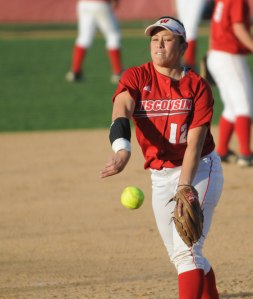
Kinesthetic sense– Feel the bend in your knees and the position of your stance. Know where your bat is in relation to your shoulder and how tightly your fingers are wrapped around it. Know and feel when to transfer your weight at the proper time to maximize power. Feel the position of your body when you hit the ball, your power position, and your follow through.

Auditory sense– Hear the sounds of the dugouts and the stands cheering.  Let those sounds slowly fade out and hear the slap of the glove on the pitchers thigh, and hear her grunt as she releases. Once you swing, hear the sound of the bat on the ball, and the cheers from your team mates and coaches.

Tactile sense– Feel the sun beating down on your shoulders, feel the sweat glistening off your body. Feel the grip of the bat in your hands.

Olfactory sense– Smell the fresh air, the cut grass, or the freshly watered dirt. 

Emotion: do you feel nervous walking up to the plate? Anxious? Excited? Confident? frustrated?

Remember to always attach emotion and thoughts to your imagery; are you happy, angry, in pain? Are you confident, nervous, concentrated, or distracted? Putting these emotions into your imagery can help you control them; within your images you can practicing changing your anxiety to excitement, or fear to confidence.

You can also use imagery to control anger after a bad call, or after a teammate makes an error. See yourself reacting in a positive way to keep your team up and focused around you. You can say cue words to yourself, like to stick the ball, to remind yourself to stay focused on the upcoming game, not on your error or the umpires bad call. In your off time, between games you can visualize an error you made in a prior game, then go through the visualization process of staying up and positive, do it with detail like the example above. In the next game after an error, instead of going through this whole process again, you can just say your cue word, like stay up, which will help you remember your visualization and react accordingly.

Don’t think it works?

I have evidence!

A study done at the United States Olympic training center indicated that 100% of sport psychology consultants, and 94% of the coaches of the Olympic athletes used imagery during their training sessions, with 20% using it at every practice session. (Coaching for the Inner Edge) If you want more, I got it!

Where can imagery be used?

It can be used in practice and in games, or before and after each.  Most athletes use imagery in pre-competition, but it can be useful to practice imagery at practice, so you can effectively transfer it over to a game situation. 

When can imagery be used?

Imagery can be used at anytime you want to work on your game. But it is said to be most effective after practice and after games because images of your performance are fresh in your mind.  Imagery can be especially helpful with injury, even though an injured player may not be able to physically practice, they can still mentally practice. Studies have shown a faster recovery rate for injured athletes who have used imagery.

Before and after practice– you can take ten minutes before practice to visualize routines and skills you are expected to perform. After practice, you can review what you worked on in practice and really feel the movements.

Before and after games– imagery can happen right before the game, before warm-ups, or in the car. After the game review things you did successfully, focus on the positive parts of your performance.

During breaks in action – it can be used between pitches or innings. Imagery can be used to build focus and self-confidence.

When injured– imagery can be used to relax and let go of the anxiety that comes with being hurt. Positive images of healing and full recovery have shown results in enhanced recovery.

Why do athletes use imagery?

They use imagery to enhance both cognitive and motivational behavior. Motivation- visual goals, goal oriented (outcome-oriented beating your opponents) and task oriented (improving your personal best). Visualize yourself winning and being congratulated, or being happy with the performance you gave on the field.  Cognitive- getting the “feel of the movement”. Research has shown that doing this type of mental imagery has enhanced performance above and beyond the level achieved merely through physical practice.

How does imagery work?

I know what you’re thinking; how does visualizing myself hitting the ball or fielding a ball actually change the way I play? Our minds can generate information from memory that is essentially the same as an actual experience; consequently, imaging events can have an effect on our nervous system similar to that of an actual experience. 

Imagery can be used to build confidence, control emotional responses, acquiring and practicing sport skills and strategies, and coping with pain or injury.

Improve concentration– it helps you focus on what you want to do, how you want to do it, and keeps your mind from wondering. You can imagine yourself in a situation where you would usually lose your concentration, after making an error or swinging at a bad pitch, and then visualize yourself staying composed and focused on the next pitch or play.

Enhance motivation– A study in an aerobic class showed that when using imagery to visualize themselves getting healthier and improving physical appearance they had more endurance while exercising.

Build confidence– Use positive imagery. See yourself throwing a perfect curveball that the batter swings and misses at, or grabbing a hard shot out of the air. But be careful, imagery can also work against you; if you imagine negative things it can lower your self confidence.

Control emotional responses– imagery can be used to psyche yourself up for a game or relax yourself before a game if you tend to play tense.

Solve problems-if you are in a slump or not performing like you want to be, you can visualize what you are doing now and compare it to what you did when you were playing at your best. Then you can decide what needs to change.

Practice or aquire a sport skill– you can practice that perfect swing or pitch in your mind which will help with execution, or enhance the learning process.

Sometimes athletes have trouble controlling their images, they can see themselves repeating their mistakes; i.e. striking out. The key is practice!

Remember, the same skills used in sports can also be used in everyday life. Use imagery before taking a big test or a giving a speech. Picture yourself doing well, and achieving your goals.

I’m not saying that everyone should use imagery, it may not work for everyone, but my job is to give you all the information I have, in hopes of helping you to be the best players you can be. Your job is to take it all in and try it. Use it accordingly, and if you don’t try it, it’s only your loss, and will only keep you from being the best you can be!

Quote of the day:

“Before every shot I go to the movies inside my head. Here is what I see. First, I see the ball where I want it to finish, nice and white and sitting up high on the bright green grass. Then I see the ball going there; its path and trajectory and even its behavior on landing.  The next scene shows me making the kind of swing that will turn the pervious image into reality. These home movies are key to my concentration and to my positive approach to every shot.” – Jack Nicklaus (Golfer)
 

Team Cohesion… Do You Have What It Takes?

Lets start out with a simple definition. In the perspective of sports psychology, team cohesion is defined as: A dynamic process reflected in the tendency for a group to stick together and remain united in the pursuit of its goals and objectives. However, underneath this definition there are two separate aspects of team cohesion, social cohesion and task cohesion.  Social cohesion is the interpersonal attractions among group members, or in other words, how well your players get along in a social setting. Task cohesion is the degree to which group members work together to achieve common goals and objectives. Both are of the up-most importance in having a successful season. In fact, in a survey of 65 U.S. coaches who participated in the 1996 Atlanta and 1994 Nagano Olympic games, team cohesion was identified by the coaches as one of the three top factors influencing success at the Olympics. (Coaching the Inner Edge, Vealey, 2005)  It’s logical for cohesion to be such a strong factor to success in team sports, we are forced to work together to win, it’s impossible to win a team sporting event by yourself.

Success and cohesion

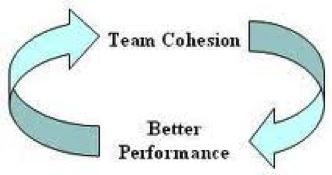
  • Performance and cohesion are circular; they will both result from each other. Team cohesion promotes success on a team, and success promotes team cohesion.
  • More for female teams than male teams

A great example of task cohesion is the “V-formation” geese fly in. They fly in this formation because when the front goose flaps its wings he creates an updraft for the goose directly behind him, allowing them to use a lot less energy to fly. When the lead goose gets tired he falls to the back and another geese takes the lead position. It is said that geese can fly 71% farther this way then they could alone. People who share a common objective or goal, can attain that goal more successfully and easily if they collaborate with one another. It is even noted, that if a goose is wounded and falls out of formation, two other geese will follow him, and stay with him until he can re-join the formation again, or until he dies.

What coaches must realize is that team cohesion is something that ebbs and flows, once you have it doesn’t mean you are automatically going to keep it. It is something that must constantly be worked on, just like the fundamental skills that are worked on everyday in practice. Teams go through stages as they become more cohesive; forming, storming, norming, and performing. These stages aren’t linear, a team may reach norming, and then fall back into the storming stage.

Forming: People are starting to get to know each other, sizing each other up, familiarizing themselves with each other. Interpersonal relationships are formed, team structure is developed, people are constantly comparing themselves to others. It’s basically the “getting to know each other” stage. A great example of this is on the TV show “The Real World”. In the first couple of days there are a lot of questions asked, deciding on whom to room with. Then on about the 3rd night drama, or conflict, happens; they enter the storming stage.

Storming: the storming stage is characterized by rebellion, resistance to control, interpersonal conflict, looking out for self playing time, why am I not starting uncertainties arise, and cliques start to form.

Norming: Hostility is replaced with development towards solidarity, cooperation, and a general consensus of working together towards goals.

Performing: This stage is the ultimate goal in team success. There is no  self-channeled energies, players aren’t thinking about themselves anymore. It’s all about their teammates and how they can succeed as a group. In this stage peak performance is possible. The team is able to solve problems without personal feelings being threatened. There is no bitterness about playing time, players understand their roles, and understand what is best for the team. It is said that most teams don’t get here, this stage is usually reserved for Olympic gold medalist teams, or world series champs.

Sometimes as a coach its hard to tell where your team might be within these stages. When I was coaching at the junior college, I actually gave my players this information and asked them where they thought we were. Everything was confidential, and it was very beneficial for me, as a coach, to hear individual perspectives and combine them together to distinguish the big picture.

In order to create team cohesion, the entire team must be deeply committed to engaging in self-reflection, honest and open dialogue, and the behavioral changes necessary to sustain an optimal team climate. Show your players that if they are a T.E.A.M. they will achieve more;Together Everyone Achieves More. Although we’ve all used and heard the quote  “there is no I in team”, there actually is, and we like to refer to that “I” as T.R.Y. Take Responsibility for Yourself. Each athlete must be doing his or her part to nurture a cohesive team culture. Every athlete on a team must T.R.Y. for T.E.A.M. to happen. Remind your players that they aren’t just friends, they’re teammates. Being a teammate gives each athlete a special status, and it gives each of their teammates the responsibility of supporting and respecting each other. There are times when your players will have conflicts,and that’s not always a bad thing. Teach them to view conflict as a wave, it can have the potential to knock them down, or sweep them forward. An argument that is resolved results in greater team growth, unlike an unresolved issue that is swept under the carpet and left to boil and add frustration.

As a coach, you need to help your athletes create an atmosphere where they can push each other to their limits. An atmosphere where they can challenge each other to work harder without anyone feeling threatened. Encourage your players to verbally appreciate their teammates efforts when hard work is being demonstrated. By hard work I don’t necessarily mean success, players who are working hard and struggling, should be verbally recognized by their teammates too. There will be times when some of your athletes start to slack off, create an environment where their teammates can respectfully motivate them to work harder. Inspire your players to pick each other up when they fail, and congratulate each other when they find success.  Your team will get so much more out of each other than we as coaches ever could.

So what does this atmosphere look like on a day to day basis at practice? Players are competitive at practice every day; they try to out due each other. They are disciplined and work their hardest with out slacking, even when the coaches aren’t watching. Everyday they are personally committing to creating an environment where team chemistry can thrive. There is constant chatter between athletes, encouraging, congratulating, and motivating each other throughout practice. Players are giving their all, even during the  basic mundane drills to ensure their game is fundamentally strong. They are focused and cognitively aware at practice to guarantee that they are mentally strong.

Quote of the day:

“I’ll do whatever it takes to win games, whether it’s sitting on a bench waving a towel, handing a cup of water to a teammate, or hitting the game winning shot”

Can Vision Training Improve Batting Performance?

Batting in baseball is a skill that requires exceptional hand-eye coordination. Due to this common concept, there is a general consensus that vision training is beneficial to hitting performance. However, there is little to no valid assessment to prove this belief in literature. The study, “High Performance Vision Training Improves Batting Statistics For University of Cincinnati Baseball Players”, set out to prove that traditional vision training can improve batting and hitting performances.The Study was done at the University of Cincinnati on the 2011 baseball team. Six weeks prior to their 2011 season, the team was introduced to vision training which consisted of 20-30 minute sessions 3 times a week. Within these sessions the athletes experienced 8 different types of vision training.

Dynavision

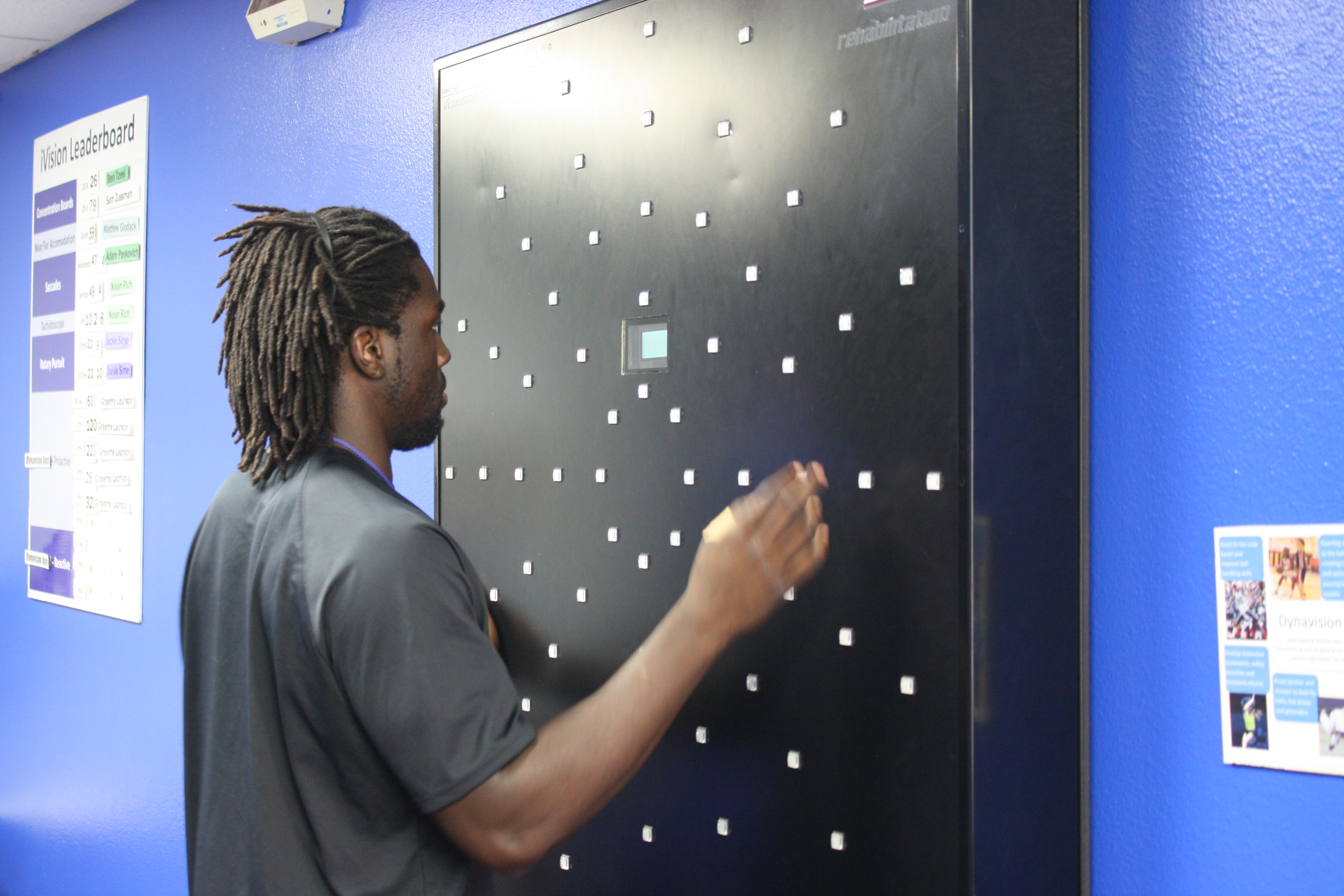
Dynavision involves a large board with various lights scattered throughout it. The lights light up, and the athlete must hit the light that illuminates. This was done in two series of one minute sessions. The device was able to record the number of hits per minute, and the reaction time of each player

Brock string

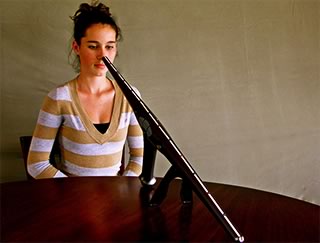
Brock string is simple eye exercise to condition the eye and lens muscles. Athletes are given a string with three balls spaced out along it. They must hold the end of the string to their nose, and have a team mate hold the other end away from them parallel to the ground. For one minute the participant must focus on the first ball, the second ball, and so on, and then work their way back to the first ball.

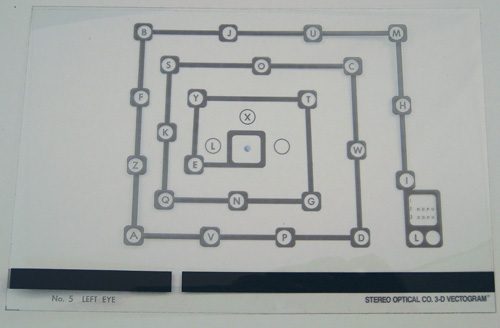
Eyeport

Eyeport is the digital version of the Brock String exercise. It is used as a warm up for extra ocular eye muscles.

 Tachistoscope

A tachistoscope is a device that displays an image for a certain amount of time. Projection tachistoscopes use a slide equipped with the mechanical shutter system just like a camera. For the training, a shutter speed was selected, and the shutter was tripped normally. the participant then must call out when they recognize the specified image. This was used to improve object recognition in the visual field, like the ball out of a pitchers hand.

Rotary

Rotary is a set of letters and numbers placed on a spiral rotating poster. This poster rotates at different speeds and directions. The players must call out and point a laser at the correct letter or number. This is done in one minute sessions.

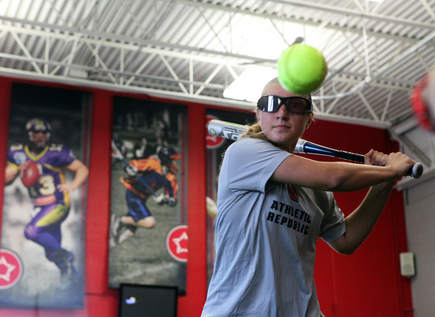
Strobe Glasses

Strobe glasses are glasses with LEDs in the lens that flash at varying speeds. These lens’s blind the batter for split seconds at a time, making life look like it is happen through a strobe light. The slower the flashes the harder it is to take in visual information. Players wore these during batting practice, as they got more advanced the strobe speed would slow down. This helps athletes to predict movement, and to take in as much visual information as possible.

Sasscades

Sasscades is a voluntary rapid movement of both eyes in the same direction from one object to another. Charts of random letters are placed on a wall, both horizontally and vertically. Players stand at varying distances and focus from one chart to another, similar to a general eye test. This is also done for one minute

Near Far Training

Near and Far training has the same concept as sasscades except the charts are put at two separate distances. The players eyes have to adjust to depth as well as left to right.

After the 2011 season was completed the teams statistics were compared to the remaining teams in the conference, as well as their previous 2010 season statistics. The data were analyzed using a simple t-test statistic to compare the difference in change for Cincinnati compared to the other Big East conference teams. An underlying normal distribution for the baseball statistics, batting average, slugging percentage and on-base percentage was assumed.

Results showed that the Cincinnati team batting average increased from 0.251 in 2010 to 0.285 in 2011. This change in batting average was statistically significant with a p-value of 0.02. The slugging percentage of University of Cincinnati increased by 0.033 while Big East’s conference slugging percentage fell over that same time frame by 0.082.This produces a difference of 0.115 which is also Statistically significant (P=.02).  Also, on base percentage increased for Cincinnati, rising by 0.034 points. Where as the Big East Conference on base percentage fell by 0.034. This difference of 0.068 was, again, statistically significant p<0.01.

In conclusion, vision training can combine traditional and technological methodologies to train the athletes’ eyes and improve batting. Vision training as part of conditioning may improve batting performance in college baseball players.

As for my own experiences with visual training, as a youth player, my coaches used to toss tennis balls to us with various letters printed on them. Our task was to yell out the correct letter while making contact with the ball. I also did this as a high school athlete on a more advanced level. I was introduced to this machine that shot out tennis balls with minimal rotation. This allowed players to read the letters while taking batting practice off game speed pitching. Both were extremely beneficial to me in my self-efficacy perception in hitting.

Other drills you can try with your players to increase hand eye coordination are:

  1. Soft tossing golf sized whiffle balls. You can make this more advanced by requiring your players to swing with a wooden dowel.
  2. Numbering and lettering tennis balls in soft toss as mentioned above.
  3. Drop toss- have a player stand on a slightly elevated surface and drop a ball into the strike zone of a hitter. The hitter must try and hit the ball as it drops to the ground.
  4. Back toss- have a player front toss to a batter from behind her. The batter must track the ball as it comes in from the opposite direction as normal, and time her swing to hit it square.
  5. Frisbee drill- Have the pitcher throw the batter a Frisbee instead of a real ball. The Frisbee tends to move and switch direction, this will help the batter predict movement of the object and react quickly.

Quote of the day: 

Practice is putting brains in your muscles”

References:

  • Clark, J. F., Ellis, J. K., Bench, J., Khoury, J., & Graman, P. (2012). High-Performance Vision Training Improves Batting Statistics for University of Cincinnati Baseball Players. Plos ONE, 7(1), 1-6. doi:10.1371/journal.pone.0029109

How far is too far?

How far are you willing to go to be the best? What will you sacrifice to get ahead of the competition? Is there a limit to how much an athlete should endure to achieve success?

In my classes we’ve been looking at exercise disorders, addiction, and depression. It’s scientifically proven that exercise can resolve, and improve the effects of depression. Health professionals are starting to prescribe daily physical activity to patients who are suffering from depression. Having said that, they’ve also seen these same patients become addicted to exercise. How do we know where to draw the line of how much is too much? If you hear a marathon runner say they ran 15 miles over the weekend, most of us wouldn’t think twice about what we’ve heard. But, what if an everyday person said they ran 15 miles over the weekend? Researchers are starting to discover that exercise addiction is common within athletes, however, their addiction simply looks like training, not an unhealthy disorder. They are able to hide out in the sports world, and mask their addiction.In the arena of wrestling, dance, and gymnastics, it’s common for athletes to endure eating disorders in order to meet the requirements of competition. We’ve also seen countless professional athletes abuse steroids to be the best.

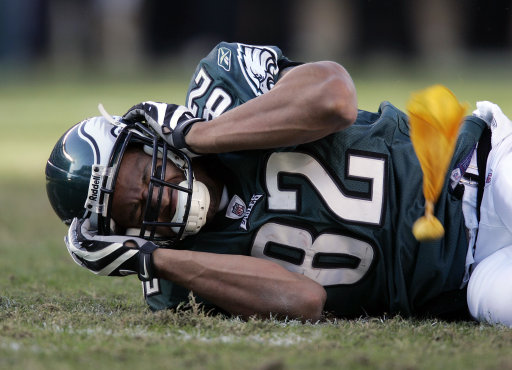
I was watching ESPN the other night, and it was highlighting stories of college athletes who had overcome incredible hardships in their journey to the top of the athletic pyramid. One of the stories focused on an extremely talented UCLA football player. This boy walked through high school at the top of his game, and was going to UCLA on an athletic scholarship. Throughout his career he had suffered many concussions. In the second year of his career at UCLA , he suffered yet again, another concussion. However; this time, the injury started to affect his every day life. He was experiencing extreme sensitivity to light, and sound, horrible headaches, and dizzy spells. Although he was an NFL hopeful, he decided to walk away from his dream, and quit playing football. He was quoted saying, “I love football and it was my only dream to be an NFL football player, but football wasn’t helping me, it was hindering my ability to live my life. It came to a point where football was hurting me, not enhancing my life.”

I can’t even imagine  how much strength it took that player to walk away from a sports dream that was clearly attainable. Our society puts so much emphasis on winning, it must have been so hard to look the other way, and put his health first. This young man is a great example to all athletes out there. There is a point where enough is enough.

What we do as athletes shouldn’t endanger our health. Make sure, as a coach, what you’re preaching to your athletes benefits the players athletic ability and overall health. As a player, make sure you aren’t sacrificing you’re health to excel in sports. It’s a fine line we walk as competitive athletes, keep your perspective straight, this is the only body we get.

Quote of the day:

“What’s above the shoulders is more important than whats below” – Ty Cobb 

Read the full story of UCLA’s linebacker here:

http://www.ocregister.com/articles/larimore-368473-camp-ucla.html

Coaching Youth Sports

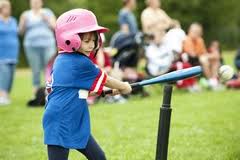
I was talking to a friend of mine the other day, and we decided we want to coach a youth recreational softball team in the spring. I was driving in my car daydreaming about what I would say at the first team meeting with all the parents present. I would want them to truly understand that I am coach who strives to create a positive experience for their children. I would state my team goals as: 1. for the girls to have fun. 2 for the girls to learn the skills necessary to be successful in the game of softball. 3 for the girls to personally improve their softball skills 4. to have fun.

Youth sport, especially at the recreational level, should never be about winning. It should always revolve around fun, and learning. If you think back to when you were a child, and you ask yourself, why did I play the sports I played? The most common answer is; my friends were playing it. Most young kids choose sports due to their social circle. I also know, as a student of sports psychology, if you link fun to a sport, you’re probably going to be more successful. If they find practicing fun, they will most likely want to do it as much as they can. Therefore, it naturally creates an opportunity for the child to excel in sport later in life, simply because they love doing it.

I want my young players to only possess fond memories of playing youth sports. I’ve always thought of calling an “error” a “learning experience”. I want to train my players brain to say; you know I had a few learning experiences today so now I know what to work on for next time. Instead of the common, I made so many errors today, I must not be very good. After each “learning experience”, especially in practice, I’ll be able to say; “what did you learn from that last play?” After teaching them the correct techniques, hopefully they can answer me with something like; “Coach, my glove was too high the ball went underneath it, so next time I need to bend my knees.” Not only will this help them learn by reiterating the correct cues to perform the skill, but later in life it will allow them to take the pressure off themselves when errors are made. I would even hope they could incorporate this way of thinking into their lives as they grow up. Instead of making mistakes, they can think of them as merely learning experiences.

I also want to breed my players to be intrinsically motivated. I want them to concentrate on mastering a skill to the best of their ability, rather than wanting to merely out play their competition or teammates. I feel that pre-testing and post-testing would be the best way to ingrain this thought process. During the first few practices, I could pre-test my players individually. I would have an assistant coach keep the rest of the team busy so it would eliminate the vibe of competition. I would then post-test them in the middle of the season, and at the end of the season. I would show them their results so they can see how far they’ve come. It won’t matter if they got the worst score on the team or the best because they are the only ones that will know their results. Hopefully this would help them concentrate on their own abilities rather than constantly comparing themselves to other players.

I also want to somehow link winning to giving their best effort. I dont want them to define winning as having the most runs, I want them to define winning as giving their best effort. The thought I have thus far is to break down the process of success, and dwindle it down to effort. For example; How to do you win? – you score more runs. How do you score more runs? – you get more hits. How do you get hits? – by swinging at good pitches. How do you swing at good pitches- by focusing and swinging well. How do you focus and swing well- by practicing and putting in effort. Something like that, to show them that it all starts and ends with effort. To be able to tell them they are winners, even if they lost the game, because they worked hard and gave it all they had. I want them to always strive to do their best, not to merely win.

I am so excited about the opportunity to possibly impact someones life so heavily. I truly hope I get the opportunity to coach at the youth level!

After re-reading this post, I got to thinking. Why am I not applying this same philosophy or way of thinking to my 18U team. I guess as a coach I somewhat expect them to be able to change their thought processes on their own. By giving them the information, and then merely talking about it with them all the time, I assume they’ll make a change. In reality, these same strategies should be applied with my older teams. It seems juvenile to refer to errors as “learning experiences” with older players, but actually I think it could really help alleviate some pressure. I shall try this soon.

Quote of the day:

“If you’re not making mistakes then you’re not doing anything. I am positive a doer makes mistakes.” – John Wooden

Mountain of Student-Athlete Success

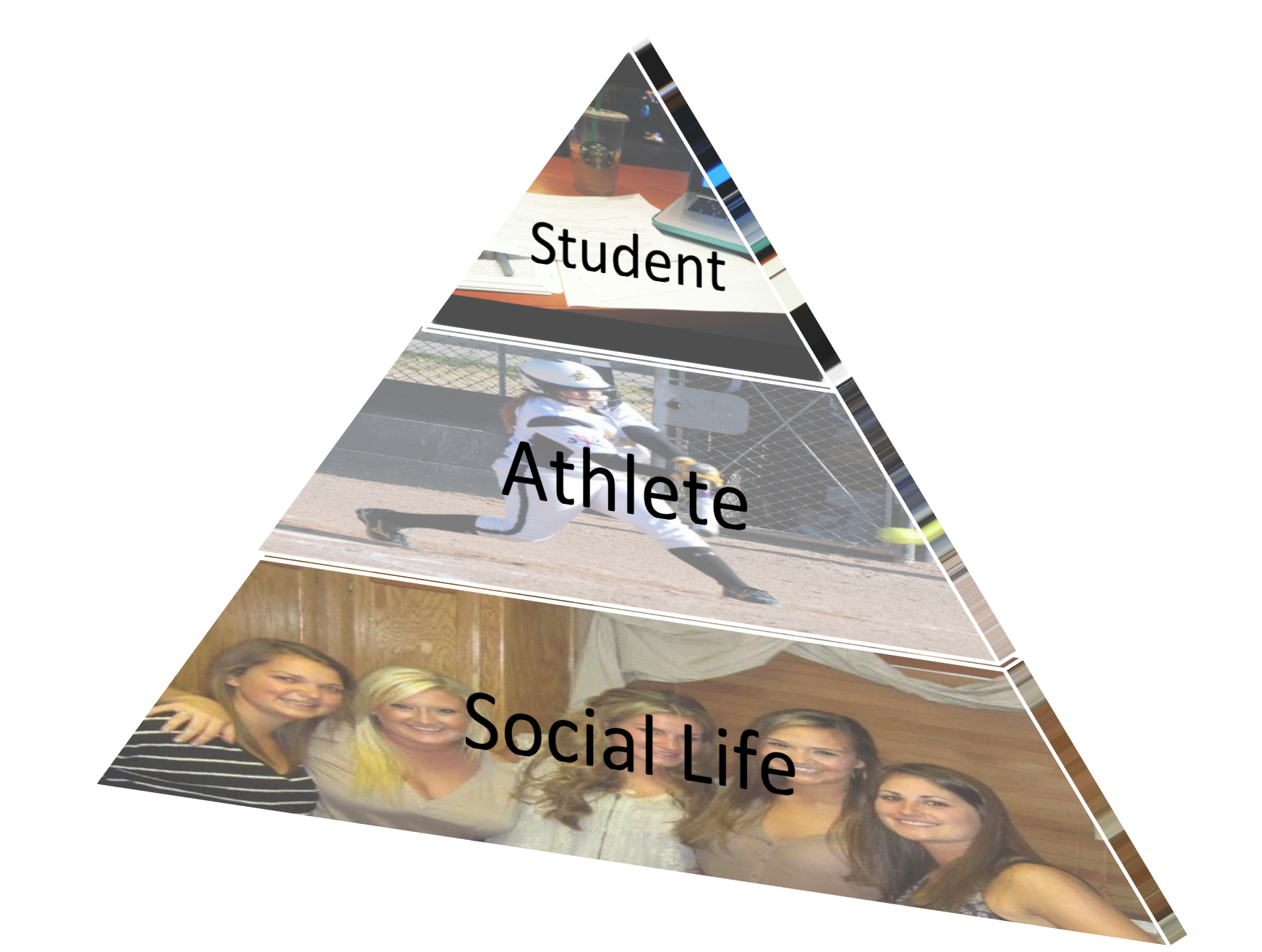
I came up with this model to illustrate the priorities a student-athlete should uphold. As a college athlete your resposibilities to uptain your student life, athletic life, and social life, should fall into a pyramid like this one shown below.

Every aspect is crucial to the optimal college experience as a student-athlete. However, these aspects should be organized like a mountain, not a volcano. If it were to rain on this mountain, the top tiers would drip down to the bottom tiers. So sometimes in college, being a student drips down and interferes with your athletic responsibilities, and being a student and an athlete can drip down and interfere with your social life. These drops create water ways through the other aspects of your life, and force you to make sacrifices. For instance, you may have to give up going out on friday night due to having softball practice early on a saturday morning. Sometimes you’ll have to study into the late hours of the night, and show up for morning work-outs a little groggy the next morning. However, this mountain is not a volcano; your social life can’t be spewing destructive lava up through your athletic, and academic career. These flaming rocks of lava can permanently burn your student-athlete career, even taking it away from you. The same can be said about your athletic career ruining your academic career, and in turn, ending your athletic career altogether. You can’t go out on a thursday night, and show up to practice completely exhausted the next day, and then in turn go to bed early without doing your homework that night.

The basis is, you, as a college athlete, are a STUDENT-athlete. You have to be a student first. You are a student before you are an athlete, and in order to stay a student-athlete you must put your academic and athletic career before your social life. It is so important for coaches, and athletes alike, to realize that without academic success, athletes wouldn’t even be allowed to play collegiate sports. Students who didn’t succeed in the classroom in high school, can’t get into colleges to further their athletic careers.You must put your academic career first. It’s the only thing that is keeping you on the field.

Quote of the day:

“There’s a reason we are called Sudent-atheletes. It is a privilege. Uphold your commitment.” 

Is hitting actually contagious?

In the world of baseball and softball the belief that “Hitting is contagious” is pretty common. It is the belief that once one player gets a hit, it trickles down the line up, and soon enough you have a rally going. But can one hit from one player truly have an effect on the next batter? I found a study entitled, “Hitting is Contagious” and it investigates just that!

Past studies have been completed that insinuate this contagious phenomenon as definitely possibly, but never proven.  Research has shown that we as humans experience “action inductions”. The tendency to perform an action related to one that we have just been observed.  The best example of this is yawning; when you see someone yawn it’s almost inevitable that you are going to yawn yourself. Other  studies that have confirmed the theory of action induction were only studied on a bivariate degree, with simple motor movements. For example, subjects would watch a finger point up or down, and the subject had to replicate the motion. They only consisted of one direction in the prompt, and one possible successful outcome to be performed.

However, there has never been a study done with multiple prompt directions and multiple possible successful outcomes.  In other words: Does action induction occur if the stimulus is only one example of a successful outcome? It is also unknown if a delay between observing the prompt and performing it compromise action induction? And lastly, Does skill level have an affect on action induction?

The purpose of this particular study was to investigate the multiple aspects of action induction in baseball players of varying skill levels.

The participants of this study consisted of 24 baseball players. 12 were considered more experienced, and 12 were considered less experienced. The more experienced players were from U.S. JCs and had a mean age of 20, and 10 years of playing experience. The less experienced players were from recreational travel leagues and had a mean age 22, and 5.9 years of playing experience.

To ensure validity and reliable, the study was performed in a lab using a simulation baseball machine. The apparatus they used to simulate a baseball at bat has been used in multiple studies previous to this one. It accurately simulates an actual baseball at bat, except every pitch is thrown in the strike zone of each particular batter.

This is how the at-bats were done.

Before each at bat, the batter would see one of four visual stimuli; action outcome, verbal, or no stimulus.

  1. The Action stimulus displayed a video of a ball traveling from home plate to right, center, or left field.
  2. The Outcome stimulus showed a ball sitting in right, center, or left field.
  3. The Verbal stimulus projected one of three words on the screen; “right” “center” or “left”
  4. None- batters viewed an empty field before the pitch.

Each stimuli was show for 10 seconds.

After the pitch was thrown, a verbal message would play telling the batter what the outcome of the pitch was; strike, single, homerun or out. The batters first got to practice on 25 pitches, and then they participated in 30 at bats each off the machine

They recorded data by placing sensors on the bat, the pitch location, and the front foot of the hitter. This allowed researchers to plot the coordinates in an x,y, z plane to confirm contact with the pitch. They also kept track of numbers of pitchers per at bat required to achieve a hit, and number of hits in total.

The data was then analyzed using fancy statistical analysis equations like, 2×4 mixed factor analysis of variance using ANOVA. What this basically means, its they took both experience level and the 4 prompt types and cross analyzed them against each other to determine how many pitches it took batters to achieve a hit after observing the various prompts. They also used the Azimuth angle equation to calculate the direction of the ball for a successful hit. They then used more ANOVA analysis to to determine how the hits corresponded to the direction of the ball shown in the prompt.

The results of the study show:

  1. more experienced and less experienced players both required fewer pitches to achieve a hit after observing the action stimulus. Which again was the stimulus where the batters watch a video of a ball being hit into the field.
  2. More experienced players showed a significant relationship between stimulus direction and hit direction for both the action and outcome prompts. Meaning that for experienced players, if they watched a ball be hit to left field, or saw a ball laying in left field, they tended to hit the ball to left field.
  3. Less experienced players only showed a significant relationship between hit direction and prompt direction after viewing the action prompt.  In other words, for less experienced players the only prompt that dictated the direction of the batters hit was the video prompt. Although, the effect was significantly smaller than the effect on more experienced players.
  4. The effect of the stimulus decreased as delay increased. With experienced players the effect was completely eliminated after 4 pitches, the equivalent to about 80s. For less experienced players the effect was eliminated after 2 pitches, roughly 40s. Meaning:  the stimuli’s effect on the direction of the hit was lowered as each pitch was thrown. 

This article didn’t discuss too many cautions; however they were worried that players might have seen the direction of the prompt as an instruction on where to hit the ball. They actually recreated this study, only using experienced players and the same prompts, but asked the batters to try and hit the ball over second base every time. Despite the change in direction, the results of this second study were significant and consistent with the results of the first study, so they were able to eliminate this caution.    

In conclusion: Hitting IS contagious! The results of the study show that action induction does occur in a baseball setting, and is more significant, and decays slower in experienced players.

I loved this study because it directly relates to my future profession and current job as a softball coach, and past experiences as a player. It’s more knowledge I have for my own personal coaching tool kit, and more knowledge to give to my players. It provides me with more evidence to strategies I already stress as a coach. Like looking to hit the first pitch, and with my new knowledge, especially after a successful at bat! Also calling time out to take a second to breathe when errors are being made, can eliminate the action induction affect and hopefully help my players positively.

On the other hand, there is one concern I have with this study. In the discussion section of the article they mentioned hurrying players between at bats to induce action induction after successful at bats. But in my mind: if you look at a real time baseball game, as an on deck batter. You see the hit, watch the defense field it, throw it in, then you have to walk to the plate, take a sign from the third base coach, and wait for the pitch delivery. That itself usually takes close to 80s, and in the article they stated that the effect of action induction is eliminated after that amount of time. This makes it seem hard to generalize these results to a real life baseball game, which they did in their discussion section.

With that said, I can still definitely utilize this information for teaching techniques, using more video, or demonstrations to promote successful performances. It also provides support to using imagery through out games and practice, which is one of my favorite strategies to use with my players.  

This was a little more technical, but I hope you enjoyed it!

Quote of the day:

“Never let the fear of striking out keep you from playing the game” – Babe Ruth 


Bad Timing or Great Timing?

Posted on

When I was an assistant coach for SRJC I was often at high school games looking at players to recruit for our future seasons. On one occasion I was sent out specifically to scout a pitcher who was throwing an important game against a very good team. Unfortunately, her team lost the game, but it wasn’t a blow out, and it didn’t make her look bad in any light. It was a great game, close in score, and came down to the very last inning. After the game I walked out onto the field to ask her coach if I could speak with her. When I asked, her coach replied with, “Well it’s bad timing, but you can talk to her if you want”. 

I was a little taken back by his response to me. I empathize with the fact that this pitcher just lost a rough game, but the opportunity to play at the next level is a positive thing no matter what time it comes along, right? I know I wasn’t presenting her with a full ride opportunity to some D1 school, but it was an opportunity to play at the next level regardless.Despite the coaches warning, the pitcher was courteous and excited at the chance to play college ball.

Looking back, this to me as a coach, seemed like perfect timing. Most players are respectful and full of the right answers when approached by a college coach after a successful outing. This was the perfect opportunity to see how she responds to failure, which is an inevitable aspect of sport, especially softball. I was able to perceive that she handled herself well when things got tough. She was a player that kept her head up, and her teammates up when the going got rough. Seeing this in a player while recruiting, is just as important as seeing their physical skills.

Keeping your head up as a player will not only enhance your performance, and mindset, but it can also convince a college coach that you’re the right player for their team. Keep that in mind, and stay positive!

Quote of the day:

“Life is 10% what happens to you, and 90% how you respond to it” -Charles R. Swindoll


Baring it all

My world from my perspective.

One Game, One Love.

Coaching perspectives and life lessons of a Sports Psychology M.A.

Live Love Sport

Improving your mental game

Secret Life of a Startup

Some things you can't complain about at work

M I Initiatives

Belief in Human Potential