Author Archives: smarcia12

Only Teach What You Trust

Posted on

image-1I remember going to softball camps as a kid. Every camp had new techniques and new ways of doing things. Most camps forced their way into your skills and changed how you did things. Countless times I entered a camp with one bunting technique and left at the end of the week with another. Now that I’m a pitching coach, and have been randomly coaching at different practices with multiple kids, I’ve been looking back on my experiences at these camps.

Walking into a practice where you aren’t the head coach, or even associated with the team; you begin to wonder where your boundaries lie. You know you’re there for a reason, and the coaching staff has asked you to help out because they admire your abilities. But, how much should you impose on their players? I found myself wondering; should I just fix the basics? Should I just teach them how to focus on the mound, and go over mental cues? Am I allowed to completely change their motion when they indeed have a pitching coach they’ve been working with?

images-55Here’s the conclusion I came to. My success in softball came form sticking to one coach, and one philosophy my entire career. I was lucky enough to have the same pitching coach from the age of 10 until I ended my career at 22. I did go to camps, and they did temporarily change my mechanics, but as soon I as I went back to a team practice, my coaches put me straight back to our way of doing things. However, with that said, I can only teach what I know and believe in.

Today I gave a pitching lesson to two young pitchers who were having trouble mastering the change-up. I was asked to help them because the change-up was one of my best pitches. The way I see it is; I won’t fix something that isn’t broken.  If they throw their curveball well, even if it’s not the way I would teach it, I’ll leave it alone. If they are struggling with different pitches, I’ll change them to the way I was taught. After all thats why I’m here.

My impromptu lessons tend to look like this. I have the pitcher go through all her pitches so I can see how she throws. I then begin to work on the pitch I was asked to help her with, or we work on the pitch I think needs the most attention. I have her throw it her way multiple times.images-56 I then do something unique. I ask the pitcher to teach me how they throw the pitch. They become the coach for a minute and show me the motion, snap, grip, and release of their pitch. After talking through the physical cues, most pitchers begin to throw more effectively. (Ahh secret sport psychology at its finest.) I then go over mental cues for them to recite before executing a pitch. If these two tactics and minor tweaks don’t improve their pitch, I break them down completely and teach them my mechanics.

I empathize with players who are constantly changing their mechanics due to working with multiple coaches; it can become very frustrating. However, as a coach, it’s my duty to teach athletes the methods I truly believe in.  Even if it may frustrate and confuse them for a moment. I have to hope that my mechanics will assist them in experiencing a break through. I now understand why my skills were analyzed and changed throughout my softball camp experiences. As coaches we need to cater to individuals players, as every athlete has different strengths, but we must enforce the methods that we know; and believe in the most.

Quote: 

“You haven’t taught until they have learned.” -John Wooden
Your Thoughts Are Your Destiny

Posted on

Thought stopping is a common technique used in sport psychology to help athletes refocus by eliminating negative thoughts, but have you ever considered using this method throughout your everyday life? I hadn’t. It wasn’t until about three years after I initially learned about this technique that I realized it could help me in other situations, like my social, romantic, and educational aspects of life. It all clicked during a lecture on Cognitive Behavior Therapy in my Psychology of Counseling Class this last spring.

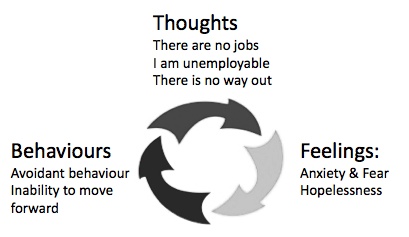
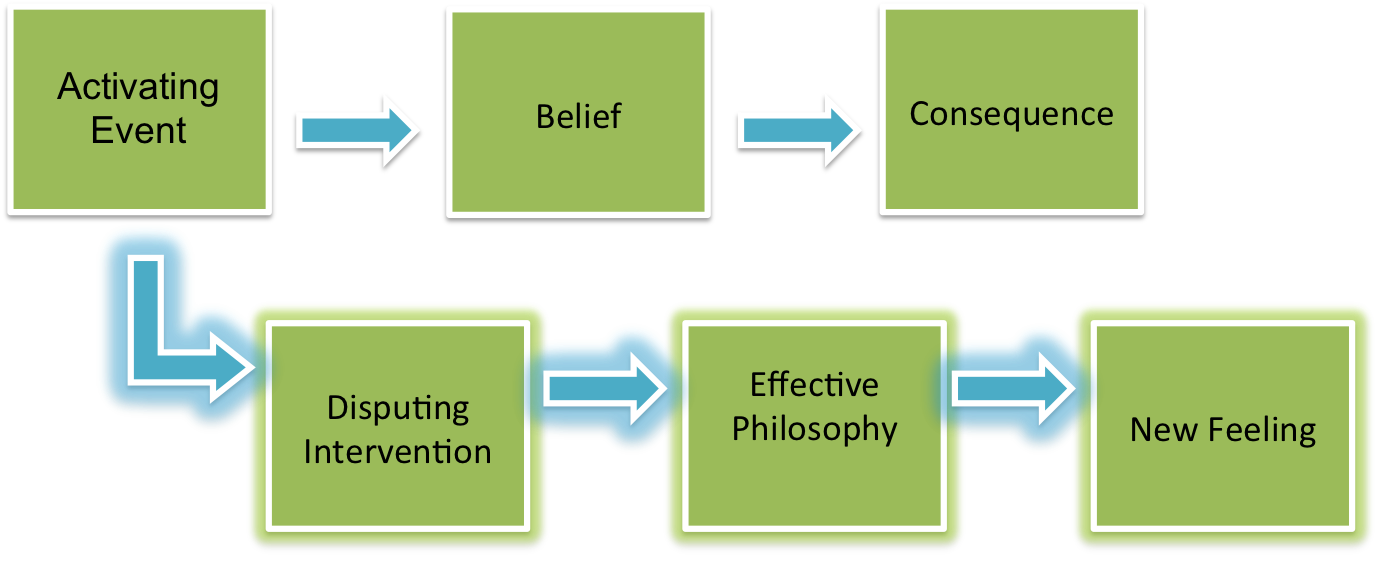
In Cognitive Behavior therapy they break down a persons reactions into a thought process following an activating event. It looks something like this.

cognitive

First a person must encounter an event to activate a response, hence the term “activating event”. Let’s say for example, you are walking through a school or work common area and a friend passes you without acknowledging you. This is the activating event. Most viciouscirclecbtpeoples’s immediate belief, or thought process, would be; “They must not like me, or they are avoiding me.” Then we react due to our belief and we suffer the consequence  of a change in mood or even a physical behavior in some situations.

In order to change the consequence outcome we must stop the original belief thought process and replace it with a new one. This is the disputing intervention. Let’s go through the scenario again using a disputing intervention. This time we pass our friend in the hallway, and again they don’t acknowledge us. First, notice your instinctual thought. (They must not like me, or they are avoiding me.) This is where the thought stopping technique comes in handy. Acknowledge the thought, and then think of a trigger word or action to cease the thoughts. Simply saying “stop” out loud can work, or try swiping your foot acrossimages-52 the ground as if you are brushing away the negative thoughts.

Now start to develop an effective philosophy. Think logically of other reasons that could have caused your friend to pass by without greeting you. Maybe they are distraught over a situation that happened earlier in the day… Maybe they are extremely busy and while running through their “To-Do List” for the day they didn’t even notice you had passed…Maybe they just simply didn’t realize it was you.

Now take these new thoughts and intertwine them into your perception of yourself, relating it not only to the initial situation but your whole persona. In this situation I would think, “I am a good friend. I am caring, loyal, and go out of my way to do things for others.” Now I can let go of the negative belief and dismiss the incident as a misunderstanding and allow myself to relish in my new positive feeling. Worthy of friendship.

images-54As human beings we take in so many incidences and allow them to serve as evidence for reasons why we should diminish our self-worth. We play them over and over in our heads and damage the image we have of ourselves. These thoughts we recite as we re-play the negative evidence become our beliefs.The more we say something to ourselves the more we believe it. Think of all the things in a day that you employ as evidence to your negative thoughts. We ingrain them into our values as we recite them over and over again. Our thoughts become our words, our words become our actions, our actions become our habits, our habits become our character, and our character becomes our destiny.  But thats the beauty in it, we can control our thoughts, and in turn decide our destiny.

Quote of the Day:

396294_313426528697317_186309574742347_939836_170420469_nWatch your thoughts, they become your words. Watch your words, they become your actions. Watch your actions, they become your habits. Watch your habits they become your character. Watch your character, it becomes your destiny. – Frank Outlaw.

Providing Productive Consequences

Posted on

Over the weekend I found myself at a 12U traveling softball team practice. I had offered to help coach throughout the season every once in a while, and this particular Sunday I was called upon.  Practice began as the girls went through their warm up routine. A little images-51laughter here, a few giggles there, and suddenly balls were being missed left and right. No one could make a proper throw and the drills were quickly becoming unproductive. The head coach had finally had enough, and instructed the girls to jog a lap around the perimeter of the field because they needed to refocus.

This method of refocusing is common, and I can’t claim that I haven’t used it myself. I’ve seen countless coaches use it in hopes their athletes will come back with a better mindset. My question is, what part of jogging a lap teaches the players to refocus their mind? I can agree that it gives them a physical break from the prior drill, and maybe gives them a moment to take their mind off the skill, but how does this method 420110405140055001_t607transfer over to a game situation? During games athletes can’t call timeout and jog a lap around the field in order to regain focus.

My point is, as coaches, we need to teach our athletes how to refocus. Instead of sending them on a jog when the wheels start to fall off at practice. Why not gather them together and take a few cleansing breathes. Then discuss the physical and mental cues that are needed to perform the drill correctly. This teaches your athletes the actual steps they need to take in order to regain focus. It is also a method they can take into a game situation. They can take a breathe between pitches and think about what they need to do in order to be successful on the next pitch.softball-focus

It’s natural in our society to give or receive a consequence when an undesired outcome is reached. However, as coaches, we need to look at ourselves as teachers. Most consequences don’t teach athletes how to avoid similar situations in the future. When things start to go awry, pinpoint what is causing it. Then take the time to teach your athletes how they can counter that cause. Alter your perspective and strive to teach your players solutions rather then resorting to handing out a simple punishment.


Quotes:

“Practice puts brains in your muscles.”

Posted on

18eaeff8c3ed7b55e20893c654767c8f

A Well Deserved Thank You

Posted on

John,
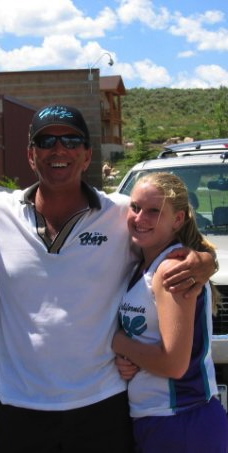
It has been over six years since I’ve stepped on the field in a Haze jersey with you as my head coach. I can still remember exactly what it 229001_1041540272659_4243_nfelt like to have a coach who fully believed in me. I wanted to thank you, from the bottom of my heart, for making me not only the player I am today, but the person I am today. Every day I find myself relying on something you instilled in me. You taught me to love this game at the age of eight, and continued to fuel my fire until you created a forever burning lpassion in me, which I am now turning into my career. The tough love you showered me with, at times being my biggest fan and at others my toughest critic, is the perfect essence of a true coach. You have not only taught me how to play, react, fail, and succeed in the game of softball, but in the game of life itself. I only aspire to do for my players what you have done for me. Thank you for the passion, the skills, the talent, the attitude, the character, and the love. I wouldn’t be where I am today without you.

Thank you, so much.
Sarah

Quote of the day:

“Thank you for believing in my yesterdays, todays, and mostly my tomorrows”

Enlighten Your Athletes With “Why”

Posted on

When I first entered the coaching world six years back, I was welcomed with a rude awakening. I was struggling to answer my athletes questions pertaining to why we did things the way we did. For instance, “Why do we go head first into second base on a steal with no runners on, opposed to going in feet first?”. After playing softball at an elite level since the age of 8, it was a shock, and honestly a little disheartening to realize I didn’t know the answer.

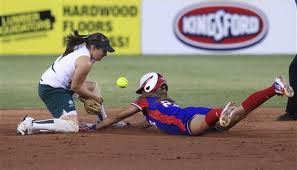
Throughout my youth career as a softball player I was lucky enough to always play for coaches who had an immense knowledge base of the game. I was coached at the elite level, with the correct techniques, and strategies, from the get go. I had coaches who knew to call pitches off the plate on a batter with two strikes. I had coaches who knew to push batters back in the box when we were trying to stealimages-47 second. I had coaches who knew to have their player tag-up at second on fly ball to right field.They always knew the correct pitches to call, defensive positioning to set up, and offensive strategies to employ. I was extremely fortunate to develop my skills under coaches who truly knew the game. I was an athlete who learned how to execute with precision.

Being taught correctly from the very beginning allowed the skills and strategies of the game to become ingrained in me, like they were second nature. I never had to conciously think about what was going on around me; my skills and play executions were more like reactions. Unfortunately, this caused me to miss out on a crucial skill, reading the game in front of me. I developed my talent under coaches who were so knowledgeable, that I didn’t get to learn the cognitive side of the game. My coaches were always calling the plays, and giving direction, so I missed the vital skill of reading the game and making decisions on my own.

Coaching has taught me to take my reactions and turn them into words. It has taught me to analyze my ingrained skills and convert them into a tangible lesson for my athletes. The biggest challenge for me has been coaching first base; I know to run when the catcher images-50bobbles a ball, but saying “run” and physically taking off, are two completely different things. It took me a while to hone in on the skill of delivering oral directions on the bases. It was no easy feat, and six years later I’m still learning, analyzing, and converting, but I’m making progress, and that’s what counts!

Coaches, give your athletes the chance to develop the cognitive aspect of this game. It is critical to include the “why” when teaching skills, and developing game strategies. Explain to athletes that pushing batters back in the box makes the throw to second base longer for the catcher. Explain that the throw from right field to third is longer than any other position on the field, which is why we tag up at second base on a fly ball hit to right field. These may seem like minute points to those who have been around the game for some time. However, these little bits of images-48information can make all the difference to your athletes. It can aid in that “click” that we all strive to witness as coaches.Give them the opportunity to employ and execute game situations on their own. Allow them to coach their own teams at practice so they can recognize when it’s smart to bunt, steal, and execute hit and runs. Let the catchers begin to call pitches, let the pitchers begin to call pitches. Remember that trial and error is a fantastic tool to utilize when developing the cognitive aspect of the game. Explaining the mental side of the game, and then allowing them to practice on their own will greatly impact your players ability, and will develop them into well rounded athletes.

Quote of the day:

“Coach is just another word for teacher.”

Should I Thank Dr Seuss?

Posted on

As a 24 year old graduate student hoping to attain her doctorate in the future, I would label myself as a pretty driven person. Throughout life’s dips and spills I’m one to keep my head up and continue to look to the future. I’m aware of this quality that I posses, but lately I’ve been curious as to where I acquired it from. Naturally, I give the credit to my parents first, and then I assume organized sport played a role due to my extensive history. However, a gift I was given on my 21st birthday makes me consider another contributor. On my 21st birthday my parents gave me the children’s book, “Oh The Places You’ll Go” by Dr Seuss. 200px-Oh,_the_Places_You'll_Go

Have you read this inspiring story lately? It’s incredible.

It’s a book of rhymes which instills a message that is valuable at all ages. You are in charge of your life and the direction you choose. You’ll have tough times, and things wont always go your way, but you will eventually succeed. You’ll keep pushing forward and “KID, YOU’LL MOVE MOUNTAINS”.

What a powerful message! It’s a vital belief when conquering the ebbs and flows of life. How lucky I am to have learned it during the years I was shaping my perspective on life. Children’s books are of the upmost importance when teaching kids life skills; a fact I wasn’t aware of until a life-long friend told me this:

IMG_5832“Picture books are the most important books anyone ever reads–or doesn’t read: Interaction with books at the beginning of life has SUCH an impact, and it’s absurd the tiny degree to which that responsibility is taken seriously. It’s a huge responsibility! The author and illustrator become the kid’s conduit to a new way of seeing the world for five minutes, and if they’re not careful, this can have a huge (and potentially negative) impact. I think people see the tiny page count and the dearth of words and think “easy!” But it’s not, and it shouldn’t be. Picture books need to be given the weight and consideration of the true art form that they are.”

I never considered that a children’s book would resonate with me so deeply at the age of 24. It’s amazing how relevant the message is to my life now, even though it was written for a child. With quite a few books under my belt, “Oh the Places You’ll Go” is still one of the best books I’ve ever read. So thanks Dr Seuss, and of course mom and dad, for the courage, drive, and perseverance to chase my passions.

Quote of the day:
“You have brains in your head.
You have feet in your shoes
You can steer yourself
any direction you choose.
You’re on your own. And you know what you know.
And YOU are the guy who’ll decide where to go.”- Dr Seuss

The importance of grass stains

Posted on

A great perspective on the importance of childhood play. Take a look!

gymbagwisdom's avatarGYMBAG WISDOM

Grass stains are the mark of play, they’re a sign that development is well on its way. Kids used to strut around with grass-stained blue jeans. A grass stain was a badge of honor; something cherished by yesterday’s youth. When your mom, armed with her Tide, couldn’t remove those stubborn stains – everybody knew you were a “player.”

And because players spent their childhood running, jumping, sliding, tumbling, falling down and getting up they developed the 3 C’s – coordination, competance, and confidence. Players came out of childhood and entered youth sports with an advantage; they had develop more ability for athletics.

Players developed the three C’s playing around in the backyards – a learning environment of the highest kind; unstructered play at it’s best, no instruction, no expections, merely playing for the fun of it. Today, however, backyards are absent of frolicking kids. Most of the time they look…

View original post 122 more words

What Percentage of Sports is Mental?

Posted on

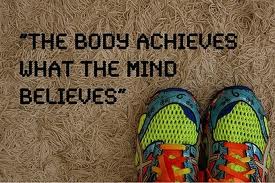
What percentage of sports is mental and what percent is physical; a question that has been plaguing the sports world for decades. First, I think the answer heavily relies on what level of athletics we are analyzing. As players grow as athletes, I believe the game becomes more mental than physical. For young players who are just learning the basic skills, playing a sport is dependent on their physical ability.  If we confine the parameters to only encompass players at the elite level, and to analyze athletes only during game day performances, I believe that sports are 90% mental and 10% physical. images-45

Let’s start with the basics. Sports are physical competitions that demand physical and mental exertion in order to defeat an opponent. Athletes must be able to physically execute skills like throwing a baseball, sprinting to the end zone, and shooting a free-throw. On the other hand, they also need to employ mental strategies like knowing which pitch to throw on an 0-2 count, executing different defensive plays, and having the ability to detect and exploit your opponents weaknesses during a match. At the elite level most athletes acquire an edge over their opponent by utilizing the right strategies at the right time, like a squeeze bunt, or a Hail Mary.

There’s also the aspect of fluctuating performances to evaluate when analyzing the mental component of sport. I’ve played softball at the elite Division II collegiate level, and I know that everyday out on the field is significantly different than the last. Even the differences in performance between games can be monumental, but why? How is it possible for a pitcher to have full control of her pitches one game, and completely lose it the next? Forget games, this can even happen between innings. Without injury, it is impossible for a pitcher, or any athlete, to drastically decrease in athletic skill from one game to the next. The only component that has the ability to fluctuate so radically in a short amount of time is a mindset. Their mental approach to the game is what causes fluctuation in performances.images-46

Athletes who compete at the elite level posses skills that are autonomic, performed without thought. These skills can be compared to a reaction; their bodies respond to a stimulus without consulting the brain first, they are programed to simply react. If the skills used to compete at the elite level are ingrained into the muscles, why do we see athletes “choke” on routine plays? This phenomenon is usually caused by pressure in intense situations which produces anxiety within an athlete. The anxiety the mind experiences creates a physical change in how the athlete moves, their muscles become tense and hinders them from performing eccentric contractions appropriately.  This physical change is created by a mindset.

Sports Psychologist Dr. Doug Gardner sums it up perfectly, “Our thoughts influence our actions and our actions influence our thoughts… each physical movement has a mental component.” Our physical movements all start with a mental process, and produce a cognitive reaction.  Due to my experiences and attained knowledge within my field, I believe that sports are far more mental than physical. In fact, I think they are almost completely mental, which leads me to my concluding answer to the proposed question; sports are 90% mental and 10% physical.

Quote of the day:

“I always felt that my greatest asset was not my physical ability, it was my mental ability.”- Bruce Jenner 

Re-discover The Game You Love

Posted on

In one of my classes last week, I got the opportunity to hear Coach Fogel, the Chico State Womens Head Basketball Coach, speak about his experiences within sport. He got to discussing youth sport and how ridiculously competitive it has become over the years. Kids used to just go outside and play pick up games with their friends. Now youngsters are competing for spots and driving two hours to merely get 480177_10151827872848508_988127512_nthe chance to play in a few games. Wouldn’t kids be better off getting 500 repetitions in their front yard with their friends? Youth sport has become obsessed with getting kids to the next level with the sole goal of eventually showing them off to college recruiters. Where did just playing for fun go?

Pursuing softball as a collegiate career caused me to take the game seriously at a young age. I have been playing highly competitive ball on multiple teams since elementary school. Although I began playing the sport because it was fun, I continued to play because I enjoyed the competitive aspect. I found pleasure in mastering the skills of the sport and demonstrating competency through competition. Practicing, or “playing”, became a habit. It was just something you did. You suited up, worked your hardest, and fine tuned your talent. To an elite athlete, that’s fun. Over time your mindset gets confined into thinking that playing softball always has to be productive. I had lost the sense that this is a game, something kids do for fun just like four-square or dodge-ball. For me, softball had been taken out of that category. It was a sport, and it needed to always be taken seriously.

Just recently, a friend of mine put softball back into perspective. He had challenged me to a dual; I was to pitch, and he was to attempt to hit off me. Challenge accepted. We went down to the local high school with my dad and went head to head. Wow, pitching was no longer effortless like it used to be. But regardless, I was still triumphant for the most part, and best of all; we all had a blast. It was fun to 189082_1883561375478_3289214_njust get outside, move, and throw a ball around. We just enjoyed the natural rhythm of the game on a beautiful spring day. This experience completely revived my love for the game of softball. A physical activity I can engage in with friends to pass the time. In fact, the very next weekend I drove up to Folsum to visit an old teammate and we spent most of the day on Saturday playing softball. It was silly and carefree, and brought back all those feelings that made me stick with the sport in the first place.

What have you been missing out on? Get out and go play!

Quote of day:

“Life is more fun when you play games”-Roald Dahl

Baring it all

My world from my perspective.

One Game, One Love.

Coaching perspectives and life lessons of a Sports Psychology M.A.

Live Love Sport

Improving your mental game

Secret Life of a Startup

Some things you can't complain about at work

M I Initiatives

Belief in Human Potential