Author Archives: smarcia12

Improving Concentration

Posted on

One of the biggest obstacles for todays athletes to overcome is concentration. It’s not usually that athletes aren’t focused, they just tend to focus on the wrong things. One of the best questions an athlete can ask a coach is, “what should I be concentrating on right now?” This questions allows the coach to really develop that players concentration and potential skill level. By giving this player 3-4 things to focus on, the coach is most likely increasing this athletes use of self-talk. Self-talk is the process of mentally talking to oneself.  This is one of the most common techniques used to improve concentration.  Here are some techniques to make self-talk beneficial:

1)   Keep phrases short and specificfocus-22

2)  Keep them in first person and present tense

3)  Construct positive phrases

4)  Say phrases with meaning and attention

5)  Speak kindly to yourself

6)  Repeat phrases often

Concentration can also be enhanced by implementing “thought-stopping”. Players can cope with negative distractions by stopping the negative thoughts before they harm their performance. It’s common for a lot of athletes to have negative thoughts during competition and practice. Think about all the situations in which negative self-talk has hurt your personal performance. Try and recognize which situations produce negative thoughts and why. Thentry to change those negative thoughts into positive motivational thoughts. For instance, as a pitcher the number four batter gets up and the catcher calls an outside curve ball. The pitcher immediately thinks to herself, don’t miss this spot or you’re going to get drilled in the face. To change this talk, she could instead think, hit the outside corner and let your curve ball break away; no one has a better curve ball than you.

1) Focus on the unwanted thought for a brief moment.

2) Then come up with a trigger word or action to stop the unwanted thought. (Ex. stop or physically snapping your fingers.)

3) Then proceed to focusing on the task you want to fulfill successfully.

Athletes can also reconstruct their thought processes by always using non-judgmental thinking. Judging a performance as good or bad can lead to generalizing behaviors. Instead look at a performance as is, without judgment; focus on what is making the athlete perform the undesired behavior and switch their attention to changing it. For a pitcher who is having a wild day, it’s obvious her control is off. Instead of thinking that she is a bad pitcher, she needs to notices that she is missing high, which means she needs to focus on using more wrist snap, and possibly shortening her stride. This will keep players from being emotionally distracted.

Remember, just like physical skills, mental skills take practice in order to master them.
images-17

Along with mental techniques, there are also physical things athletes can do to help improve their concentration. They can establish routines which can be used before or during an event to focus attention, reduce anxiety, eliminate distractions, and enhance confidence. Pre-performance routines have been proven to help athletes switch their attention from irrelevant cues to task relevant thoughts.

Practicing eye control can enhance focus on the task at hand. Athletes must keep their eyes from wondering into the stands, or looking at the runners on base while up to bat. “Keep your eye on the ball” is harder said than done.Athletes can also try developing competition plans. They can think about the next game and what they are going to do in certain circumstances. Similar to being in the field on defense, and preparing for what to do with the ball on the next play.

Over learning skills of the game to make them automatic, like we discussed above, can help athletes focus on mentally challenging aspects of the game. John Wooden explains it best: When learning to read kids must first learn the letters, and the sounds they make. Then slowly they can put these sounds into words, and soon sentences. However, in these early stages kids are solely focusing on the sounds of the words, not the meaning of the word, definitely not the meaning of the sentence it’s in, and surely not the book. Once they have mastered the skill of making sounds into words, they no longer have to focus on what each word is, they can read for comprehension and expand their minds with the books knowledge. Mastering skills in sports is the same way; once the skills are automatic athletes can open their minds to executing strategy, and outsmarting their opponents

Many athletes believe that focus and concentration are only important during games, when in fact, it is almost more important in practice; the phrase, “practice makes perfect”, explains how important concentration is in practice.

Quote of the day:

“Confidence, focus, composure” 

The Importance of Teammates

Posted on

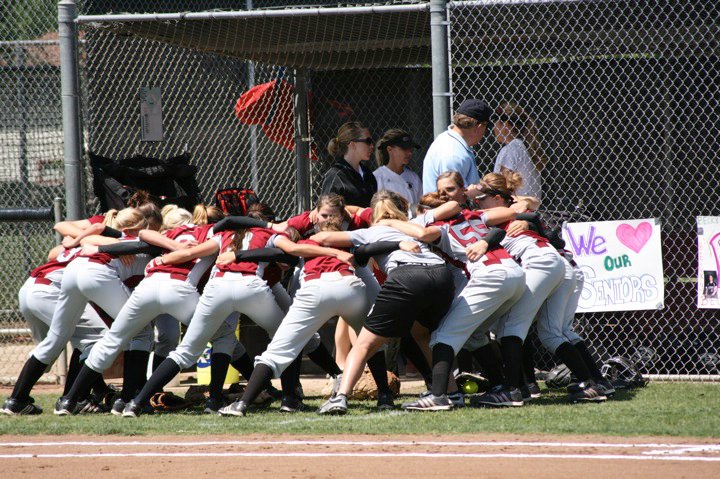
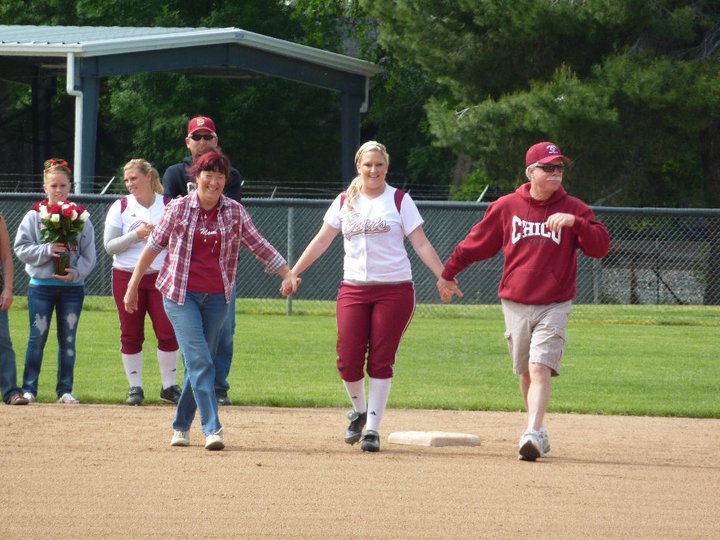
We’ve all been there before, that early, cold, 8:00am game. You’re tired, you’re groggy, you’re shivering, and your cleats are soaked with morning dew. I understand how hard it is to be there, but this is the moment when your teammates play a big role.Penn State softball homerun huddle You get to come out here and hang out with your best friends first thing in the morning. That’s the aspect that makes those 8am games fun. In life, when the going gets tough and you hit a wall, it’s your family and closest friends that get you by, right? Those are the people you turn to. It has to be the same way out here, on this team. This is a part of your family. When things get rough out here, you turn to your neighbor, you work hard for her. Your bond with her is so strong, that you strive team cohesion chicoto make her look good at every opportunity. You sacrifice yourself to promote her success. That’s when we will excel as a team, and you will excel as individual players. When we commit to being  “all for one and one for all”. When nobody cares who gets the credit. That’s when those special, unforgettable, incredible moments happens. That’s where championship teams and players are made; that’s the foundation. Team cohesion is an essential ingredient to success.

Team cohesion applies in life as well. If we all cared a little more about the people around us the world would be a better place. If we helped each other out without needing recognition for good deeds we do. We could truly excel as a society and grow as social beings. Selflessness is an invaluable trait. So start here, on the softball field, for your teammates.

Quote of the day:

“A candle loses nothing by lighting another a candle. That’s what you guys are here to do, light each other up.”

Sports Psychology in the Classroom

Posted on

I am currently working as an aid in a special education elementary school classroom. The children I work with are between 8-12 years old and have behavioral issues or learning difficulties. Today I was working one on one with a little boy who really struggles with math.Math-problems-dyscalculia He gets frantic and starts to guess at the numbers, function signs, and eventually answers. Numbers just come chaotically flying out of his mouth with no real reasoning behind them. For example, when asked what 6 minus 5 equals, his first instinct is to shout out “7”, then “2”. And so on.  Everything he does is a guess. He never takes a moment to allow his brain to process the numbers and give a well thought out answer. I quickly noticed this, and my sports psychology training instantly kicked in.

I took a moment, told him to take a deep breath and really look at the numbers we were dealing with. After a few deep breathes, he blurted out, “I can’t.” “I don’t know.” I then made him practice some positive self-talk. Out loud I had him say, “I can do this.” “I know my numbers.” After repeating these mantras a few times, and deeply breathing, he began to read the problem images-42out loud correctly. He slowly read the numbers and grabbed his counting chart. He correctly identified the numbers in the problem, and which way to move on his chart for subtraction.  He looked up after he counted, and said, “1?”. I then said, “Do you think you did the problem correctly?”. He said, “yes”. I said, “So tell me confidently you know the answer is 1.” He then proudly said, “1!”.

We then went on to do 15 minutes of solid relaxed math and he began to learn rather than guess. It’s a moment that will forever resonate with me, and further my belief in the power of Sports Psychology.

Quote of the day:

“Just Breathe”

Game Breaks, a Chance to Connect.

Posted on

Through out my career as an athlete, I’ve always disliked the practice of keeping athletes in the dugout between double-header games. A lot of coaches at the collegiate level demand that their athletes stay in the dugout between double-header games; this takes away the opportunity for them to socialize with family members and friends who have come out to support them. The reason behind this practice is to keep the athletes focused between games. This never resonated well with me. It is impossible for any human being to stay focused 218090_1770503336280_4685399_nfor two entire games including the lapse in competition between games. It is said that the human mind can only truly focus for around 10 seconds at a time. If this is true, we are constantly going in and out of focus throughout the game. If we are able to do this through out the game, surely we can break focus to eat a snack, visit with our fans, and then regain focus when it’s time to warm up again. That brings up another great point, warm ups. I’ve never watched a team go straight into the second game after a break without warming up. There is always at least 10-15 minutes of warm up before that second game. This is the perfect time to get mentally prepared for game 2.

“Between the White Lines”, a documentary that follows the UCLA team in their 2008 season, head coach Sue Enquist sheds some light on this topic. She says, “It’s not about winning its about the process.” In the clip of the movie she talks about enjoying the process of getting where you are going. A big part of this was including the families in the journey of UCLA. Without the support of the families, the players wouldn’t be where they are today. It was so important to Coach Enquist that the parents and siblings felt like a part of the UCLA team.

Sometimes fans drive hours to see athletes play, and they can’t always stay for both games. I think it is crucial to allow athletes to quickly visit these people between games. I can only see benefits with this practice. The fans feel as if they are apart of the experience and the 223244_1770549497434_2760203_nteam. The athletes feel rewarded by having fans who are there to support them. It allows the players to get perspective, this is just a game, they can relax for a moment and enjoy themselves. For those players who aren’t starters, or didn’t play, this is a moment for them to feel appreciated even though they weren’t necessarily apart of the game.

Athletes should be able to return to their optimal arousal level after taking a break. If your athletes can’t, they need to learn proper arousal and relaxation techniques.  Let them visit with their family and friends between games, and teach them to mentally prepare themselves during warm ups.

Quote of the day:

“It’s not about winning or losing, it’s about enjoying the process.” -Sue Enquist UCLA Softball

A Perspective on Playing Rough

As a coach, if you resort to rough play, what does it say to your opponent, and what does it say to your players?

Through out my experience as an athlete, I don’t remember having an opinion or perspective on rough play. I do, however, remember a specific incident when one of my teammates made a rough move on our opponent. The only thing my coach told her was, “If you’re going to dish it, be prepared to take it.” I immediately adopted this response as my philosophy in regard to rough play. I would never encourage it, but if it were to happen, my players better be prepared to deal with the consequences gracefully.images-41Now that I’m a little wiser and a little older, I wouldn’t tolerate rough play from my athletes. I want my team to be respected not only for their talent but how they present themselves. I want my athletes to achieve success in the fairest play possible, without any sort of rough or negative behaviors. Playing rough, reminds me of the saying, “If you ain’t cheating you ain’t trying”. If a team resorts to playing rough, it puts off the vibe that they are incapable of defeating their opponent fair in square. They need an extra edge to defeat the opposing team. If I’m the opponent, I take this as a compliment. My team is so good, our competitors are worried about beating us, so they are resorting to other means. As for my own team, I want them to believe that being a winner means putting in your best effort, not cheating and merely attaining a higher score to be named the winner. It’s all in how you define success, I don’t agree with winning at all costs, I believe in winning means putting forth your best effort. Respecting the game, the opponent, your teammates, coaches, and officials.

Playing rough teaches players to get rough when the tough gets going, and not only on the sports field, but it also teaches them that getting rough is the answer in life. As coaches we can instill the opposite trait in our players by teaching them to react with good sportsmanship when this situation presents itself. This will carry on with them through life, and help them to always treat people with kindness no matter how rude or rough they are. As an adult, networking is the key to success, especially in the workforce; learning to never burn bridges is a great lesson to instill early on.

Quote of the Day:

“Be more concerned with your character than your reputation. Your character is what you really are; your reputation is merely what others think of you”- John Wooden. 

Sports Psychology Skeptics

Have you ever been talking to someone and you start to get the feeling they are just humoring you? Listening and agreeing with you to merely be polite, rather than actually buying into what you’re saying? Well, I get this all the time when it comes to Sports Psychology. I constantly receive that polite smile and nod we’ve all been taught since we were children.

In a country where our media is continuously glorifying old school coaches who yell, scream and punish their players to victory; a lot of people find the field of Sport Psychology a waste. Even the entire field of psychology tends to get a bad rep.  You can really get a sense of MV5BMTczNTA2MDc0OF5BMl5BanBnXkFtZTYwMTg4MDY2._V1_SY317_CR1,0,214,317_this negative perspective when talking about psychological disorders, like depression. The general consensus of American society is that people need to just pick themselves up and get over it. They don’t see these disorders as real illnesses, like the flu or cancer. But they are! The mind and body are completely intertwined; the way you physically feel affects the way you think, and the way you think affects the way you physically feel. For instance, have you ever had a bad dream and woke up sweating with a racing heart? Your physical body was simply lying there sleeping, however your mind encountered something so real in its subconscious it caused your body to have a physical reaction. Stomach Ulcers. A physical ailment created by an overly stressed and worried mind. In our society today we are battling an obesity epidemic. Why? Everyone knows that eating nutritiously and exercising are the keys to a healthy weight, so why do we have such a problem with obesity? It’s the mental part of it, the motivation, and the self-control we struggle with.

This is the epitome of sports psychology. Enabling your mind and body to work together to be the best possible version of yourself you can be. Sports psychology teaches your mind to work for you, not against you. It’s easy, while exercising, for you to think I’m tired, I’ve done enough, lets’ quit for the day. Sports psychology trains your mind to push your body to the next level; it trains it to say, just a little bit farther, you got this.

Most people assume Sports psychology is an asset that athletes can only use when they are in a slump or a rut. However, it’s something sport_psychologyathletes can use all the time. In a competitive league where all the athletes have elite skills, the one thing you can have over your opponent is a mental edge. Athletes can have a great game one-day, and a terrible game the next. Why? It’s not their physical skills that drastically decreased in 24 hours, it’s their mental approach that changed!

The best of the best use sports psychology to harness their greatness, maybe it’s just the edge you need to step up your game. Train your mind to work for you!

Quote of the day: 

“What’s above the shoulders is more important than what’s below” Ty Cobb

Care First

In order to get the most out of your athletes, you must care about who they are as people first. It’s a very simple rule, but it’s easy to get caught up in competition and forget it. I had the same coach from the age of 10 to the age of 18. I owe most of my success, and skill level to him. However, the thing I remember the most, is that he cared. He supported me and believed me, not only as an athlete, but also as a person. I wanted to work hard for my coach because I knew how much he believed in me. I didn’t want to let him down.

Creating a caring relationship also makes criticism easier to handle. I knew that when he was criticizing my game, he still enjoyed me as a person. This is a hard concept for youngerimages-28 players to grasp. Most youth players take criticism personally and think their coach doesn’t like them if they correct them often. This personal relationship helps them to distinguish the difference between criticism and dislike.

Although I’m terrible with names and faces, I make a prominent effort to remember my players as quickly as I can. I also like my players to fill out an “About Me” form. It’s a basic questionnaire with details on their favorite things, goals in life, past softball experiences, and unique things about them. Not only does this help my players to feel more comfortable around me, but it also helps me put names to faces.

The better they feel, the better they will play. You as a coach play a huge role as to how they feel as people. It gives athletes great confidence and self-esteem when they are certain their coach appreciates them as a human being. They’ll come to you for more than just softball, down the road they will probably seek advice on life choices from you. I know my coach is someone I still turn to, and I haven’t played for him in almost 6 years. Strive to make a difference in not only their softball skills, but in their life skills.

 Quote of the day:

“They don’t care how much you know, until they know how much you care”

It’s Okay to Make a Mistake

Posted on

“It’s okay to make a mistake.” Just say that to yourself. “It’s okay to make a mistake.” Again. “It’s okay to make a mistake.” Do you feel more relaxed? I sure do. Think about how much stress would be relieved if your boss, or teacher said, “’ It’s okay to make a mistake today.” I suddenly don’t feel so panicked about completing the task at hand. It’s almost as if the possibility of making a mistake has completely left my mind.

In any situation of life, giving your best effort is a scary task. Contemplate this. If someone tries as hard as they can to complete a task, and they can’t; they fail, they simply weren’t good enough. That’s a hard pill to swallow.  In many cases it’s easier to lie to ourselves. By giving half the effort, we always have an excuse to fall back on. “Well if I tried harder I probably could’ve done it.” Sports is the perfect place to learn to deal with failure, real baseball-error-1failure. Giving your best effort with no excuse as to why you failed. It’s one of the only parts of life where failing really doesn’t matter. Your team may loose the championship if you drop a fly ball, but the world won’t end, no one will lose their job, and life will go on tomorrow. Jim Thompson in his book Positive Coaching says it best, “One of the great things about sports is that it can give children the chance to experiment with making gigantic efforts without horrible consequences when they fail. They can see how it feels to give everything they have to a task, something a surprising number of people don’t ever have any experience with. “

If we never learned to deal with failure, we would have never learned to walk, ride a bike, or read. As children failing was common. We were used to failure, and it didn’t deter us much. As we grow older we tend to stop learning as much because our willingness to fail has greatly decreased. Bring that youthful mindset back to your players by simply telling them, “It’s ok to make a mistake.” Like John Wooden says; “I’m positive a doer makes mistakes.” If you want your athletes to continue to grow, improve, and develop as players, they will make mistakes. So let them.

For coaches who want to develop players as people as well as athletes this is a great principle to instill. It also gives you an out as a coach when you make a mistake. It allows mistakes to simply be learning situations and nothing more.

Quote of the day:

“Believe in the miracle of the second chance.”


Concentrating on Focus

Focus, what is focus?! Athletes have been harped on to focus since the beginning of competition. It’s one of the most common phrases we hear in sports. But, what is it? When yellingasking your athletes to focus, what are you actually asking them to do? Can you write out 5 simple steps to achieve the focus you’re asking them to possess?

At first I was perplexed by this question, how can I paint vivid guidelines for my players to follow in order to attain the focus I’m asking them to have? I found my answer within the definition of concentration. The definition of concentration in a sport or an exercise setting involves four parts; Selective attention, maintaining attention focus, situational awareness, and shifting attention focus.

Selective awareness is the act of focusing on relevant environmental cues. It’s the physical process of eliminating irrelevant cues from your realm of attention and only selecting the relevant cues to concentrate on. Once an athlete has mastered a skill, they no longer have to consciously think about it while they are performing it. For instance, younger athletes are taught to drop step as a first step to any fly ball. With more practice and experience, that first step becomes second nature, done without thought. Having these second nature habits allows athletes to pay attention to other parts of the game.

Maintaining attention focus is the ability to maintain concentration throughout the entire game. This is tough because studies show the average time thoughts stay on target is about 5 seconds. Some of the greatest athletes earned their reputation not on pure talent, but the ability to stay focused in competition. Tennis player Chris Evert never had the best physical ability, but she never let a bad line call, missing an easy shot, or crowd noise, affect her. Concentration was the key factor that made her a champion.

Maintaining situational awareness is an athlete’s ability to understand what is going on around them. It’s the peripheral vision of concentration. This ability allows players to size up game situations, opponents, and competitions to make the right decisions in play.

Shifting attention focus is the ability to be flexible with attention; being able to switch one’s focus depending on what the situation calls for.

Think of Concentration as a personal spotlight. Athletes have to know where to point their 133spotlight, how narrow or broad to make the beam of light, and be able to switch it from place to place quickly, in order to focus on the correct things.

Researchers have found that when studying elite athletes in their most exceptional performances, three of the eight key components of their performance were related to concentration.

1) Being absorbed in the present and having no thoughts about the past or future.

2) Being mentally relaxed and having a high degree of concentration and control.

3) Being in a state of extraordinary awareness of both their own bodies and the external environment.

155991

It has been proven that expert athletes, compared to novice athletes, have a different focus in game situations. Exp

ert players are able to disregard irrelevant stimuli and focus on task-oriented things, rather than the outcome of the task. This is proven by the study of eye movements in experts and novice athletes. A perfect example is the basketball player Magic Johnson who was known for his no look passes. He used advanced cues to know what his teammate’s future moves would be.

Focusing on the wrong cues, is one of the biggest problems for athletes. It’s not that they lack the ability to focus, but their focus is concentrated in the wrong area. Sometimesathletes get caught up in focusing on internal worries and concerns, past experiences, future events, the pressure of the game, and body mechanics.

Jim Thompson, the author of “Positive Coaching” brings up a great perspective in concentration. Most athletes are consumed with trying to avoid looking dumb. They are focused on not making a mistake, which is actually causing them to focus solely on making mistakes.


Quote of the day:

“When I’m training I’m focused… by focusing all the time on what you’re doing when you’re training, focusing in a race becomes a by-product.” -Orlick and Parintons landmark study of Canadian Olympic athletes   

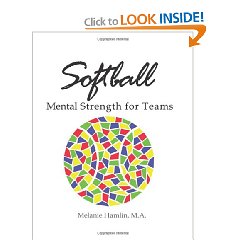
Softball Mental Strength for Teams

Softball Mental Strength for Teams written by Melanie Hamlin M.A. This workbook is full of exercises and lessons specifically geared toward softball teams. It was written by a student in graduate school who played collegiate softball and now coaches. It’s easy to use, something any coach could implement into their seasons practices plans. check it out!

Amazon.com: Softball Mental Strength for Teams (9781478260066): Melanie Hamlin M.A.: Books.

Baring it all

My world from my perspective.

One Game, One Love.

Coaching perspectives and life lessons of a Sports Psychology M.A.

Live Love Sport

Improving your mental game

Secret Life of a Startup

Some things you can't complain about at work

M I Initiatives

Belief in Human Potential