Category Archives: Uncategorized

Wise Words in The Circle

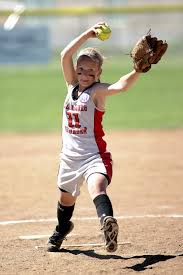
I’ve been a pitcher since I was eight years old; I played through high school at the varsity level, through travel ball all the way to the 18U Gold level, and four years in college. Needless to say, I’ve struggled on the mound more than a few times. I’ve been approached by coaches in all different manners in an attempt to get me back “in the zone”. Looking back, I have a personal opinion as to what worked for me. However, now I am graduate student of Sport Psychology have a few other perspectives to add to my repertoire.

images-63

I think that humor can work, especially in younger athletes. It allows them to breathe for a second without even realizing they are allowing their bodies to relax. With that said, I think you have to know your athletes first. For me, it definitely worked on occasion, but humor was also a prominent part of my disposition. Some players take this game so seriously that humor can come off as an insult. Instead of allowing them to take a load off, you can make them even more tense and anxiety ridden.

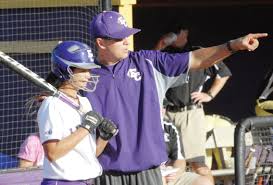
I was lucky enough to have the same travel coach for ten years of my playing experience. He knew me well as an athlete, and as a person. When I began to struggle on the mound his words from the dugout were always encouraging. JosephThis is the first piece of the puzzle that helped me “keep it together” when the wheels started to fall off. It helped to calm my thoughts of, “is he going to pull me?”.  If things didn’t improve from there he would come out to the mound. When he arrived he would simplify the situation for me. He wouldn’t mention the runners on base, or the two bombs I had just given up, or the tight score. He would tighten my focus into the things I could control like; trust your mechanics, keep the ball off the plate with two strikes, and keep your change up low in the zone. He would sometimes go the supportive route as well, saying things like, “I put you out here for a reason, and I’m leaving you in for a reason. I believe that you can handle this team and walk away successful. This is your battle and I’m going to let you fight it. Show me what you got.” Depending on the situation humor was used also, which worked at the right time and the right place.

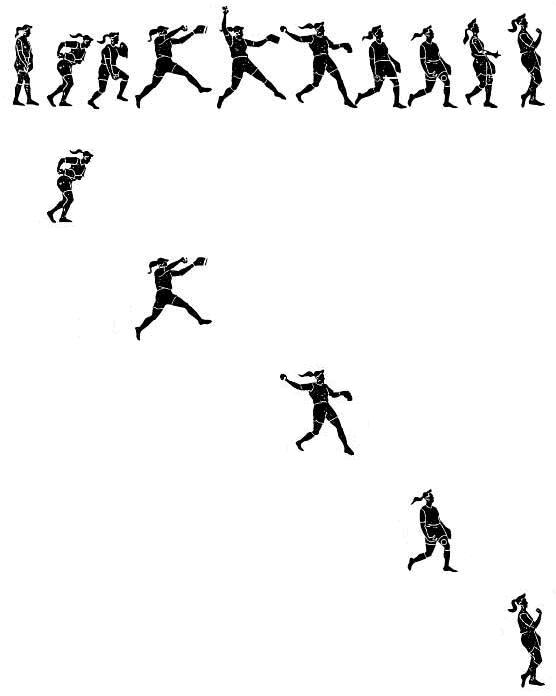
cc_fundamentals_image

As a sport psychology student I look at my experiences as a pitcher through a new lens. I realized that the biggest reason I began to struggle was focus, self-confidence, and anxiety. Quality thoughts lead to quality actions; my thoughts weren’t always directed where they should have been. Tense muscles perform differently than loose muscles; when athletes experience anxiety, the physiology of their muscles change. They no longer perform the way they were trained under relaxed conditions. A sudden lack in self-confidence can be a producer of anxiety. With this knowledge, I know that there are three things a coach should do when approaching the mound. Coach the pitcher to relax, use deep breathing techniques. It is physiologically impossible for a body to effectively deep breathe and panic at the same time. Deep breathing will help to combat the effects of anxiety. To handle focus, give your pitcher cues to think about that she is in control of, like her mechanics. She can’t control weather the umpire calls a ball a strike or not, she can’t control whether the batter swings or not, and she can’t control the performance of her teammates when a ball is put into play. What she can control is the thoughts in her mind, and the actions of her body. Give her a few things to think about to keep her mind concentrated on the correct area. Self-Confidence is a larger issue than any coach can fully combat with a single trip to the mound. However, knowing that your pitcher has your support is immensely helpful.

Quote of the day:

“Poets are like baseball pitchers. Both have their moments. The intervals are the tough things.”- Robert Frost 

Critcism vs. Praise

Did you know that experts recommend coaches to give players 5 responses of praise to every 1 remark of criticism? They refer to it as the magic ratio; 5:1.

Think of your players, as you would think of your car. If you fill your cars’ gas tank with gas, you can go anywhere you want. gastank If the tank is empty, you can’t go anywhere. Athletes experience the same process. Fill their emotional tanks with praise, and they feel they can do anything. Deprive them of praise, and their self confidence plummets, and they will feel discouraged.

Coaches aren’t the only ones who have access to an athletes emotional tank. Teammates do as well. Ask your players to think about the kind of things that make them feel valued and confident on the playing field. Allow them to realize what kind of praise really sits with them as athletes.  Then ask them to offer these kinds of statements to their teammates. Sometimes praise is appreciated on a higher level if it comes from a peer.

All praise is good, however, if you really want praise to resonate with your athletes it must be; authentic, specific, immediate, private and clean. A good way to remember this is by giving your athletes ASIP of Confidence.Indian of the Week 2013 Grace Farrow

Authentic – Praise must be sincere, as a coach you must mean what you say. It must be spoken in the most genuine of tones.

Specific- a simple “good job” doesn’t inform the athlete which skill they performed well. Make sure you insert a specific aspect in your praise. For example; “that was great, you kept your hands inside the ball on that last swing.”

Immediate – Praise should be delivered immediately after the action is committed. Giving praise so quickly helps to reinforce specific skills as opposed to whole performances.

Private – Although it may seem like a good idea to boast a players skills in front of their peers, it can actually keep them from putting in their best effort.  Some athletes may be teased, or called the coaches pet if they are constantly praised in front of the team. Other players may just simply be too shy to enjoy public praise. Praise is more authentic if done in private, the athletes know it is meant only for them, and there is no other reason for the comment, rather then simply complimenting their talents.

Confidence – Yes, praise does enhance confidence, however the “C” in confidence also stands for Clean. Praise must be clean in order for it to be effective. Try to keep yourself images-58from giving praise in order to get a future action in return. Stray from telling an athlete something meaningless and nice in hopes they will do something different, and completely unrelated tomorrow. Also, keep the word “but” out of your praising statements. If you say; “You did a great job at keeping your head up at practice today, but it’s unacceptable to show up 20 minutes late.” The statement after the “but” completely ruins the credibility in the prior comment which was authentic, specific, and private praise.

ASIP Give your athletes a ASIP of confidence with praise that is Authentic, Specific, Immediate, Private and Clean.

Quote of the day:

“Ability is what you’re capable of doing. Motivation determines what you do. Attitude determines how well you do it.”- Lou Holtz


Create a Mental Checklist to Improve Concentration

Posted on

It seems to me that coaches tend to write off youth athletes who lack the discipline to focus through practice or games. CoachesUnknown123 seem to think that concentration is an innate skill and can’t be improved or changed. As a kid I remember hearing that the human brain could only focus for five seconds at a time, this immediately became my internal excuse for not paying attention in class. So I’m guilty of dismissing the possibility of improvement as well.

I’ve learned of Neuroplasticity: “The brain’s ability to reorganize itself by forming new neural connections throughout life. Neuroplasticity allows the neurons (nerve cells) in the brain to compensate for injury and disease and to adjust their activities in response to new situations or to changes in their environment.” This means that concentration can be enhanced due to our brains ability to undergo neuroplasticity.

images-62 Like I’ve said before, most coaches simply tell players to concentrate without teaching them how to do so. I’ve reworked my coaching language in an tempt to avoid doing this. I try to keep the words “concentrate” and “focus” out of my coaching vocabulary as much as possible. Easier said than done. I’ve begun to utilize a strategy I picked up in graduate school. I consciously create a concentration checklist for my athletes when I feel they are losing focus, or concentrating on the wrong aspects.

So what is a concentration checklist you ask? It consists of 3-4 physical or mental components needed to complete a skill. They are simple, short tasks which are easy to remember and repeat. A skill we are all familiar with is making a right turn while driving. A concentration checklist for this would look something like this:

1. Signal blinker

2. check traffic to left and right

3. accelerate and turn the wheel to the right side.

When teaching athletes how to throw a change up, I usually give them this checklist. hqdefault

1. Lock wrist to the sky

2. Keep Elbow at your side

3. Think over the bucket in the hole

This checklist helps to keep athletes thoughts on the right path. I’m implying the need for them to focus more adequately, and showing them how to do it, rather than simply telling them they need to.

Consolidate the task at hand into three simple steps. It’s something simple that athletes can repeat to themselves to keep their mind and body on the right track.

Quote of the day:

“A goal without a plan is just a wish.”

Bridging the Gap

Posted on

sport-workI’ve started a new blog! This blog caters to those of us who have left the sports world and entered the corporate world. This blog focuses on adapting sport psychology concepts to be beneficial and functional in the workplace. Enjoy! Bridging the Gap.

Only Teach What You Trust

Posted on

image-1I remember going to softball camps as a kid. Every camp had new techniques and new ways of doing things. Most camps forced their way into your skills and changed how you did things. Countless times I entered a camp with one bunting technique and left at the end of the week with another. Now that I’m a pitching coach, and have been randomly coaching at different practices with multiple kids, I’ve been looking back on my experiences at these camps.

Walking into a practice where you aren’t the head coach, or even associated with the team; you begin to wonder where your boundaries lie. You know you’re there for a reason, and the coaching staff has asked you to help out because they admire your abilities. But, how much should you impose on their players? I found myself wondering; should I just fix the basics? Should I just teach them how to focus on the mound, and go over mental cues? Am I allowed to completely change their motion when they indeed have a pitching coach they’ve been working with?

images-55Here’s the conclusion I came to. My success in softball came form sticking to one coach, and one philosophy my entire career. I was lucky enough to have the same pitching coach from the age of 10 until I ended my career at 22. I did go to camps, and they did temporarily change my mechanics, but as soon I as I went back to a team practice, my coaches put me straight back to our way of doing things. However, with that said, I can only teach what I know and believe in.

Today I gave a pitching lesson to two young pitchers who were having trouble mastering the change-up. I was asked to help them because the change-up was one of my best pitches. The way I see it is; I won’t fix something that isn’t broken.  If they throw their curveball well, even if it’s not the way I would teach it, I’ll leave it alone. If they are struggling with different pitches, I’ll change them to the way I was taught. After all thats why I’m here.

My impromptu lessons tend to look like this. I have the pitcher go through all her pitches so I can see how she throws. I then begin to work on the pitch I was asked to help her with, or we work on the pitch I think needs the most attention. I have her throw it her way multiple times.images-56 I then do something unique. I ask the pitcher to teach me how they throw the pitch. They become the coach for a minute and show me the motion, snap, grip, and release of their pitch. After talking through the physical cues, most pitchers begin to throw more effectively. (Ahh secret sport psychology at its finest.) I then go over mental cues for them to recite before executing a pitch. If these two tactics and minor tweaks don’t improve their pitch, I break them down completely and teach them my mechanics.

I empathize with players who are constantly changing their mechanics due to working with multiple coaches; it can become very frustrating. However, as a coach, it’s my duty to teach athletes the methods I truly believe in.  Even if it may frustrate and confuse them for a moment. I have to hope that my mechanics will assist them in experiencing a break through. I now understand why my skills were analyzed and changed throughout my softball camp experiences. As coaches we need to cater to individuals players, as every athlete has different strengths, but we must enforce the methods that we know; and believe in the most.

Quote: 

“You haven’t taught until they have learned.” -John Wooden

Your Thoughts Are Your Destiny

Posted on

Thought stopping is a common technique used in sport psychology to help athletes refocus by eliminating negative thoughts, but have you ever considered using this method throughout your everyday life? I hadn’t. It wasn’t until about three years after I initially learned about this technique that I realized it could help me in other situations, like my social, romantic, and educational aspects of life. It all clicked during a lecture on Cognitive Behavior Therapy in my Psychology of Counseling Class this last spring.

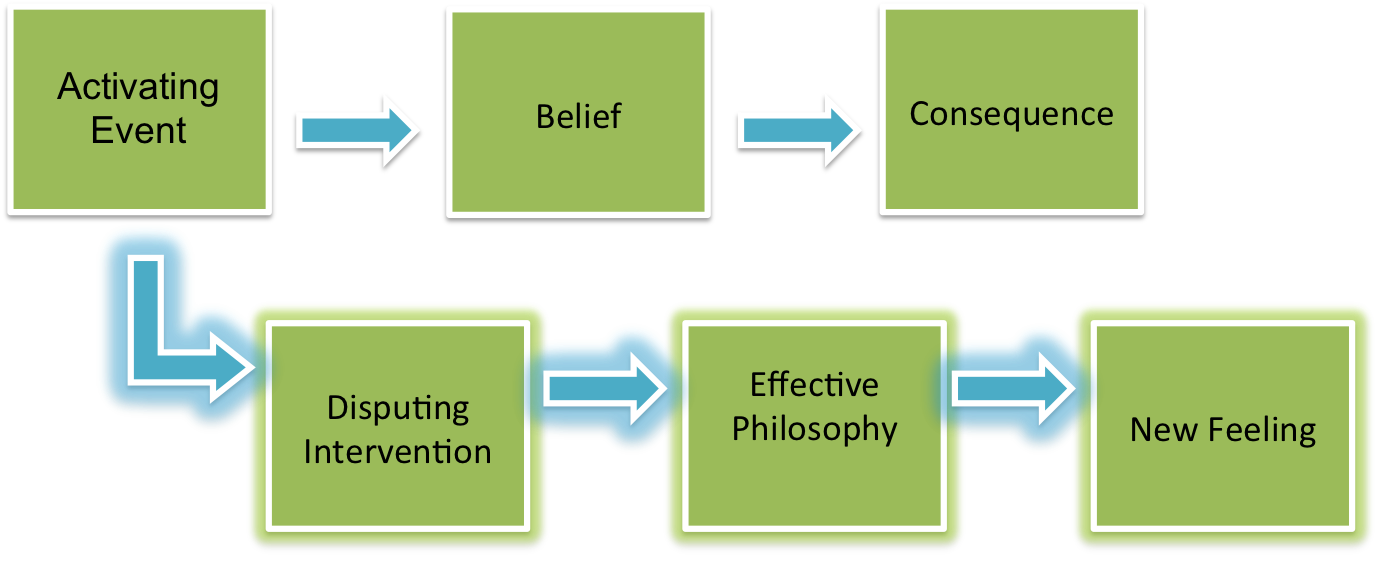
In Cognitive Behavior therapy they break down a persons reactions into a thought process following an activating event. It looks something like this.

cognitive

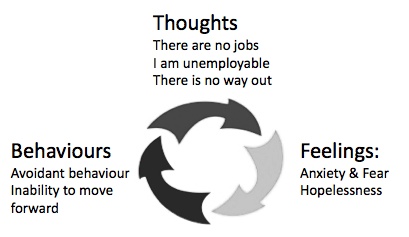
First a person must encounter an event to activate a response, hence the term “activating event”. Let’s say for example, you are walking through a school or work common area and a friend passes you without acknowledging you. This is the activating event. Most viciouscirclecbtpeoples’s immediate belief, or thought process, would be; “They must not like me, or they are avoiding me.” Then we react due to our belief and we suffer the consequence  of a change in mood or even a physical behavior in some situations.

In order to change the consequence outcome we must stop the original belief thought process and replace it with a new one. This is the disputing intervention. Let’s go through the scenario again using a disputing intervention. This time we pass our friend in the hallway, and again they don’t acknowledge us. First, notice your instinctual thought. (They must not like me, or they are avoiding me.) This is where the thought stopping technique comes in handy. Acknowledge the thought, and then think of a trigger word or action to cease the thoughts. Simply saying “stop” out loud can work, or try swiping your foot acrossimages-52 the ground as if you are brushing away the negative thoughts.

Now start to develop an effective philosophy. Think logically of other reasons that could have caused your friend to pass by without greeting you. Maybe they are distraught over a situation that happened earlier in the day… Maybe they are extremely busy and while running through their “To-Do List” for the day they didn’t even notice you had passed…Maybe they just simply didn’t realize it was you.

Now take these new thoughts and intertwine them into your perception of yourself, relating it not only to the initial situation but your whole persona. In this situation I would think, “I am a good friend. I am caring, loyal, and go out of my way to do things for others.” Now I can let go of the negative belief and dismiss the incident as a misunderstanding and allow myself to relish in my new positive feeling. Worthy of friendship.

images-54As human beings we take in so many incidences and allow them to serve as evidence for reasons why we should diminish our self-worth. We play them over and over in our heads and damage the image we have of ourselves. These thoughts we recite as we re-play the negative evidence become our beliefs.The more we say something to ourselves the more we believe it. Think of all the things in a day that you employ as evidence to your negative thoughts. We ingrain them into our values as we recite them over and over again. Our thoughts become our words, our words become our actions, our actions become our habits, our habits become our character, and our character becomes our destiny.  But thats the beauty in it, we can control our thoughts, and in turn decide our destiny.

Quote of the Day:

396294_313426528697317_186309574742347_939836_170420469_nWatch your thoughts, they become your words. Watch your words, they become your actions. Watch your actions, they become your habits. Watch your habits they become your character. Watch your character, it becomes your destiny. – Frank Outlaw.

Providing Productive Consequences

Posted on

Over the weekend I found myself at a 12U traveling softball team practice. I had offered to help coach throughout the season every once in a while, and this particular Sunday I was called upon.  Practice began as the girls went through their warm up routine. A little images-51laughter here, a few giggles there, and suddenly balls were being missed left and right. No one could make a proper throw and the drills were quickly becoming unproductive. The head coach had finally had enough, and instructed the girls to jog a lap around the perimeter of the field because they needed to refocus.

This method of refocusing is common, and I can’t claim that I haven’t used it myself. I’ve seen countless coaches use it in hopes their athletes will come back with a better mindset. My question is, what part of jogging a lap teaches the players to refocus their mind? I can agree that it gives them a physical break from the prior drill, and maybe gives them a moment to take their mind off the skill, but how does this method 420110405140055001_t607transfer over to a game situation? During games athletes can’t call timeout and jog a lap around the field in order to regain focus.

My point is, as coaches, we need to teach our athletes how to refocus. Instead of sending them on a jog when the wheels start to fall off at practice. Why not gather them together and take a few cleansing breathes. Then discuss the physical and mental cues that are needed to perform the drill correctly. This teaches your athletes the actual steps they need to take in order to regain focus. It is also a method they can take into a game situation. They can take a breathe between pitches and think about what they need to do in order to be successful on the next pitch.softball-focus

It’s natural in our society to give or receive a consequence when an undesired outcome is reached. However, as coaches, we need to look at ourselves as teachers. Most consequences don’t teach athletes how to avoid similar situations in the future. When things start to go awry, pinpoint what is causing it. Then take the time to teach your athletes how they can counter that cause. Alter your perspective and strive to teach your players solutions rather then resorting to handing out a simple punishment.


Quotes:

“Practice puts brains in your muscles.”

Posted on

18eaeff8c3ed7b55e20893c654767c8f

Enlighten Your Athletes With “Why”

Posted on

When I first entered the coaching world six years back, I was welcomed with a rude awakening. I was struggling to answer my athletes questions pertaining to why we did things the way we did. For instance, “Why do we go head first into second base on a steal with no runners on, opposed to going in feet first?”. After playing softball at an elite level since the age of 8, it was a shock, and honestly a little disheartening to realize I didn’t know the answer.

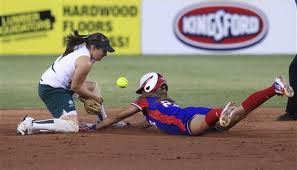
Throughout my youth career as a softball player I was lucky enough to always play for coaches who had an immense knowledge base of the game. I was coached at the elite level, with the correct techniques, and strategies, from the get go. I had coaches who knew to call pitches off the plate on a batter with two strikes. I had coaches who knew to push batters back in the box when we were trying to stealimages-47 second. I had coaches who knew to have their player tag-up at second on fly ball to right field.They always knew the correct pitches to call, defensive positioning to set up, and offensive strategies to employ. I was extremely fortunate to develop my skills under coaches who truly knew the game. I was an athlete who learned how to execute with precision.

Being taught correctly from the very beginning allowed the skills and strategies of the game to become ingrained in me, like they were second nature. I never had to conciously think about what was going on around me; my skills and play executions were more like reactions. Unfortunately, this caused me to miss out on a crucial skill, reading the game in front of me. I developed my talent under coaches who were so knowledgeable, that I didn’t get to learn the cognitive side of the game. My coaches were always calling the plays, and giving direction, so I missed the vital skill of reading the game and making decisions on my own.

Coaching has taught me to take my reactions and turn them into words. It has taught me to analyze my ingrained skills and convert them into a tangible lesson for my athletes. The biggest challenge for me has been coaching first base; I know to run when the catcher images-50bobbles a ball, but saying “run” and physically taking off, are two completely different things. It took me a while to hone in on the skill of delivering oral directions on the bases. It was no easy feat, and six years later I’m still learning, analyzing, and converting, but I’m making progress, and that’s what counts!

Coaches, give your athletes the chance to develop the cognitive aspect of this game. It is critical to include the “why” when teaching skills, and developing game strategies. Explain to athletes that pushing batters back in the box makes the throw to second base longer for the catcher. Explain that the throw from right field to third is longer than any other position on the field, which is why we tag up at second base on a fly ball hit to right field. These may seem like minute points to those who have been around the game for some time. However, these little bits of images-48information can make all the difference to your athletes. It can aid in that “click” that we all strive to witness as coaches.Give them the opportunity to employ and execute game situations on their own. Allow them to coach their own teams at practice so they can recognize when it’s smart to bunt, steal, and execute hit and runs. Let the catchers begin to call pitches, let the pitchers begin to call pitches. Remember that trial and error is a fantastic tool to utilize when developing the cognitive aspect of the game. Explaining the mental side of the game, and then allowing them to practice on their own will greatly impact your players ability, and will develop them into well rounded athletes.

Quote of the day:

“Coach is just another word for teacher.”

Should I Thank Dr Seuss?

Posted on

As a 24 year old graduate student hoping to attain her doctorate in the future, I would label myself as a pretty driven person. Throughout life’s dips and spills I’m one to keep my head up and continue to look to the future. I’m aware of this quality that I posses, but lately I’ve been curious as to where I acquired it from. Naturally, I give the credit to my parents first, and then I assume organized sport played a role due to my extensive history. However, a gift I was given on my 21st birthday makes me consider another contributor. On my 21st birthday my parents gave me the children’s book, “Oh The Places You’ll Go” by Dr Seuss. 200px-Oh,_the_Places_You'll_Go

Have you read this inspiring story lately? It’s incredible.

It’s a book of rhymes which instills a message that is valuable at all ages. You are in charge of your life and the direction you choose. You’ll have tough times, and things wont always go your way, but you will eventually succeed. You’ll keep pushing forward and “KID, YOU’LL MOVE MOUNTAINS”.

What a powerful message! It’s a vital belief when conquering the ebbs and flows of life. How lucky I am to have learned it during the years I was shaping my perspective on life. Children’s books are of the upmost importance when teaching kids life skills; a fact I wasn’t aware of until a life-long friend told me this:

IMG_5832“Picture books are the most important books anyone ever reads–or doesn’t read: Interaction with books at the beginning of life has SUCH an impact, and it’s absurd the tiny degree to which that responsibility is taken seriously. It’s a huge responsibility! The author and illustrator become the kid’s conduit to a new way of seeing the world for five minutes, and if they’re not careful, this can have a huge (and potentially negative) impact. I think people see the tiny page count and the dearth of words and think “easy!” But it’s not, and it shouldn’t be. Picture books need to be given the weight and consideration of the true art form that they are.”

I never considered that a children’s book would resonate with me so deeply at the age of 24. It’s amazing how relevant the message is to my life now, even though it was written for a child. With quite a few books under my belt, “Oh the Places You’ll Go” is still one of the best books I’ve ever read. So thanks Dr Seuss, and of course mom and dad, for the courage, drive, and perseverance to chase my passions.

Quote of the day:
“You have brains in your head.
You have feet in your shoes
You can steer yourself
any direction you choose.
You’re on your own. And you know what you know.
And YOU are the guy who’ll decide where to go.”- Dr Seuss

Baring it all

My world from my perspective.

One Game, One Love.

Coaching perspectives and life lessons of a Sports Psychology M.A.

Live Love Sport

Improving your mental game

Secret Life of a Startup

Some things you can't complain about at work

M I Initiatives

Belief in Human Potential