Category Archives: Uncategorized

The importance of grass stains

Posted on

A great perspective on the importance of childhood play. Take a look!

gymbagwisdom's avatarGYMBAG WISDOM

Grass stains are the mark of play, they’re a sign that development is well on its way. Kids used to strut around with grass-stained blue jeans. A grass stain was a badge of honor; something cherished by yesterday’s youth. When your mom, armed with her Tide, couldn’t remove those stubborn stains – everybody knew you were a “player.”

And because players spent their childhood running, jumping, sliding, tumbling, falling down and getting up they developed the 3 C’s – coordination, competance, and confidence. Players came out of childhood and entered youth sports with an advantage; they had develop more ability for athletics.

Players developed the three C’s playing around in the backyards – a learning environment of the highest kind; unstructered play at it’s best, no instruction, no expections, merely playing for the fun of it. Today, however, backyards are absent of frolicking kids. Most of the time they look…

View original post 122 more words

Re-discover The Game You Love

Posted on

In one of my classes last week, I got the opportunity to hear Coach Fogel, the Chico State Womens Head Basketball Coach, speak about his experiences within sport. He got to discussing youth sport and how ridiculously competitive it has become over the years. Kids used to just go outside and play pick up games with their friends. Now youngsters are competing for spots and driving two hours to merely get 480177_10151827872848508_988127512_nthe chance to play in a few games. Wouldn’t kids be better off getting 500 repetitions in their front yard with their friends? Youth sport has become obsessed with getting kids to the next level with the sole goal of eventually showing them off to college recruiters. Where did just playing for fun go?

Pursuing softball as a collegiate career caused me to take the game seriously at a young age. I have been playing highly competitive ball on multiple teams since elementary school. Although I began playing the sport because it was fun, I continued to play because I enjoyed the competitive aspect. I found pleasure in mastering the skills of the sport and demonstrating competency through competition. Practicing, or “playing”, became a habit. It was just something you did. You suited up, worked your hardest, and fine tuned your talent. To an elite athlete, that’s fun. Over time your mindset gets confined into thinking that playing softball always has to be productive. I had lost the sense that this is a game, something kids do for fun just like four-square or dodge-ball. For me, softball had been taken out of that category. It was a sport, and it needed to always be taken seriously.

Just recently, a friend of mine put softball back into perspective. He had challenged me to a dual; I was to pitch, and he was to attempt to hit off me. Challenge accepted. We went down to the local high school with my dad and went head to head. Wow, pitching was no longer effortless like it used to be. But regardless, I was still triumphant for the most part, and best of all; we all had a blast. It was fun to 189082_1883561375478_3289214_njust get outside, move, and throw a ball around. We just enjoyed the natural rhythm of the game on a beautiful spring day. This experience completely revived my love for the game of softball. A physical activity I can engage in with friends to pass the time. In fact, the very next weekend I drove up to Folsum to visit an old teammate and we spent most of the day on Saturday playing softball. It was silly and carefree, and brought back all those feelings that made me stick with the sport in the first place.

What have you been missing out on? Get out and go play!

Quote of day:

“Life is more fun when you play games”-Roald Dahl

Improving Concentration

Posted on

One of the biggest obstacles for todays athletes to overcome is concentration. It’s not usually that athletes aren’t focused, they just tend to focus on the wrong things. One of the best questions an athlete can ask a coach is, “what should I be concentrating on right now?” This questions allows the coach to really develop that players concentration and potential skill level. By giving this player 3-4 things to focus on, the coach is most likely increasing this athletes use of self-talk. Self-talk is the process of mentally talking to oneself.  This is one of the most common techniques used to improve concentration.  Here are some techniques to make self-talk beneficial:

1)   Keep phrases short and specificfocus-22

2)  Keep them in first person and present tense

3)  Construct positive phrases

4)  Say phrases with meaning and attention

5)  Speak kindly to yourself

6)  Repeat phrases often

Concentration can also be enhanced by implementing “thought-stopping”. Players can cope with negative distractions by stopping the negative thoughts before they harm their performance. It’s common for a lot of athletes to have negative thoughts during competition and practice. Think about all the situations in which negative self-talk has hurt your personal performance. Try and recognize which situations produce negative thoughts and why. Thentry to change those negative thoughts into positive motivational thoughts. For instance, as a pitcher the number four batter gets up and the catcher calls an outside curve ball. The pitcher immediately thinks to herself, don’t miss this spot or you’re going to get drilled in the face. To change this talk, she could instead think, hit the outside corner and let your curve ball break away; no one has a better curve ball than you.

1) Focus on the unwanted thought for a brief moment.

2) Then come up with a trigger word or action to stop the unwanted thought. (Ex. stop or physically snapping your fingers.)

3) Then proceed to focusing on the task you want to fulfill successfully.

Athletes can also reconstruct their thought processes by always using non-judgmental thinking. Judging a performance as good or bad can lead to generalizing behaviors. Instead look at a performance as is, without judgment; focus on what is making the athlete perform the undesired behavior and switch their attention to changing it. For a pitcher who is having a wild day, it’s obvious her control is off. Instead of thinking that she is a bad pitcher, she needs to notices that she is missing high, which means she needs to focus on using more wrist snap, and possibly shortening her stride. This will keep players from being emotionally distracted.

Remember, just like physical skills, mental skills take practice in order to master them.

images-17

Along with mental techniques, there are also physical things athletes can do to help improve their concentration. They can establish routines which can be used before or during an event to focus attention, reduce anxiety, eliminate distractions, and enhance confidence. Pre-performance routines have been proven to help athletes switch their attention from irrelevant cues to task relevant thoughts.

Practicing eye control can enhance focus on the task at hand. Athletes must keep their eyes from wondering into the stands, or looking at the runners on base while up to bat. “Keep your eye on the ball” is harder said than done.Athletes can also try developing competition plans. They can think about the next game and what they are going to do in certain circumstances. Similar to being in the field on defense, and preparing for what to do with the ball on the next play.

Over learning skills of the game to make them automatic, like we discussed above, can help athletes focus on mentally challenging aspects of the game. John Wooden explains it best: When learning to read kids must first learn the letters, and the sounds they make. Then slowly they can put these sounds into words, and soon sentences. However, in these early stages kids are solely focusing on the sounds of the words, not the meaning of the word, definitely not the meaning of the sentence it’s in, and surely not the book. Once they have mastered the skill of making sounds into words, they no longer have to focus on what each word is, they can read for comprehension and expand their minds with the books knowledge. Mastering skills in sports is the same way; once the skills are automatic athletes can open their minds to executing strategy, and outsmarting their opponents

Many athletes believe that focus and concentration are only important during games, when in fact, it is almost more important in practice; the phrase, “practice makes perfect”, explains how important concentration is in practice.

Quote of the day:

“Confidence, focus, composure” 

The Importance of Teammates

Posted on

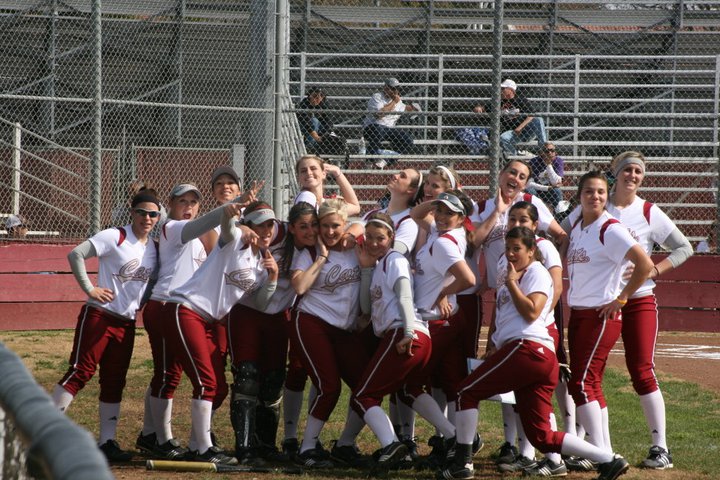
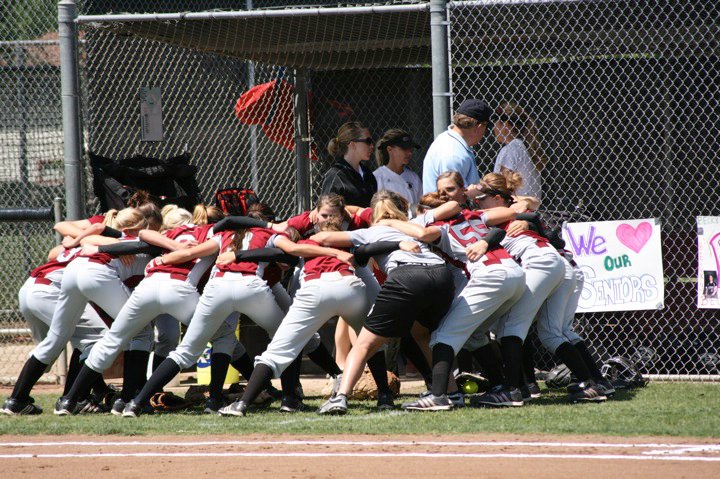
We’ve all been there before, that early, cold, 8:00am game. You’re tired, you’re groggy, you’re shivering, and your cleats are soaked with morning dew. I understand how hard it is to be there, but this is the moment when your teammates play a big role.Penn State softball homerun huddle You get to come out here and hang out with your best friends first thing in the morning. That’s the aspect that makes those 8am games fun. In life, when the going gets tough and you hit a wall, it’s your family and closest friends that get you by, right? Those are the people you turn to. It has to be the same way out here, on this team. This is a part of your family. When things get rough out here, you turn to your neighbor, you work hard for her. Your bond with her is so strong, that you strive team cohesion chicoto make her look good at every opportunity. You sacrifice yourself to promote her success. That’s when we will excel as a team, and you will excel as individual players. When we commit to being  “all for one and one for all”. When nobody cares who gets the credit. That’s when those special, unforgettable, incredible moments happens. That’s where championship teams and players are made; that’s the foundation. Team cohesion is an essential ingredient to success.

Team cohesion applies in life as well. If we all cared a little more about the people around us the world would be a better place. If we helped each other out without needing recognition for good deeds we do. We could truly excel as a society and grow as social beings. Selflessness is an invaluable trait. So start here, on the softball field, for your teammates.

Quote of the day:

“A candle loses nothing by lighting another a candle. That’s what you guys are here to do, light each other up.”

Sports Psychology in the Classroom

Posted on

I am currently working as an aid in a special education elementary school classroom. The children I work with are between 8-12 years old and have behavioral issues or learning difficulties. Today I was working one on one with a little boy who really struggles with math.Math-problems-dyscalculia He gets frantic and starts to guess at the numbers, function signs, and eventually answers. Numbers just come chaotically flying out of his mouth with no real reasoning behind them. For example, when asked what 6 minus 5 equals, his first instinct is to shout out “7”, then “2”. And so on.  Everything he does is a guess. He never takes a moment to allow his brain to process the numbers and give a well thought out answer. I quickly noticed this, and my sports psychology training instantly kicked in.

I took a moment, told him to take a deep breath and really look at the numbers we were dealing with. After a few deep breathes, he blurted out, “I can’t.” “I don’t know.” I then made him practice some positive self-talk. Out loud I had him say, “I can do this.” “I know my numbers.” After repeating these mantras a few times, and deeply breathing, he began to read the problem images-42out loud correctly. He slowly read the numbers and grabbed his counting chart. He correctly identified the numbers in the problem, and which way to move on his chart for subtraction.  He looked up after he counted, and said, “1?”. I then said, “Do you think you did the problem correctly?”. He said, “yes”. I said, “So tell me confidently you know the answer is 1.” He then proudly said, “1!”.

We then went on to do 15 minutes of solid relaxed math and he began to learn rather than guess. It’s a moment that will forever resonate with me, and further my belief in the power of Sports Psychology.

Quote of the day:

“Just Breathe”

Sports Psychology Skeptics

Have you ever been talking to someone and you start to get the feeling they are just humoring you? Listening and agreeing with you to merely be polite, rather than actually buying into what you’re saying? Well, I get this all the time when it comes to Sports Psychology. I constantly receive that polite smile and nod we’ve all been taught since we were children.

In a country where our media is continuously glorifying old school coaches who yell, scream and punish their players to victory; a lot of people find the field of Sport Psychology a waste. Even the entire field of psychology tends to get a bad rep.  You can really get a sense of MV5BMTczNTA2MDc0OF5BMl5BanBnXkFtZTYwMTg4MDY2._V1_SY317_CR1,0,214,317_this negative perspective when talking about psychological disorders, like depression. The general consensus of American society is that people need to just pick themselves up and get over it. They don’t see these disorders as real illnesses, like the flu or cancer. But they are! The mind and body are completely intertwined; the way you physically feel affects the way you think, and the way you think affects the way you physically feel. For instance, have you ever had a bad dream and woke up sweating with a racing heart? Your physical body was simply lying there sleeping, however your mind encountered something so real in its subconscious it caused your body to have a physical reaction. Stomach Ulcers. A physical ailment created by an overly stressed and worried mind. In our society today we are battling an obesity epidemic. Why? Everyone knows that eating nutritiously and exercising are the keys to a healthy weight, so why do we have such a problem with obesity? It’s the mental part of it, the motivation, and the self-control we struggle with.

This is the epitome of sports psychology. Enabling your mind and body to work together to be the best possible version of yourself you can be. Sports psychology teaches your mind to work for you, not against you. It’s easy, while exercising, for you to think I’m tired, I’ve done enough, lets’ quit for the day. Sports psychology trains your mind to push your body to the next level; it trains it to say, just a little bit farther, you got this.

Most people assume Sports psychology is an asset that athletes can only use when they are in a slump or a rut. However, it’s something sport_psychologyathletes can use all the time. In a competitive league where all the athletes have elite skills, the one thing you can have over your opponent is a mental edge. Athletes can have a great game one-day, and a terrible game the next. Why? It’s not their physical skills that drastically decreased in 24 hours, it’s their mental approach that changed!

The best of the best use sports psychology to harness their greatness, maybe it’s just the edge you need to step up your game. Train your mind to work for you!

Quote of the day: 

“What’s above the shoulders is more important than what’s below” Ty Cobb

Care First

In order to get the most out of your athletes, you must care about who they are as people first. It’s a very simple rule, but it’s easy to get caught up in competition and forget it. I had the same coach from the age of 10 to the age of 18. I owe most of my success, and skill level to him. However, the thing I remember the most, is that he cared. He supported me and believed me, not only as an athlete, but also as a person. I wanted to work hard for my coach because I knew how much he believed in me. I didn’t want to let him down.

Creating a caring relationship also makes criticism easier to handle. I knew that when he was criticizing my game, he still enjoyed me as a person. This is a hard concept for youngerimages-28 players to grasp. Most youth players take criticism personally and think their coach doesn’t like them if they correct them often. This personal relationship helps them to distinguish the difference between criticism and dislike.

Although I’m terrible with names and faces, I make a prominent effort to remember my players as quickly as I can. I also like my players to fill out an “About Me” form. It’s a basic questionnaire with details on their favorite things, goals in life, past softball experiences, and unique things about them. Not only does this help my players to feel more comfortable around me, but it also helps me put names to faces.

The better they feel, the better they will play. You as a coach play a huge role as to how they feel as people. It gives athletes great confidence and self-esteem when they are certain their coach appreciates them as a human being. They’ll come to you for more than just softball, down the road they will probably seek advice on life choices from you. I know my coach is someone I still turn to, and I haven’t played for him in almost 6 years. Strive to make a difference in not only their softball skills, but in their life skills.

 Quote of the day:

“They don’t care how much you know, until they know how much you care”

It’s Okay to Make a Mistake

Posted on

“It’s okay to make a mistake.” Just say that to yourself. “It’s okay to make a mistake.” Again. “It’s okay to make a mistake.” Do you feel more relaxed? I sure do. Think about how much stress would be relieved if your boss, or teacher said, “’ It’s okay to make a mistake today.” I suddenly don’t feel so panicked about completing the task at hand. It’s almost as if the possibility of making a mistake has completely left my mind.

In any situation of life, giving your best effort is a scary task. Contemplate this. If someone tries as hard as they can to complete a task, and they can’t; they fail, they simply weren’t good enough. That’s a hard pill to swallow.  In many cases it’s easier to lie to ourselves. By giving half the effort, we always have an excuse to fall back on. “Well if I tried harder I probably could’ve done it.” Sports is the perfect place to learn to deal with failure, real baseball-error-1failure. Giving your best effort with no excuse as to why you failed. It’s one of the only parts of life where failing really doesn’t matter. Your team may loose the championship if you drop a fly ball, but the world won’t end, no one will lose their job, and life will go on tomorrow. Jim Thompson in his book Positive Coaching says it best, “One of the great things about sports is that it can give children the chance to experiment with making gigantic efforts without horrible consequences when they fail. They can see how it feels to give everything they have to a task, something a surprising number of people don’t ever have any experience with. “

If we never learned to deal with failure, we would have never learned to walk, ride a bike, or read. As children failing was common. We were used to failure, and it didn’t deter us much. As we grow older we tend to stop learning as much because our willingness to fail has greatly decreased. Bring that youthful mindset back to your players by simply telling them, “It’s ok to make a mistake.” Like John Wooden says; “I’m positive a doer makes mistakes.” If you want your athletes to continue to grow, improve, and develop as players, they will make mistakes. So let them.

For coaches who want to develop players as people as well as athletes this is a great principle to instill. It also gives you an out as a coach when you make a mistake. It allows mistakes to simply be learning situations and nothing more.

Quote of the day:

“Believe in the miracle of the second chance.”


Concentrating on Focus

Focus, what is focus?! Athletes have been harped on to focus since the beginning of competition. It’s one of the most common phrases we hear in sports. But, what is it? When yellingasking your athletes to focus, what are you actually asking them to do? Can you write out 5 simple steps to achieve the focus you’re asking them to possess?

At first I was perplexed by this question, how can I paint vivid guidelines for my players to follow in order to attain the focus I’m asking them to have? I found my answer within the definition of concentration. The definition of concentration in a sport or an exercise setting involves four parts; Selective attention, maintaining attention focus, situational awareness, and shifting attention focus.

Selective awareness is the act of focusing on relevant environmental cues. It’s the physical process of eliminating irrelevant cues from your realm of attention and only selecting the relevant cues to concentrate on. Once an athlete has mastered a skill, they no longer have to consciously think about it while they are performing it. For instance, younger athletes are taught to drop step as a first step to any fly ball. With more practice and experience, that first step becomes second nature, done without thought. Having these second nature habits allows athletes to pay attention to other parts of the game.

Maintaining attention focus is the ability to maintain concentration throughout the entire game. This is tough because studies show the average time thoughts stay on target is about 5 seconds. Some of the greatest athletes earned their reputation not on pure talent, but the ability to stay focused in competition. Tennis player Chris Evert never had the best physical ability, but she never let a bad line call, missing an easy shot, or crowd noise, affect her. Concentration was the key factor that made her a champion.

Maintaining situational awareness is an athlete’s ability to understand what is going on around them. It’s the peripheral vision of concentration. This ability allows players to size up game situations, opponents, and competitions to make the right decisions in play.

Shifting attention focus is the ability to be flexible with attention; being able to switch one’s focus depending on what the situation calls for.

Think of Concentration as a personal spotlight. Athletes have to know where to point their 133spotlight, how narrow or broad to make the beam of light, and be able to switch it from place to place quickly, in order to focus on the correct things.

Researchers have found that when studying elite athletes in their most exceptional performances, three of the eight key components of their performance were related to concentration.

1) Being absorbed in the present and having no thoughts about the past or future.

2) Being mentally relaxed and having a high degree of concentration and control.

3) Being in a state of extraordinary awareness of both their own bodies and the external environment.

155991

It has been proven that expert athletes, compared to novice athletes, have a different focus in game situations. Exp

ert players are able to disregard irrelevant stimuli and focus on task-oriented things, rather than the outcome of the task. This is proven by the study of eye movements in experts and novice athletes. A perfect example is the basketball player Magic Johnson who was known for his no look passes. He used advanced cues to know what his teammate’s future moves would be.

Focusing on the wrong cues, is one of the biggest problems for athletes. It’s not that they lack the ability to focus, but their focus is concentrated in the wrong area. Sometimesathletes get caught up in focusing on internal worries and concerns, past experiences, future events, the pressure of the game, and body mechanics.

Jim Thompson, the author of “Positive Coaching” brings up a great perspective in concentration. Most athletes are consumed with trying to avoid looking dumb. They are focused on not making a mistake, which is actually causing them to focus solely on making mistakes.


Quote of the day:

“When I’m training I’m focused… by focusing all the time on what you’re doing when you’re training, focusing in a race becomes a by-product.” -Orlick and Parintons landmark study of Canadian Olympic athletes   

Team Cohesion… Do You Have What It Takes?

Lets start out with a simple definition. In the perspective of sports psychology, team cohesion is defined as: A dynamic process reflected in the tendency for a group to stick together and remain united in the pursuit of its goals and objectives. However, underneath this definition there are two separate aspects of team cohesion, social cohesion and task cohesion.  Social cohesion is the interpersonal attractions among group members, or in other words, how well your players get along in a social setting. Task cohesion is the degree to which group members work together to achieve common goals and objectives. Both are of the up-most importance in having a successful season. In fact, in a survey of 65 U.S. coaches who participated in the 1996 Atlanta and 1994 Nagano Olympic games, team cohesion was identified by the coaches as one of the three top factors influencing success at the Olympics. (Coaching the Inner Edge, Vealey, 2005)  It’s logical for cohesion to be such a strong factor to success in team sports, we are forced to work together to win, it’s impossible to win a team sporting event by yourself.

Success and cohesion

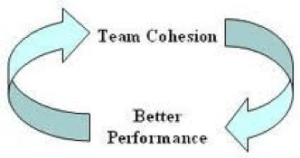
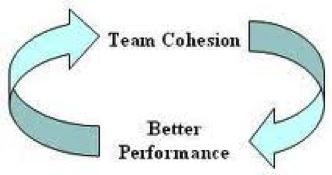
  • Performance and cohesion are circular; they will both result from each other. Team cohesion promotes success on a team, and success promotes team cohesion.
  • More for female teams than male teams

A great example of task cohesion is the “V-formation” geese fly in. They fly in this formation because when the front goose flaps its wings he creates an updraft for the goose directly behind him, allowing them to use a lot less energy to fly. When the lead goose gets tired he falls to the back and another geese takes the lead position. It is said that geese can fly 71% farther this way then they could alone. People who share a common objective or goal, can attain that goal more successfully and easily if they collaborate with one another. It is even noted, that if a goose is wounded and falls out of formation, two other geese will follow him, and stay with him until he can re-join the formation again, or until he dies.

What coaches must realize is that team cohesion is something that ebbs and flows, once you have it doesn’t mean you are automatically going to keep it. It is something that must constantly be worked on, just like the fundamental skills that are worked on everyday in practice. Teams go through stages as they become more cohesive; forming, storming, norming, and performing. These stages aren’t linear, a team may reach norming, and then fall back into the storming stage.

Forming: People are starting to get to know each other, sizing each other up, familiarizing themselves with each other. Interpersonal relationships are formed, team structure is developed, people are constantly comparing themselves to others. It’s basically the “getting to know each other” stage. A great example of this is on the TV show “The Real World”. In the first couple of days there are a lot of questions asked, deciding on whom to room with. Then on about the 3rd night drama, or conflict, happens; they enter the storming stage.

Storming: the storming stage is characterized by rebellion, resistance to control, interpersonal conflict, looking out for self playing time, why am I not starting uncertainties arise, and cliques start to form.

Norming: Hostility is replaced with development towards solidarity, cooperation, and a general consensus of working together towards goals.

Performing: This stage is the ultimate goal in team success. There is no  self-channeled energies, players aren’t thinking about themselves anymore. It’s all about their teammates and how they can succeed as a group. In this stage peak performance is possible. The team is able to solve problems without personal feelings being threatened. There is no bitterness about playing time, players understand their roles, and understand what is best for the team. It is said that most teams don’t get here, this stage is usually reserved for Olympic gold medalist teams, or world series champs.

Sometimes as a coach its hard to tell where your team might be within these stages. When I was coaching at the junior college, I actually gave my players this information and asked them where they thought we were. Everything was confidential, and it was very beneficial for me, as a coach, to hear individual perspectives and combine them together to distinguish the big picture.

In order to create team cohesion, the entire team must be deeply committed to engaging in self-reflection, honest and open dialogue, and the behavioral changes necessary to sustain an optimal team climate. Show your players that if they are a T.E.A.M. they will achieve more;Together Everyone Achieves More. Although we’ve all used and heard the quote  “there is no I in team”, there actually is, and we like to refer to that “I” as T.R.Y. Take Responsibility for Yourself. Each athlete must be doing his or her part to nurture a cohesive team culture. Every athlete on a team must T.R.Y. for T.E.A.M. to happen. Remind your players that they aren’t just friends, they’re teammates. Being a teammate gives each athlete a special status, and it gives each of their teammates the responsibility of supporting and respecting each other. There are times when your players will have conflicts,and that’s not always a bad thing. Teach them to view conflict as a wave, it can have the potential to knock them down, or sweep them forward. An argument that is resolved results in greater team growth, unlike an unresolved issue that is swept under the carpet and left to boil and add frustration.

As a coach, you need to help your athletes create an atmosphere where they can push each other to their limits. An atmosphere where they can challenge each other to work harder without anyone feeling threatened. Encourage your players to verbally appreciate their teammates efforts when hard work is being demonstrated. By hard work I don’t necessarily mean success, players who are working hard and struggling, should be verbally recognized by their teammates too. There will be times when some of your athletes start to slack off, create an environment where their teammates can respectfully motivate them to work harder. Inspire your players to pick each other up when they fail, and congratulate each other when they find success.  Your team will get so much more out of each other than we as coaches ever could.

So what does this atmosphere look like on a day to day basis at practice? Players are competitive at practice every day; they try to out due each other. They are disciplined and work their hardest with out slacking, even when the coaches aren’t watching. Everyday they are personally committing to creating an environment where team chemistry can thrive. There is constant chatter between athletes, encouraging, congratulating, and motivating each other throughout practice. Players are giving their all, even during the  basic mundane drills to ensure their game is fundamentally strong. They are focused and cognitively aware at practice to guarantee that they are mentally strong.

Quote of the day:

“I’ll do whatever it takes to win games, whether it’s sitting on a bench waving a towel, handing a cup of water to a teammate, or hitting the game winning shot”

Baring it all

My world from my perspective.

One Game, One Love.

Coaching perspectives and life lessons of a Sports Psychology M.A.

Live Love Sport

Improving your mental game

Secret Life of a Startup

Some things you can't complain about at work

M I Initiatives

Belief in Human Potential