Category Archives: My Experiences

Re-discover The Game You Love

Posted on

In one of my classes last week, I got the opportunity to hear Coach Fogel, the Chico State Womens Head Basketball Coach, speak about his experiences within sport. He got to discussing youth sport and how ridiculously competitive it has become over the years. Kids used to just go outside and play pick up games with their friends. Now youngsters are competing for spots and driving two hours to merely get 480177_10151827872848508_988127512_nthe chance to play in a few games. Wouldn’t kids be better off getting 500 repetitions in their front yard with their friends? Youth sport has become obsessed with getting kids to the next level with the sole goal of eventually showing them off to college recruiters. Where did just playing for fun go?

Pursuing softball as a collegiate career caused me to take the game seriously at a young age. I have been playing highly competitive ball on multiple teams since elementary school. Although I began playing the sport because it was fun, I continued to play because I enjoyed the competitive aspect. I found pleasure in mastering the skills of the sport and demonstrating competency through competition. Practicing, or “playing”, became a habit. It was just something you did. You suited up, worked your hardest, and fine tuned your talent. To an elite athlete, that’s fun. Over time your mindset gets confined into thinking that playing softball always has to be productive. I had lost the sense that this is a game, something kids do for fun just like four-square or dodge-ball. For me, softball had been taken out of that category. It was a sport, and it needed to always be taken seriously.

Just recently, a friend of mine put softball back into perspective. He had challenged me to a dual; I was to pitch, and he was to attempt to hit off me. Challenge accepted. We went down to the local high school with my dad and went head to head. Wow, pitching was no longer effortless like it used to be. But regardless, I was still triumphant for the most part, and best of all; we all had a blast. It was fun to 189082_1883561375478_3289214_njust get outside, move, and throw a ball around. We just enjoyed the natural rhythm of the game on a beautiful spring day. This experience completely revived my love for the game of softball. A physical activity I can engage in with friends to pass the time. In fact, the very next weekend I drove up to Folsum to visit an old teammate and we spent most of the day on Saturday playing softball. It was silly and carefree, and brought back all those feelings that made me stick with the sport in the first place.

What have you been missing out on? Get out and go play!

Quote of day:

“Life is more fun when you play games”-Roald Dahl

Sports Psychology in the Classroom

Posted on

I am currently working as an aid in a special education elementary school classroom. The children I work with are between 8-12 years old and have behavioral issues or learning difficulties. Today I was working one on one with a little boy who really struggles with math.Math-problems-dyscalculia He gets frantic and starts to guess at the numbers, function signs, and eventually answers. Numbers just come chaotically flying out of his mouth with no real reasoning behind them. For example, when asked what 6 minus 5 equals, his first instinct is to shout out “7”, then “2”. And so on.  Everything he does is a guess. He never takes a moment to allow his brain to process the numbers and give a well thought out answer. I quickly noticed this, and my sports psychology training instantly kicked in.

I took a moment, told him to take a deep breath and really look at the numbers we were dealing with. After a few deep breathes, he blurted out, “I can’t.” “I don’t know.” I then made him practice some positive self-talk. Out loud I had him say, “I can do this.” “I know my numbers.” After repeating these mantras a few times, and deeply breathing, he began to read the problem images-42out loud correctly. He slowly read the numbers and grabbed his counting chart. He correctly identified the numbers in the problem, and which way to move on his chart for subtraction.  He looked up after he counted, and said, “1?”. I then said, “Do you think you did the problem correctly?”. He said, “yes”. I said, “So tell me confidently you know the answer is 1.” He then proudly said, “1!”.

We then went on to do 15 minutes of solid relaxed math and he began to learn rather than guess. It’s a moment that will forever resonate with me, and further my belief in the power of Sports Psychology.

Quote of the day:

“Just Breathe”

Game Breaks, a Chance to Connect.

Posted on

Through out my career as an athlete, I’ve always disliked the practice of keeping athletes in the dugout between double-header games. A lot of coaches at the collegiate level demand that their athletes stay in the dugout between double-header games; this takes away the opportunity for them to socialize with family members and friends who have come out to support them. The reason behind this practice is to keep the athletes focused between games. This never resonated well with me. It is impossible for any human being to stay focused 218090_1770503336280_4685399_nfor two entire games including the lapse in competition between games. It is said that the human mind can only truly focus for around 10 seconds at a time. If this is true, we are constantly going in and out of focus throughout the game. If we are able to do this through out the game, surely we can break focus to eat a snack, visit with our fans, and then regain focus when it’s time to warm up again. That brings up another great point, warm ups. I’ve never watched a team go straight into the second game after a break without warming up. There is always at least 10-15 minutes of warm up before that second game. This is the perfect time to get mentally prepared for game 2.

“Between the White Lines”, a documentary that follows the UCLA team in their 2008 season, head coach Sue Enquist sheds some light on this topic. She says, “It’s not about winning its about the process.” In the clip of the movie she talks about enjoying the process of getting where you are going. A big part of this was including the families in the journey of UCLA. Without the support of the families, the players wouldn’t be where they are today. It was so important to Coach Enquist that the parents and siblings felt like a part of the UCLA team.

Sometimes fans drive hours to see athletes play, and they can’t always stay for both games. I think it is crucial to allow athletes to quickly visit these people between games. I can only see benefits with this practice. The fans feel as if they are apart of the experience and the 223244_1770549497434_2760203_nteam. The athletes feel rewarded by having fans who are there to support them. It allows the players to get perspective, this is just a game, they can relax for a moment and enjoy themselves. For those players who aren’t starters, or didn’t play, this is a moment for them to feel appreciated even though they weren’t necessarily apart of the game.

Athletes should be able to return to their optimal arousal level after taking a break. If your athletes can’t, they need to learn proper arousal and relaxation techniques.  Let them visit with their family and friends between games, and teach them to mentally prepare themselves during warm ups.

Quote of the day:

“It’s not about winning or losing, it’s about enjoying the process.” -Sue Enquist UCLA Softball

Sports Psychology Skeptics

Have you ever been talking to someone and you start to get the feeling they are just humoring you? Listening and agreeing with you to merely be polite, rather than actually buying into what you’re saying? Well, I get this all the time when it comes to Sports Psychology. I constantly receive that polite smile and nod we’ve all been taught since we were children.

In a country where our media is continuously glorifying old school coaches who yell, scream and punish their players to victory; a lot of people find the field of Sport Psychology a waste. Even the entire field of psychology tends to get a bad rep.  You can really get a sense of MV5BMTczNTA2MDc0OF5BMl5BanBnXkFtZTYwMTg4MDY2._V1_SY317_CR1,0,214,317_this negative perspective when talking about psychological disorders, like depression. The general consensus of American society is that people need to just pick themselves up and get over it. They don’t see these disorders as real illnesses, like the flu or cancer. But they are! The mind and body are completely intertwined; the way you physically feel affects the way you think, and the way you think affects the way you physically feel. For instance, have you ever had a bad dream and woke up sweating with a racing heart? Your physical body was simply lying there sleeping, however your mind encountered something so real in its subconscious it caused your body to have a physical reaction. Stomach Ulcers. A physical ailment created by an overly stressed and worried mind. In our society today we are battling an obesity epidemic. Why? Everyone knows that eating nutritiously and exercising are the keys to a healthy weight, so why do we have such a problem with obesity? It’s the mental part of it, the motivation, and the self-control we struggle with.

This is the epitome of sports psychology. Enabling your mind and body to work together to be the best possible version of yourself you can be. Sports psychology teaches your mind to work for you, not against you. It’s easy, while exercising, for you to think I’m tired, I’ve done enough, lets’ quit for the day. Sports psychology trains your mind to push your body to the next level; it trains it to say, just a little bit farther, you got this.

Most people assume Sports psychology is an asset that athletes can only use when they are in a slump or a rut. However, it’s something sport_psychologyathletes can use all the time. In a competitive league where all the athletes have elite skills, the one thing you can have over your opponent is a mental edge. Athletes can have a great game one-day, and a terrible game the next. Why? It’s not their physical skills that drastically decreased in 24 hours, it’s their mental approach that changed!

The best of the best use sports psychology to harness their greatness, maybe it’s just the edge you need to step up your game. Train your mind to work for you!

Quote of the day: 

“What’s above the shoulders is more important than what’s below” Ty Cobb

A Learning Experience

The thing I love most about the sports arena, is the opportunity to continue learning. The information in sports is constantly changing, re-arranging, and updating itself. There are vast new strategies, techniques, and philosophies arising out of the woodwork everyday.  Something I’ve done to capture the learning experiences and important instances throughout my career is to write down moments that resonated with me along the way.

During my collegiate career as an athlete, I wrote this entry:

Yesterday we had a rough practice, especially at the end. We couldn’t catch the ball or  throw it to our spots. Coach shut down practice because we couldn’t pull it together and sentsoftball-error everyone home. In our huddle at the end of practice coach said that something needed to come from within, that we shouldn’t be ok with how we were playing. Then went on about how we need to stop saying, “it’s alright, get the next one”; we needed to expect more out of our teammates.  After practice we all carried on as normal laughing and singing and went on our way.

I was laughing and singing, but on the inside, I was pissed. I should have been the one to keep the team motivated to keep trying and work harder. That should have been me; I failed in my duty to make the team as good as they could be. I also felt like I got called out directly because coach had specifically  referenced my “it’s alright, get the next one” comment. But to me I always expect my fellow teammates to be giving 100% because I always aim to. So if my teammates are giving a hundred percent and just can’t get it right, to me, you should shake off the previous play, and focus on making the next one better; in other words, “it’s alright, get the next one.”

The next morning at workouts, coach pulled us together before we started anything.  Coach talked about how we acted after practice ended badly yesterday. How we carried on with our normal laughing and singing as we packed up our stuff; obviously frustrated that we didn’t outwardly convey how bad practice went. Coach also threw in how our ranking had fell from the previous season. Coach talked about how four years ago our program was a losing program and everyone on the team was ok with it. She compared us to them. This is how that made me feel:

Gall Huddle

(Frustrated.  As a player I always have a smile on my face I never let anything get to me, that’s how I am. That’s how I always am. How often do you see me drop my head, how many home runs ruin my attitude and eventually my game? None, never. I don’t act on the outside, I react on the inside. Give me a second chance and you’ll see the initiative I have to motivate myself to be better. Am I supposed to break away from who I am, and throw my glove to prove that I’m upset? Do you really need to see me upset to know that I am? Have I not shown you that I love this game, and only want to do what will make me and my teammates better?  Can’t you trust that I want to do better. You preach trust. I trust you, respect me, and trust me back.)

In wanting us to show that we care, it seemed as if our coach was asking us to hang our heads. To me, it was like she was breeding bad attitudes. In a game, if I make an error and hang my head it is not going to do any good for myself or my team. So why would I hang my head after a bad practice? It’s like that quote, “it’s not about how many mistakes you make, but how you react to each mistake.” Of course I am going to come out the next practice and give everything I have. I had planned to step up my vocal game, and be more motivating to my teammates, hoping to inspire them to play at their best potential during practice. But, we were reprimanded before we got to show how we had re-focused and were dedicated to making our team better. Also, by just ending practice the day before, coach gave up on us, the exact opposite reaction coach desired from us as players. Be a model, not a critic. Throwing in the ranking stats to the pre-practice speech was supposed to provoke us to work harder; to prove to ourselves we belonged here, and to prove those other teams wrong. However, when faced with a challenge in practice, our coach gave up and ended practice. My travel ball coach would’ve said something along the lines of, “Do you guys want to be here or do you want to go home? Because you’re playing like shit.” He would have given us the chance to make the decision to not accept the way we were playing. The way he does it achieves the goal of making it come from within, because we made the choice to stay, yet it also is slightly harsh and gets the point across in a quick and straight to the point matter. Our collegiate coach wanted someone to step up; maybe I should have said, “no coach I don’t think we should end practice I think we should stay here and work through it” Although, I also didn’t want to disrespect my coaches decision to end practice. But I should of.  I should’ve asked if my team wanted to stay and work on it, that’s where I failed.

229587_1043180913674_2361_n

Looking back I have mixed emotions reading this. In my own personal philosophy I will never end practice early, mostly because I know how frustrating that is as a player. However, I do understand how easy it is to misinterpret a persons actions after an unsuccessful outing. As a coach I have to retrain my brain, and keep myself from judging my players after a bad performance or loss. I have to remember that letting it go is a positive quality, even though it can come across as if they don’t care.

If I had been coaching my own collegiate team when this situation arose, I think I would have brought the team together and focused on something else. I would have implemented a team bonding activity, or discussed strategy, or even played a fun game. I would do something to break the tension, let every ones mind relax. After achieving that break, I would have gone right back into the drill we were struggling with, hoping to end practice on a positive note.

Sport is so important to collegiate athletes, it’s a big chunk of their life, and it’s continually on their mind. The way a practice ends is important, their perception of the practice and the feelings and thoughts that accompany it are stuck with them until the next time they meet. Leaving on a sour note takes a toll on athletes. It is a goal of mine to have my players always leaving practice feeling confident and positive. I hope they leave excited to come back.

Quote of the day: 

“People don’t care how much you know until they know how much you care” – John C Maxwell
Shake it off and Stay Positive


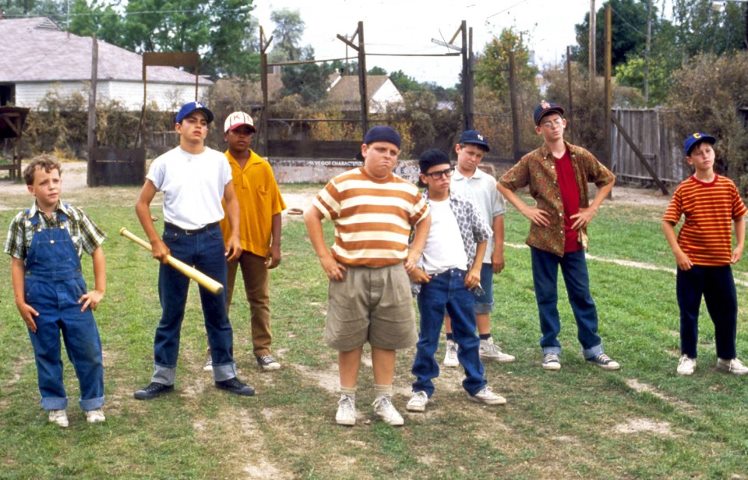
Playing tournament softball for 12 years of my life taught me one of my most important life lessons; to shake it off and stay positive. Playing tournament ball throughout my youth allowed me to spend my weekends playing 4-8 softball games. Over the course of a weekend tournament we would win some games and lose some games; I would play well in some games, and not so great in others. But no matter what the outcome of a game or appearance at the plate was, I was forced to shake it off and be prepared for the next game, or outing on the mound. It’s frustrating to go out and swing and miss at the last 9 pitches you’ve been thrown, or hit 4 of the last 5 batters you’ve faced, but getting angry, throwing your helmet, or crying won’t make your day any better for yourself or your team. As hard as that is to hear, it’s true. Do you think your team gets pumped up when you slam your helmet to the ground before running out to play defense? No. You just bring the rest of the team down with you and put the focus on yourself instead of the game. It may take some frustration out for you, but don’t be selfish, this is a team sport, it’s all about your team, not you. You have to learn how to constructively handle your failures. Softball is a game of failure; if you go up to the plate 10 times, get 4 hits and strike out 6 times, you are a damn good hitter. You would be batting 400. Failing is a part of this game, so learn from your failures and make an adjustment. Don’t dwell on the past, you can’t change it anyway. Instead of throwing a fit, try sprinting back to the dugout and screaming your head off for your pitcher or next batter up to the plate. This takes the focus off yourself and puts it back on to your team.  Don’t be selfish, give it all up for your team, always.

Quote of the day:

“Success is the ability to endure one failure after another with out the loss of enthusiasm” – Winston Churchill

Baring it all

My world from my perspective.

One Game, One Love.

Coaching perspectives and life lessons of a Sports Psychology M.A.

Live Love Sport

Improving your mental game

Secret Life of a Startup

Some things you can't complain about at work

M I Initiatives

Belief in Human Potential