Category Archives: Uncategorized

Passing the Torch – Servant Leadership

A former player of mine recently contacted me and shared an amazing piece of her coaching philosophy with me. Since my time as her coach, she has taken my place as the assistant coach at our local JC. I couldn’t be more proud of the thought and passion she puts into her coaching. Below is something she wrote for her players and I am absolutely in awe of her passion and talents. Great, great, job Taylor, you are going to make such an impact on the athletes you come into contact with.

coach_taylor“Did you push yourself to be great today? If you didn’t do it, we lost a day. And we don’t have many days to lose. It’s so easy to be average. It takes a little something to be special. Why be around average? I believe there are certain ideas that can push teams to greatness. Servant leadership. Having an attitude of gratitude. Selflessness. Humility. Let’s find a way to incorporate these acts into our lives, every single day. As John Wooden said, “It’s amazing what you can accomplish if you do not care who gets the credit.”

Ask yourself this: are you more concerned with the team’s outcome or your own personal outcome? Would you rather see the team win at the expense of you getting no hits with 2 errors? Selflessness wins games. Servant leadership wins games. And having an attitude of gratitude wins games. Do you understand what servant leadership is? Do you really understand what it means to put others first, and in doing so, genuinely want them to succeed? A servant leader focuses primarily on the growth and well-being of people and the communities to which they belong. If every person on this team promises to practice servant leadership, how could we fail? We will succeed because we will become better human beings in this process. For a team to be great, selflessness and humility are 2 necessary traits for a team to posses. People with humility don’t think less of themselves. They just think of themselves less. Often times in sports the bigger picture can be lost.

As a coach, my short-term goal is for this team to win games. I am competitive and passionate, and I want us to be the best. But my long-term goal is for this team to grow into amazing human beings and to be the best people we can be on and off the field. Our time is so short and it’s crucial that we incorporate these ideas in our everyday lives to be successful. We need to work harder at having an attitude of gratitude. We are so lucky that we were given this opportunity. At the beginning of every year, I make a promise to myself to cherish and enjoy every moment. I tell myself not to get caught up in the wins and losses, but to enjoy the moments with all of you special people. Time speeds by at an alarming pace. Sometimes we can forget to take a breather and enumerate what we have been given that we’ve forgotten or taken for granted.

Because of this, let’s all try to focus on the positive rather than the negative. Let’s start, end, and live each moment of the day in gratitude. Because after all, our time together is so short and you will never forget your teammates. You will forget the wins and losses. You will probably even forget the countless conversations you had with each other. But you will never forget the way your teammates made you feel. And for that, we should all be thankful. In the big picture, we are all moving towards the same goal. We are all holding onto the same rope, pulling that rope together in the same direction. So hold that rope tight, and be thankful you’ve been given the opportunity to be one of the special few to experience this special environment. Being a part of something bigger than yourself is such a special thing. And if you forget everything else, remember this: a player who makes a team great is more valuable than a great player. Losing yourself in the group, for the good of the group, that’s teamwork.

Thank you again Taylor for sharing, seriously, I couldn’t be more proud of you. You are going to go so far, and impact so many people. Keep up the incredible work, and thank you so much for keeping in touch and sharing your successes with me.

Quote of the day:

“We make a living by what we get, but we make a life by what we give.” – Winston Churchill 

Goal Setting Helps Athletes to Stay in the Moment

Goal setting is the most proven technique in sport psychology. It helps to motivate athletes and improve performance by enhancing confidence. Without goals, how can athletes know what to focus on? It’s like a road trip; if you don’t know where you are going how are you going to get there? Goals are the stepping-stones to dreams; they are the action plans; they are what you can do right now. Goals bring the future into the present.

In sport psychology there are three types of goals: process goals, performance goals and outcome goals. Process goals are those that focus on “how”; the process of how to execute a skill. For instance, keeping your head down on a ground ball or having a good follow through on a free throw.

Performance goals are those that focus on an individual’s performance. For instance, hitting the ball solidly on a line at every at bat, or hitting 90% of your spots as a pitcher.

Outcome goals, are the goals that all of us commonly set; I want to come in first place at the tournament. I want to get 4 hits today. They rely on other factors in order to achieve them.

Every type of goal is important. They motivate and focus us in various ways.

It’s important for athletes to set process goals; these are goals that keep athletes focused in the moment. In order to set motivating process goals, have your athletes focus on making their goals action based rather than outcome based. Their process goals should be things that they are 100% in control of, that way, when they do succeed they can take 100% of the credit. Athletes can strive for having four quality at bats rather than getting four hits. Meaning, athletes should focus on swinging at the correct pitches and putting good swings on those pitches. Focusing on the process will allow the outcome to take care of itself. Setting smaller goals, like this one, gives the athlete more feedback so they can see their results and let their confidence grow.

Outcome goals are what we all play for. They keep you motivated during the mundane practices. Those memorable championship moments keep people motivated in sport, so these goals are important too, as long as you have the steps to get there. For instant a good outcome goal could be to win the championship, but in order to get there athletes need to set and achieve process goals, like putting in 100% effort at every practice.

Goal setting reminds me of a quote by John Lennon; “Life is what happens when you are busy making other plans”. If athletes focus too much on outcome goals, and how successful they are in reaching those, they miss the process of getting there. In my experiences, most of my peers in college were so ready to graduate college and couldn’t wait to enter the real world. They forgot to realize how amazing the experience was along the way.

By focusing on process goals you can celebrate the little victories all game or all season long. After all life IS the little moments. It’s about compiling millions of happy moments to create a happy life. It’s not about the 3 or 4 major successes you have in your life; it’s about the life that happened on the pursuit to those major successes.

In life and in sport, enjoy the process of attaining the big goals, by setting some process and performance goals along the way. Sport psychology states that goals work by increasing, attention, persistence, effort and strategy. I’m pretty sure it has the same effect in everyday life.

Quote of the day: “Success is how you collect your minutes. You spend millions of minutes to reach one triumph, one moment, then you spend maybe a thousand minutes enjoying it. If you were unhappy through those millions of minutes, what good is the thousand minutes of triumph? It doesn’t equate… Life is made of small pleasures. Good eye contact over the breakfast table with your wife. A moment of touching a friend. Happiness is made of those tiny successes. The big ones come too infrequently. If you don’t have all those zillions of tiny successes, the big ones don’t mean anything.” — Norman Lear

My Coaching Philosophy

Posted on

As a coach, I want you to succeed. I want you to push yourselves and improve. I want you to love this game and come back to it time and time again. But first, I want you to be happy.

This is not just softball to me; this is life. When I ask you to tell me what makes a great player, I’m sure I would hear things like savvy base running, a strong throw, quick feet, and hand-eye coordination. But the characteristics I believe truly matter go much deeper than mere physical qualities and abilities. I think great athletes possess qualities like courage, persistence, selflessness, and patience.

Throughout my entire career, I’ve always heard that softball is an escape. But I never truly understood the essence of that statement until a few years ago when I was working as an instructional aide in elementary schools. I had just moved to a new city where I didn’t know many people, my romantic life was a bit rough, my graduate program was working me to the bone, and I was trying my best to adapt to living in a large city. Emotionally, I was struggling to get by on a day-to-day basis. At first, going to work was tough. I truly enjoyed my job, but I could feel myself going through the motions. I was physically there, but my mind was always wandering off somewhere else.

Watching my students fully immerse themselves in the daily joys of being a third grader made me realize that I should be doing just that with them. For Pete’s sake, my job consisted of hanging out with eight-year-old kids, coloring, and playing games. It was an amazing job to have. It was hard at first to really let go of life outside of work, but with practice, I was able to fully enjoy myself every day.

We miss so many of life’s wonderful moments by worrying about the past or future instead of living in the present. When I found myself doing this at work, I would make myself recite three to five things that were in my immediate present. Things like, “It’s a beautiful day outside, we are playing balloon volleyball, and I’m coloring in third grade again.” It shifted my focus back to what I was doing, got me out of my head, and allowed me to simply live in the moment.

I didn’t recognize its importance at the time, but softball is what got me through every speed bump I hit from ages 8 to 22. The game was always something that was there for me.

It was a place where I could forget the world and dive into the reality of improving as a player and becoming successful in a game I loved. The satisfaction of working hard, improving, developing relationships, and being a part of something bigger than myself allowed me to establish a healthy sense of self-worth. It was my escape and saving grace when the world got tough. It reinforced the notion that even when life gets tough, there’s always a piece of it worth fighting for, always something to enjoy.

With that said, here on this field, I want you to develop into the people you want to be. I want you to take this time to be selfish. Shut out the rest of the world and better yourself here.

Quote of the Day:

“The wins and losses will fade away, but the friendships and memories will last a lifetime.”

Choose Your Words Wisely

Posted on

We’ve all heard the saying, “It’s the little things in life that matter.” This statement couldn’t be more true for sport. The words coaches choose to use with their athletes can make the ultimate difference in how an athlete performs, and even how much they enjoy their sport.

Imagine you are on a basketball court waiting for practice to start. Your coach starts practice by saying, “Go ahead and take ten shots”. What does your mind’s eye see? A player standing at the freethrow line taking a few shots to warm up maybe?swish Now imagine If that basketball coach had said, “Go ahead and take 10 swishes”. Now what image do you get in your head? I happen to see shot after shot swishing through the bottom of the net.

The words coaches use can instantly shape the way an athlete’s mind views the task at hand. By using keywords like “swish”, it immediately increases their focus by directing the mind to concentrate on a precise desirable outcome. The mind automatically visualizes a ball swishing through a net which will actually help the player perform more successfully. Imagery is a popular sport psychology tactic that consists of a mental rehearsal through visualization. It’s been proven to be effective in improving sport performance at every level of sport, from novice to expert. Instructing athletes to “swish” the ball prompts the mind to do just this, visualize the outcome.

Most coaches, without thinking, constantly tell their athletes “Nice play”. I prefer to comment on my athlete’s effort. Here’s why: Telling an athlete you loved their effort rather than commenting on the outcome, puts the athlete in full control of their performance. They now understand that what you are looking for is hard work. Hard work trumps a clean play any day in my book. huddleTalented athletes can slack off at a practice and still have the chance to perform well. By rewarding the effort the athlete put in, you can reinforce the importance of working hard and improving skills no matter what skill level the athlete is currently at. You can also compliment the athlete on what specific mechanic they did well so they know how to be consistently successful.

As a coach choosing your words wisely can make a world of difference to your athletes.  Take into consideration the following sentence that was said by a coach after a 11-0 run rule victory. “ I just wanted to say sorry to you younger kids who didn’t get into the game; we didn’t score enough runs early enough to get you in”. This statement makes those younger girls feel as if they aren’t good enough to play unless the team is ahead by a bunch of runs. It implies that the coach doesn’t trust their talents to keep the game within reach. Instead the coach could say, “I just wanted to say sorry to you younger girls who didn’t get in the game, due to the high amount of runs scored the game ended in 5 innings and I didn’t have enough time to get you guys in.” The difference here is immense, especially in the minds of high school athletes.

As a coach, the words you say matter. It’s the smallest thing, but it makes the biggest impact.

Quote of the Day:

“It’s the little things that matter most”

Implementing Self Determination Theory

This past month at the 2014 AASP (Association for Applied Sport Psychology) Conference I had the privilege of hearing Edward Deci Speak. Edward Deci is a world renowned researcher who is most famous for his work with Self Determination Theory. Self Determination edwarddeciTheory states that athletes have three basic needs that need to be filled in order to foster intrinsic motivation; competence, autonomy, and relatedness. Intrinsic motivation is something we experience in instances where we are motivated to do something because we enjoy it, the task engrosses us, and we don’t require external rewards to keep our motivation. When athletes are driven by this type of motivation they tend to excel; when we love something we want to do it all the time and have the desire to improve. An atmosphere that fulfills the above needs for athletes is called a needs supportive environment. These are environments where athletes can truly thrive and reach their maximum potential.

Competency: Athletes need to be able to demonstrate their abilities in order to feel as if they are competent in their sport. Autonomy: Encouraging autonomy through self initiation and choice reinforces their internal drive by giving them more control over their progress and success. Relatedness: Showing athletes that they belong and are apart of something bigger than themselves fosters our universal need to belong and interact.

So as a coach how do you create a needs supportive environment that caters to your athletes needs SelfDeterminationTheoryand fosters intrinsic motivation? Below are a few simple ways coaches can do just that. As you read through the following examples keep in mind pressure is the number one killer of intrinsic motivation.

Relatedness:

Try to relate and understand your athlete’s perspective. Acknowledge their emotions and the way they see things. Listen to your players and validate the way they feel. “I know it’s hot out and you guys are working hard, I appreciate that.” “I know it’s boring to take 70 swings at a hitting station by yourself.” Let them know that you can relate!

Provide meaningful feedback. Be specific; a simple “good job” doesn’t inform the athlete which skill they performed well. Make sure you insert a specific aspect in your praise. For example; “That was great, you kept your hands inside the ball on that sports-vballlast swing.” Try to give feedback immediately after the action is committed. Giving feedback so quickly helps to reinforce specific skills as opposed to whole performances. By giving athletes meaningful feedback you are conveying that you care about their progress, your athletes will feel like their progress is an important factor in the teams success.

Give a rationale for requested behavior. If coaches offer reasons for the behaviors they request from their players, the athletes feel less controlled. On the team I currently coach, our players were braiding each others hair during our warm up time. As the coaches we told them this behavior was unacceptable. At first they were frustrated and angry; they wanted everyone to look uniform and ready for competition. After we explained that hair braiding needs to take place prior to warm ups because it’s distracting, they were more accepting of our rule change. They now understand that it is hard to mentally prepare to play a softball game when they’re physically focusing on braiding hair. Giving reasons for the rules and expectations of the team helps athletes to feel on the same level as the coaches, they are apart of the team, not being controlled by the team.

Autonomy

Encourage self-initiation and experimentation. Intrinsic motivation is derived from doing something because you enjoy it, and want to succeed or participate. Encouraging self-initiation and experimentation gives athletes control over their progress and success. Allow them to try new things, and find new ways to succeed. Let them be apart of the coaching process. Ask them what they think they should do to better their performance and then help them create an action plan to attain it. Make it their choice to get better.

Offer relevant choices. Reinforce the autonomy of your athletes by allowing them to make relevant choices. For instance, if you know you are going to work on both defense and offense at practice, why not let them choose which one they do first? Allow them to put together their own warm up routine, like I’ve mentioned before in my blog; Autonomy breeds pride. sport_laBarbera_06Pressure kills intrinsic motivation; try not to force your athletes to work hard or even participate. Give them the choice, they know what the consequences are but the choice to participate is completely up to them. The key to this approach is keeping emotion out of your voice. Implying you will be angry depending on the choice they make is the same thing as demanding they participate or work hard. Use an even tone and let them know the choice is up to them. When they do choose to participate, you are reinforcing their autonomy by encouraging self initiation.

Competency

Calibrate for optimal challenge. Athletes need to practice and compete at the edges of their abilities. This way they fail and succeed at a rate that keeps them motivated. Make sure practices, and the level of competition pushes your players but also allows them to achieve success. This threshold of success and failure reinforces their need to feel competent. They will be able to demonstrate their competency by improving and achieving success despite their failures.

Focus on indirect rather than direct competition. Indirect competition refers to athletes competing against themselves, whereas direct competition is when athletes compete against an opponent. When athletes compete against themselves, they focus on progress and being their personal best. There is less pressure in the situation and they can easily see their progress, in turn driving their motivation to keep progressing. I’m not suggesting that all direct competition is bad. It’s important that when athletes partake in direct competition, their personal best is acknowledged and you as a coach reinforce the parts of their performance they can control. Athletes can never control the performance of their opponent, they need to focus on their own personal performance to succeed and recognize their progress. I talk a little bit more about this in my blog: Where is Your Confidence Coming From?

Minimize use of controlling language. When athletes continually hear must, should, or other language that controls their actions, they feel as if they aren’t good enough to govern themselves. It also evokes pressure which again is an intrinsic motivation killer. Try to keep the controlling language to a minimum and let your athletes thrive.

They key to producing elite athletes is instilling a love for the game, something they will come back to over and over again simply because they love the sport.

Quote of the day:

“Somewhere behind the athlete you’ve become and the hours of practice and the coaches who have pushed you is a little girl who fell in love with the game and never looked back… play for her.” – Mia Hamm

Put Happiness First

03Our society is a little backwards. We say work harder so you’ll be more successful and that will make you happier. However when we work hard and achieve success, we then just push our expectations higher. So our brains never really get to revel in that successful feeling and immerse itself in happiness.

Why don’t we work backwards? Studies have shown that “happier” people perform better in many contexts. Doctors make quicker more beneficial decisions, and students perform higher on tests. This is because these “happier” people have more internal resources to dedicate to their successes, in other words they have fewer negative distractions. Research has done studies that ask participants to increase their happiness levels. This is done by learning to live in the moment, increasing gratefulness, engaging in random acts of kindness, engaging in meditation and regular exercise. If we could increase the happiness indexof our athletes they would have more personal resources to put into sport. We could help athletes enjoy their sport despite the outcome of competition.

Increase an athlete’s happiness? That sounds like quite the daunting task for a coach. I’m telling you it doesn’t have to be. In fact, it may actually make coaching easier in the long run. Here are a few simple things you can do to assist your athletes in becoming happier more productive assets to your team.

Living in the moment: As humans we tend to spend only 53% of our time actually living in the present moment. We are constantly worrying about or anticipating future situations or analyzing and reliving those in the past. We don’t give ourselves the opportunity to get lost in the present moment. Matt Killingsworth found that the more we let our minds wander, whether our thoughts are negative or positive, the less happy we tend to be. So how do we stay in the present moment and how will that improve sports performance? When you realize your mind is wandering and you aren’t focused on the task at hand, silently name 5-10 things that are positive and within your present experience. For instance if an athlete is at practice and they realize they are thinking about their weekend plans or last nights TV episode, they might recite these five things silently: 1) I am outside on a beautiful day and the sun is shining. 2) I am surrounded by teammates that I enjoy spending time cd_skatepark_getout_061611_32with. 3) I am playing the sport I love. 4) I am about to take a fly ball. 5) I feel confident in the way I’ve been performing at practice. These thoughts immediately bring the mind to the present and keep thoughts focused on the task at hand. This immediately increases the mental focus of athletes and helps them to perform at a higher level because they are using product thoughts to aid their body’s performance. Matt Killingsworth’s Ted Talk

Count your blessings: Expressing gratitude to someone else has been found to increase happiness by 25% according to research. Those who are thankful for the good things in their life tend to be more optimistic, energetic, empathetic, and generous. It’s easy to dwell on the negatives in this fast paced, ever changing, social media crazed world we live in. Give your athletes a chance to be grateful for the positive things in their life everyday before or after practice. Team members, as well as coaches, can share out loud 3 things they are grateful for, or you can have teammates partner up to share their gratitude for the life they are living. Being grateful for the way things are today is another way of living in the present moment and keeping distracting thoughts at bay.

Random acts of kindness: this-beautiful-random-act-of-kindness-was-photographed-give-this-awesome-guy-a-like-for-caringResearchers have conducted studies where they give participants $20 dollars. The participants are either told to spend that money on themselves or someone else. Results suggest that those participants who spent their money on other people were happier and more satisfied with their purchases than those who spent it on themselves. Happiness research has come to the conclusion that random acts of kindness leads to living a happier life. As a coach you can make this part of your team culture. Make it apparent to your athletes that generosity, selflessness, and kindness are highly valued on your team. After all they are key characteristics of a good teammate. Set up friendly challenges where athletes strive to outdo each other in the number of random acts of kindness they commit in a day. It can be things as simple as lending a stranger lunch money, giving a stranger a compliment, bringing a teammate a new hair accessory, or bringing a special snack for the whole team to enjoy after practice. These acts of selflessness will show the athletes that they are in this together. When someone is willing to sacrifice themselves for the good of the group others tend to feel more secure and are willing to put forth more effort. Knowing that their teammates are putting others before themselves will help the team come together and be stronger on their rise to victory.

Regular exercise: Since I am focusing on sports regular exercise is 4bb87f872f32423626104be6b8f010a5418f1c93something that you as a coach are already taking care of. However, sometimes the workouts we get as an athlete aren’t enough. Encourage your athletes to do more off the field, keeping our bodies healthy is a foundational step in attaining higher levels of happiness.

Meditation: I’ve never been a promoter of meditation but a Ted Talk I watched a while back gave me a new perspective. We all know it’s imperative that we let our bodies rest; sleep is the time when we recharge our batteries so we can function at the proper levels the next day. As athletes we stretch our muscles, and rest our bodies between practices and competitions in order to heal and reboot. However, we never give our mind this courtesy. Our minds are constantly going 100% all the time. We are thinking, worrying, wondering, focusing, calculating all day long, and then when we go to sleep we dream. Our minds never get a moment to shutdown and reboot. This is where meditation comes in. Giving the mind the break it needs can be the key to seeing the world and ourselves in a whole new light. Ask athletes to take ten minutes out of their day to do absolutely nothing; no mind wandering, no texting, no TV, no reading, just being. Ten Mindful Minutes Ted Talk

Using this philosophy and working “backwards” to success will show your athletes that you care about their well being. When an athlete knows that a coach cares about them as a person and not just an athlete that aids in the teams success, they are more willing to go above and beyond for that coach. Increase their happiness and in turn1247259.large increase their commitment to the sport, and their drive for success. Happier athletes are more productive athletes simply because they have more resources to put forth.

Quote of the day:

“Be happy for this moment. This moment is your life.” – Omar Khayyam

An Alter Ego as a Competitive Edge

Posted on

As a young pitcher my disposition was naturally cheery on the mound. I was smiley, and for the most part, completely relaxed. My personality Brian+Wilson+San+Francisco+Giants+Photo+Day+kRgjKI-PYv1lhelped me throw well and kept me calm in pressure situations, but I wasn’t exactly intimidating to the opposing batters. I lacked the intensity of a foo-man-shoe mustache that most MLB relief pitchers sported back in the day. My coach thought I needed a “fear the beard” edge over my opponents. His solution, sunglasses; every time I went on the mound I was ordered to wear sunglasses in an attempt to intimidate the batters I faced. This memory got me thinking; maybe the girls who need a little extra umph out there on the playing field could create an alter ego to release their inner all-star. Beyonce does it, why can’t we!

Sasha Fierce is the infamous alter ego of Beyonce Knowles that allows her to be sassy, sexy, and all kinds of fierce during her on stage performances. ‘When I’m onstage I’m aggressive and strong and not afraid of my sexuality. The tone of my voice gets different, and I’m fearless. I’m just a different person”-Beyonce.?????

Alter ego’s can be a source of mental preparation before taking the field. Instead of going through their mental routine before competition to prepare themselves to play, athletes could focus on transforming into their alter ego personality. This personality may be a little more intense, a little less outwardly emotional, and more self-confident than their normal self usually is. I’ve always felt that the competitive side of me is different than my everyday personality anyway so creating an alter ego may actually help athletes put their game face on.

Give your alter ego its’ own name and its own look.This new persona should be very vivid in your mind, see their body language and how they hold themselves. Know how this person would react in all situations, to failure, to distractions, to successes, and injuries. Even give your alter ego a background story. Where do they come from and why are they so unbreakable on the field. The more filled out this character is, the easier it will be transform into them at game time.

Pulling on this persona before competitions and practice will allow you to leave reality and step into work mode. Life distractions will seem more distant because they aren’t a part of your alter egos reality, they only know sport. Pulling on your alter ego suit will take some practice. Take a few minutes to step into your new persona just before practice and games. For a while you may have to re-engage your new persona during game breaks like Billy Chapel from For The Love of the Game, “Clear the Mechanism”. 

It takes just as much effort to mentally suit up as it does to physically suit up. Take the time to let your mind leave reality and enter the world of competitive sport. Maybe the best time to transform into your alter ego IS while you are suiting up. Visualize yourself changing into that person as you change into your practice gear or game day uniform. Let it be known to your teammates, they should be able to tell the difference between the normal you and your competitive alter ego. Commit to your new character, the less you break face, the easier it will be to become your alter ego when you need it.

Alter egos have helped many notable people in history to be the successes they became. Take the time to create the best athlete version of yourself you can, and next time you step out onto the field, GET YOUR GAME FACE ON!

 Quote of the day:

“I learned that courage was not the absence of fear, but the triumph over it. The brave man is not he who does not feel afraid, but he who conquers that fear.” – Nelson Mandela 

A Glimpse Into Two Different Mindsets

Posted on

I got the opportunity to spend a couple days with a JV softball team up in Sacramento this past season. I got to observe two practices and a game. I was taken aback by the passion, drive, and enthusiasm these girls have for their sport.

As a freshman in high school I played varsity ball and I never got to experience the JV level. These girls don’t have dreams of playing in college; they aren’t obsessed with beating out the girl next to them to get a look from a college coach. SHS_JV_Softball_undefeated2014These girls just simply love the game. They love to play and want to spend as many minutes on the field as they can. They eat up coaching and ask for more of it when they don’t get enough. Their sole desire is to improve. Every ounce of their mental capacity is focused on the task at hand. They are supportive of each other to a fault. No matter how unsuccessful a teammate is performing they are genuinely supportive. They are patient, kind, and extremely encouraging. This is the atmosphere I’ve been striving to instill in my teams for years. They really accept every player for who they are and aren’t judgmental of their skill level. They just want everyone to try their hardest all the time, and they do! They work hard without a peep from their coaches, it’s all them all the time.

It was an amazing display of a mastery climate created by the players themselves.

My biggest question is why? Why has this atmosphere been so effortlessly created on this team? I think the answer lies in the research of Carol Dweck; the difference between the growth and capacity mindset. Individuals who posses the growth mindset are constantly looking to improve, they believe that with hard work anybody can improve at anything. These people welcome failure, and challenges, because they are opportunities to learn and grow. Capacity mindset is a whole different ball game. These folks believe that abilities are set. You either have it or you don’t, there isn’t any real opportunity for immense improvement. These people avoid failure at all costs, they are constantly trying to put themselves in situations where they can show off their talents because they need to prove themselves. They need to reaffirm their abilities to others consistently because there is no room for improvement.

Without the pressure of having to prove themselves to a college coach, the JV girls are able to embrace failure and focus on learning and developing their talents. Where as the varsity girls get caught up in always trying to look the best so college coaches don’t notice their flaws or weaknesses.

226930_1041855400537_9933_n

Winning the NCS Championship my senior year of high school

This is a pretty broad statement; all varsity athletes have a capacity mindset and all JV athletes have a growth mindset. That’s not exactly what I’m saying. I’m inferring that maybe because most varsity athletes have been talented since they were kids, they may have been referred to as “natural athletes”. Well, as a natural athlete, the talent you have isn’t something you worked for, therefore you aren’t in control of improving it. However, athletes who weren’t always the greatest, probably weren’t ever told this, and they learned from a young age that they were going to have to work hard to be able to play ball at a competitive level. They learned that hard work and repetition lead to improvement.
Although I made varsity as a freshman, I was never considered a “natural athlete”. In fact, most thought I would never play in college. I had to work really hard for the successes that came my way. Looking back, I’m thankful that I didn’t have “natural talent”, it made me take control of my ability and push my way to the top. It’s something that still impacts my life today; I may not be the best at what I do, but I am constantly looking for opportunities to learn and better myself. Where I am today is just a starting point, I am in full control of developing my abilities to get to the top of my field.

Quote of the day:

“Don’t tell me how talented you are. Tell me how hard you work” Artur Rubenstein

How Stress Can be Helpful!

Posted on

Anxiety, we’ve all felt it. It’s the cringe in your stomach when you step up to the plate. It’s the feeling of clammy hands making it difficult to grip the club on the last hole. It’s the shortness of breath before taking a free throw shot. nervous-sweatingIt’s excessive perspiration ruining a shirt before a big speech. It’s a pounding heart as the starting gun sounds. It’s the body kicking into overdrive stimulating the fight or flight response.

The field of sport psychology has developed multiple approaches and strategies to fight the negative side effects of competitive anxiety. Relaxation techniques like deep breathing and progressive muscle relaxation aim to quiet the mind and the body, decreasing the heart rate and in turn quieting the racing mind.

However, a simple change in perception can be just as beneficial to controlling those pre-game jitters. Kelly McGonigal, a health psychologist, is known for taking research and turning it into easy useful methods for the everyday person to utilize. In her latest Ted Talk she speaks about how to view stress in a positive manner. I found her approach to work very well, especially in preparation for competition.

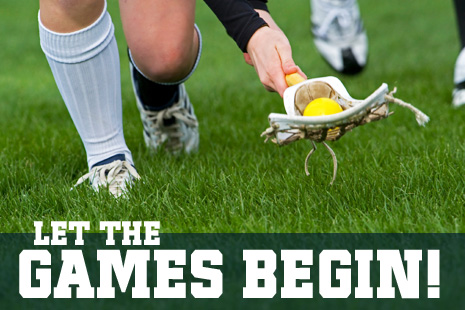
Most of us interpret the above stress syndrome as negative. We think, oh no I must be really nervous for this performance. But what if we started to view that stress response as helpful? If we thought, oh my heart is pounding and my breath is quickening my body must be revving up for competition. lacrosse-games-beginThe pounding heart just gets more blood to my muscles which helps them perform more efficiently. The increase in breath rate is helping to increase the oxygen in my bloodstream to help my body work harder. Researchers found that this simple change in perspective actually changed the physical stress response in participants. They still felt the pounding heart and the sweaty hands, however, their blood vessels didn’t constrict as they did previously. This allowed for better blood flow throughout the body and was actually a helpful response!

Next time you are walking up to the plate for an at bat and feel your stress response kicking in, view it as a positive thing! It is helping your body prepare for competition, embrace it, and use it’s power!

For more information watch the “Making Stress Your Friend” Ted Talk

Quote of the day: Adopting the right attitude can convert a negative stress into a positive one” Hans Selye

Ten Minutes Of Greatness

Posted on

I really do believe the saying “early bird gets the worm”. I have noticed that the best of the best get there first. Weather it be a teacher, an employee, or an athlete; the ones who get their first, or early, are usually the ones who do the best work.download (2) I’ve also noticed in myself that when I get up early and start my day, I feel the best. I am productive and inspired. There is something about that early morning silence. It’s energizing, empowering, and encouraging.

Have you ever been the first person to do something? Or have you witnessed someone else stepping outside of the box and trying something new for the first time? I have been in both of these situations, and something I heard recently really rings true. People who do things first get noticed. In fact our culture has a slu of terms to describe these people; trend-setters, leaders, or entrepreneurs.

Take 10 minutes to do something that will help you become great before you start your day. Jim Brogan urges his clients and athletes to shoot “swishes” before school in the morning. EXCELLENCEPrime yourself by putting your mind in a productive mindset. This will jump start your day and keep you on the path to success.

So what do I do for my 10 minutes of greatness in the morning? Every morning as I am getting ready for work I watch a Ted Talk. These talks inspire me and help me to add new aspects to my sport psychology lessons.

Taking ten minutes everyday, preferably in the morning, is a great way for athletes to begin the process of improving their mental game. Whether it’s ten minutes of imagery to improve their visualization skills and improve their performance. Or practicing their concentration skills by doing simple focus drills. It could be ten minutes of devising plans of how to deal with adverse situations; how are you going to react if you don’t have your best stuff at practice today?

What can you do before you start your day? It only takes ten minutes.

Quote of the day:

“Excellence is a learned skill” 

Baring it all

My world from my perspective.

One Game, One Love.

Coaching perspectives and life lessons of a Sports Psychology M.A.

Live Love Sport

Improving your mental game

Secret Life of a Startup

Some things you can't complain about at work

M I Initiatives

Belief in Human Potential