Category Archives: Uncategorized

Create an Optimal Experience

229001_1041540272659_4243_n

My Coach and I in Park City Utah when I was 15 for the Triple Crown World Series.

Through my experience as an athlete, student, and coach, I have learned and experienced how much of an impact a coach can have on a player; both positive and negative. How many times have you heard the story about the one coach who ruined a kid’s athletic career? Unfortunately it’s a common story too many children have lived through. Fortunately, we also hear the stories about the one coach who influenced an athlete to pursue sport for the rest of their careers. This was my experience in youth sport; I was coached by a coach who understood the value of self-confidence, and what it means to truly believe in a player, despite the odds. Without his guidance, and trust in my abilities, I wouldn’t be who I am, or have the dreams I have, today.

225701_1041459710645_3214_n

Giving my teammate Caly a piggy back ride after a team victory

Youth sport is such an influence place to teach life lessons to children. For instance if I ask you to recall a childhood memory from a 3rd-5th grade classroom, most of us draw banks or have very vague memories. When asked to recall a sporting memory from childhood most of us can quickly recall a vivid memory, some of which still elicit emotion. Unfortunately, the volunteers who so kindly step up to coach are usually not supported with mass amounts of training. They simply add coach to their laundry list of responsibilities and do the best they can. A simple way to improve your coaching is to strive to give kids an overall optimal experience in sport, not the experience of a winning season.

So what consists of an optimal experience in sport? When you send your child off to play youth sport are you hoping they will eventually walk away with the skills needed to play at the collegiate level? Some maybe, but mostly, you just want your kid to have a good experience and hopefully like the sport, right?

226717_1043195914049_841_a

This is me playing second base when I was 15 in Salt Lake City, Utah.

Unfortunately, in a society where sport is an entertainment business, optimal experience can get mistaken for a winning season. A winning season doesn’t always equate to a great experience. In one of my many seasons of softball we had a very good team. Our record was good and we were one game out of the finals. We even got to travel to some amazing places to play ball. This same year 5 girls electively ended their softball careers.

It’s not just about the scoreboard; it’s about having fun, improving, learning, creating friendships, and developing self-confidence. These are the things parents will come up and thank coaches for after the season is through. Try to keep this in mind when you head out to the field to coach your youngsters. Create an optimal experience for all your athletes.

Quote of the day: 

“When all is said and done, it’s not the shots that won the championship that you remember, but the friendships you made along the way.” -Unknown

Writing for Youth1.com!

healthfitnessI am very excited to announce that I am now a contributor to Youth1.com! I am writing weekly sport psychology articles for their new Health & Fitness section.  Youth1.com is an awesome website that is solely focused on youth athletics. They refer to themselves as the ESPN for youth sport!

Click here to check out my first article!

Thank you so much for all of your support! 

Autonomy Breeds Pride

It’s early. The morning dew is still beaded up upon each blade of grass that covers the outfield. If you look off into the distance, you can see the fog still hovering low over the surrounding fields.SANYO DIGITAL CAMERA A familiar buzz catches your attention and shifts your gaze to the right field line of the field directly in front of you. It’s the low chatter of a well oiled team preparing for their upcoming competition. They are like a machine, rotating in and out of drills in perfect synchronization. You can almost see the aura of energy radiating around them.

This is one of my favorite scenes from the travel ball world; seeing a team that takes pride in themselves and is anxious to take the field. A team that doesn’t need a coach to get them started in the morning. A team that is accountable and takes responsibility for the necessary actions needed to prepare for competition.

How do you get your team to create that desired morning buzz? Here’s my best suggestion; let them develop their own warm-up routine and pre-game cheer. If you let them be a part of the creative process, they will feel a sense of ownership towards their pre-competition routine. It won’t be something they were merely ordered to do. It will be something they created. Their own masterpiece. Letting athletes make their own decisions gives them the opportunity to be proud of the things they’ve chosen.

Giving them the reins on creating their warm-up will also allow a few other things to emerge. This is a great opportunity to observe who steps up as a leader. softball-warm-upIt’s hard to get 11-20 people to agree on one thing, this will show you which person is comfortable taking charge and facilitating the compromises that will need to occur. It will also allow you to see unique skills your athletes possess; who’s creative, who’s a good listener, who thinks outside the box, who communicates well, who follows, and who’s organized.

Another thing to keep in mind; their warm-up doesn’t have to be uber serious the whole time. When I was playing collegiate ball, Sonoma State University used to begin their warm-ups with a silly human obstacle course relay race. I remember how loud they would get as soon as warm-ups started. We were on the opposite sideline running through our mundane dynamic stretches and they were cheering eachother on, laughing, smiling, and really getting pumped, yet staying loose for game time. I was always secretly jealous that my team didn’t take part in anything like that.

Let your athletes take charge, of course with knowing that you get the final approval on any routine that is developed. Give them a sense of pride and ownership by increasing their autonomy. You never know, they might come up with something that surprises you!

Quote of the day:

“The difference between a good athlete and a top athlete is the top athlete will do the mundane things when nobody’s looking.” – Susan True

Balance is Key

Posted on

As I was driving to work one morning, watching the sun gracefully rise, I came upon a thought: our whole lives have a common thread centered around rising and falling. The sun rises in the morning and “falls” in the evening, we arise in the snoceanmorning, and we fall asleep at night. The tides rise and fall with the gravitational pull of the moon. Our bodies are fuelled by homeostasis; a process of balancing out the rise and fall in temperature and aspects of nutrition. Our lives are a series of ups and downs, everyday. In order to be successful we must learn to rise and fall with a steady mind.

John Wooden preached emotional stability to his players. He didn’t want them to get caught up in success or failure. He didn’t believe in highly emotional “pump-up” speeches during pre-game because he wanted his players to stay level headed. He also didn’t allow his players to become emotionally distraught after a mistake. He believed in balance. images-65

This steadiness in the face of success and failure encompasses the meaning of mental toughness. “It is recognizing that you are going to make mistakes, sometimes costly mistakes, but you tough it out and do the best you can anyway”, as Jim Thompson describes in his book Positive Coaching.

In games like baseball and softball mental toughness is crucial. They are games of failure; success in these sports is defined as failing more than you succeed. A highly respected batting average is .400, failing six times out of ten. Most major leaguers who are considered big time hitters only have averages in the .300 range, failing seven out of ten times. The game is slow, which allows you to dwell on the failures. As a defensive player you could experience multiple innings, or even games, after an error before getting the chance to make a successful play again. How would it look if we took these failures to heart? What if we simply gave up every time we swung and missed? What if, as children, we gave up every time we “failed” when learning to walk? We would never improve.

Athletes need to build up their mental toughness to get to the next level. They need to experience success and failure with grace so they can hone their skills and discover their full potentials.

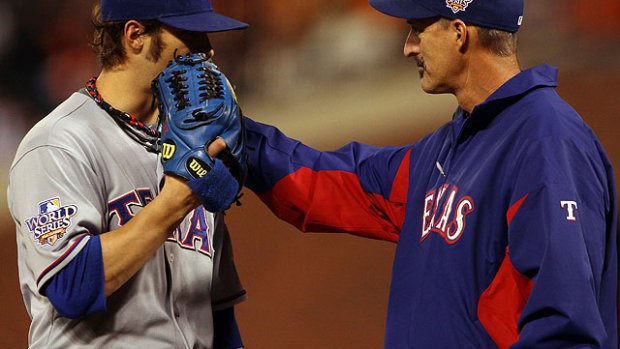
mike-madduxA golden opportunity to challenge a players’ mental toughness is on the mound in a situation where the pitcher is struggling. As a coach you can approach the mound and challenge the pitcher to improve their mental toughness. “This team thinks they have you backed into a corner because you are starting to struggle. Do you think you can work on your mental focus and keep hitting your spots instead of letting them get to you?” Switching the focus to improving mental toughness is a beneficial strategy in helping athletes to develop mental capabilities. It may also improve performance, and allow the athlete to succeed in a tough situation. Sometimes changing an athletes’ perspective or focus allows them to perform more naturally because their mind is distracted from scrutinizing every technical aspect of their performance.

Help your athletes fail and succeed with grace. Help them to ride the waves of sport performance instead of getting washed out with tide by giving them opportunities in challenging situations to improve their mindset.

Quote of the Day:

“You can’t let praise or criticism get to you. It’s a weakness to get caught up in either one” – John Wooden 

A Beautiful Escape

It came to me while I was watching an episode of Greys’ Anatomy. On the episode of Greys, a girl witnessed her grandmother, mom, and father die on her 18th birthday. She then had to take responsibility for her two younger siblings. On this same day, one of the doctors had to operate on an anonymous patient. The surgery isn’t successful, and the doctor loses the patient. Turns out, this patient was her co-workers husband, and she would have to break the news to her. sky dugout

As I was bawling my eyes out watching this episode unfold, I realized something. There are so many terrible, heart-wrenching tragedies that occur in this world on a daily basis, but sports aren’t one of them. What a great carefree way to escape the hardships of our society. We get to go out on the field and hit, pitch, throw, catch, and dive, and the worst thing that could happen to us, is we lose a game. (Except maybe Injury, but in general) That’s it. We just lose, but we get to live and get to play another day.

We all tend to get caught up in the statistics of what team we need to beat, and how many errors the top players make… But if you take a step back and look at the big picture you realize, it’s just a game.prom catcher If you start to look at where softball falls within the demands and events that life can bring, it’s an escape. We get to escape all the stresses, tragedies, and frustrations of the world and just play.

As a coach, I want to harness that. I want to create an atmosphere where players can achieve pure happiness and unchained success. Give them a place to learn and succeed; a place where they can escape the stresses of life and experience success. I want to enhance their abilities and give them a role. I want to give them a chance to feel like they are apart of something, a needed piece of the puzzle. I want to give those kids who may have it rough at home, a place to feel truly important, successful, and accepted. cloudsI strive to teach them life lessons through the game of softball. I want to create a setting where I can give them the tools to face the real world, and a place to escape from it; all at the same time.

So coaches when you’re out on the field, and the going gets tough, take a second to breathe. Remember, you are contributing to their lives. Don’t forget that you have the power to give them an outlet for success. You could be the difference in their future.

Quote of the day:

“I’ve learned that you shouldn’t go through life with a catcher’s mitt on both hands; you need to be able to throw something back.” – Maya Angelou 

The Potential Consequences of Team Cohesion

I’ve always preached the importance of team cohesion to my players as well as to fellow coaches. As a former player, I’ve witnessed how beneficial it can be, not only to the performance of a team, but for the overall experience as a player. Recently, I had the opportunity to talk with Coach Margie Wright who coached softball at Fresno State University, a Division I program. She brought up a side of team cohesion that is more commonly experienced in the coaching world. margie wrightThe possible negative consequences that can arise within teams who possess high team cohesion, an important aspect that I hadn’t acknowledged in my blogs. Team Cohesion Blog

“Prepare for the possibility of the team being united and they all turn against the coach in a strong solidarity against a decision the coach made against one of their teammates.”

In my opinion, this outcome is a perfect example of total success. This is an example of a coach that full heartedly united her players. Enough so, that the players united in the frightening task of disagreeing with their head coach, someone they trust, respect, and obey, in order to protect their teammate. I’m not aware of the specific circumstances that accompanied this situation, however, I would be proud to lead a team who came together and made a united decision to protect a teammate in the face of conflict. Whether their decision was right or wrong for the organization is an entirely different issue, one that deals with commitment and focus, not cohesion. Coach wright agreed with my response and divulged that after further explanation to her athletes they all agreed with the decision that was made. It’s so important to have open communication with your athletes, behaviors don’t always portray the actual intentions. An open dialogue can enhance the player-coach relationship by building trust and understanding. As mentioned before in my Enlighten Athletes with “Why” blog, it’s essential to give athletes the reasoning behind things.

Coach Wright also mentioned an extremely common problem that arises in the process of becoming a cohesive team. “An individual or small group of the team either being left out (unnoticed by the coach) or resistive to the team coming together.”

My suggestion to battling this issue starts with a teams’ culture. It must be apparent to the players that the team norms, and coaches philosophy, believe that every player is imperative for the teams successes. Every player must feel they play an important role to the team, even if they don’t get much playing time.Softball_WEBBorunda-360x240 The atmosphere of the team must preach that no one gets left out and that selfish attitudes are simply unacceptable. With these standards and model behaviors in place problem athletes or cliques, will quit or be washed into the “right” way of doing things. Some players may not fully buy into the “one for all” attitude, but they will comply, at least on the outside. If they truly don’t like it, they’ll leave. Again, Coach Wright and I were on the same page in alleviating this issue. Set standards for what is acceptable and what isn’t, there will always be problem players; allow the teams’ culture to convert them or let them go.

Coach Wright spoke of another issue that tends to be extremely common among teams. “Team cohesiveness not producing a team win. The players may decide they don’t need to work so hard to be united because it didn’t appear to work since the outcome was negative.”

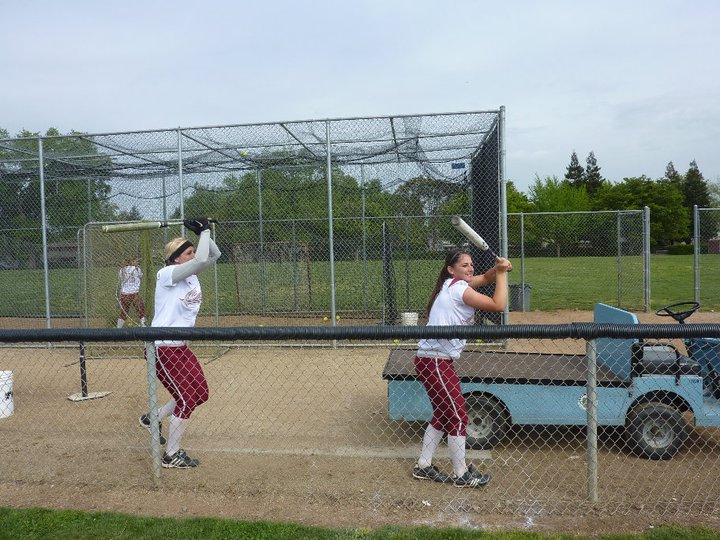
Two of my Chico State teammates doing their bat dance ritual before a game

My best answer to this issue would be knowledge and understanding. Most players don’t get the luxury of a sport psychology class that allows them to truly understand the benefits and fluctuations of team dynamics. Team cohesion isn’t a quick fix or a guaranteed road to success. It is one factor that influences performance not a sole predictor. Also, incorporating team bonding activities that are fun or help players learn about one another can help to keep the team cohesion issue enticing to players. In my experience through sport, playing as a team and including everyone was always preached, but the reasoning behind it wasn’t always clear. I think teaching athletes about studies done around cohesion as well as relating it to future life skills is a great way to deter athletes from giving up.

The most difficult issue Coach Wright brought to my attention was: “The cohesiveness becomes more social than work oriented and the social times the team gets together become destructive. (Team drinking or breaking training rules…)”

My teammates/roommates and I in our freshman year of college

Although social and task cohesion are indicative to success in sport, one without the other can create issues. The above mentioned issue of breaking team training rules and behavior codes are issues that need intervention and appropriate punishment. I’m torn on how I would handle these issues. On one hand I think it’s more of an issue that is related to team climate and commitment to goals. On the other hand it is directly related to team cohesion, can athletes hold each other accountable? I think I would commend the team on being together as a team but explain that their actions as a whole are counterproductive to their goals as student-athletes. My emphasis in coaching is teaching players, and incorporating life lessons. Throughout my career many of the “whys” behind strategies and skills were left out. I also didn’t get the chance to really connect with some of my coaches over sharing a passion for the same game. As a coach I want my players to know why coming together as team is important, and to know that playing collegiate ball is a once in a lifetime opportunity. I would speak of personal experiences in hopes to inspire them to change their ways.

Talking through these issues with such a well known and successful collegiate coach was really insightful. When your out there on the field as a coach one of your biggest responsibilities is problem solving; sometimes this is easy to forget as I sit here and write. I focus a lot on prevention, when it reality, most coaches are looking for resolving tactics midseason. It was also a huge compliment to hear that someone of her status agreed with my view points on how to handle these common issues. I throughly enjoyed hearing her perspective on the matter, it brought me “back to reality” so to speak. Hope you all enjoyed it as much as I did!

Quote of the Day:

“Let your hair down but not your team” – anonymous 

The Moral Dilemma of Sport

Morality in sport has been a hot topic of discussion in my classes lately. It’s something that draws me in full heartedly. The consensus is, that our sports culture is currently developing characters, instead of developing character within our athletes. We are consumed with a sport culture that is obsessed with winning, implying that winning at all costs is desirable. This can even mean injuring another player, or cheating when striving to be the best. In fact, those who have been socialized through competitive sport don’t even analyze most negative sport behaviors as moral dilemmas. hockeyfightFor instance, most would say that inflicting pain on another human being is morally wrong, however, within a sport contest, hitting an opponent with a “wild” pitch is seen as part of the game. We, as athletes, don’t always register these scenarios as moral decisions, and this is because of how we have been socialized in the sports culture. Researchers call it “game reasoning”, a bracketed reality that elicits different moral reasoning. (Shields & Bredemeir)

My question is: is this “game reasoning” mentality acceptable? When you see the abundance of research done on aggression, and realize that it a learned behavior that is influenced by social factors, you start to wonder if it should be tolerated. As humans, we develop characteristics by emulating those around us. We also conform to the norms of our environments, which are heavy influences on the way we choose to behave. (Bandura) As children we see our favorite star athlete picking a fight on the field and we suddenly see this behavior as acceptable, and desirable. Especially because it is condoned by the media, being replayed hundreds of times. In society we conform to what is “normal”, so in different situations we follow the majority of the group. If everyone in basketball fouls at the end of a tight game to get possession of the ball, you will most likely conform to that way of doing things also. hitbypitch

Realizing that this behavior is socialized, where do we draw the line? Studies have shown that this “game reasoning” isn’t such a bracketed reality. The lines are becoming blurred and those behaviors seen as acceptable in sport are now carrying over into real life situations. This is concerning, especially if we consider the world of youth sport. How are we influencing our youth as moral beings? Are the sport programs we employ socializing them to be dishonest, lying, cheating individuals because winning is of the upmost importance?

In some scenarios, yes, sport is creating characters rather than developing character. However, it has also been proven that because these characteristics are socialized, we can socialize our youth into highly moral people. We can create team climates that focus on effort, teamwork, encouragement, and fair play. We can define success as trying one’s best, rather than defeating an opponent. We can employ coaches who model desirable behaviors for our youth to emulate.goodpractice

I would consider myself a pretty moral person, however I’ll admit, those lines get blurry when right vs. wrong is put into a sport context. It’s hard to draw that line of how far is too far within game reasoning. Some sport rules and cultures make it feel like it’s okay to injure another person. Is cross-checking an opponent in hockey morally wrong, or just part of the game? Should we draw the line at physically taking out the opposing teams best player to gain an advantage? These questions are easy to answer for those who haven’t been socialized in sport, any kind of aggression that inflicts pain is wrong. For those of us who have been socialized through sport, where is the line drawn?

I just found this video of a softball pitcher intentionally hitting the umpire in the face with a “wild” pitch. It looks as if the coach calls a team huddle and plans this brutal retaliation against a bad call. The catcher bails out as soon as the pitch is delivered and leaves the umpire wide open. Click here to check it out: What are your thoughts?

Quote of the day:

 “The only disability is a bad attitude.”

My Apologies

To all my faithful readers, I would like to apologize for my lack of posting lately. Graduate school has been keeping me busy! The good news is I have acquired a plethora of new knowledge! I promise to have a post up by the end of the week. Thank you so  much for your patience, and of course your support! 

Sincerely,

Sarah. 

Coach Sue Enquist

She is one of my favorites. She’s just so motivating!

If you ever have the chance to watch “Between the White Lines” , a UCLA Softball documentary, do it! It’s so insightful.

Hope you enjoyed this!

Baring it all

My world from my perspective.

One Game, One Love.

Coaching perspectives and life lessons of a Sports Psychology M.A.

Live Love Sport

Improving your mental game

Secret Life of a Startup

Some things you can't complain about at work

M I Initiatives

Belief in Human Potential