Tag Archives: softball

Care First

In order to get the most out of your athletes, you must care about who they are as people first. It’s a very simple rule, but it’s easy to get caught up in competition and forget it. I had the same coach from the age of 10 to the age of 18. I owe most of my success, and skill level to him. However, the thing I remember the most, is that he cared. He supported me and believed me, not only as an athlete, but also as a person. I wanted to work hard for my coach because I knew how much he believed in me. I didn’t want to let him down.

Creating a caring relationship also makes criticism easier to handle. I knew that when he was criticizing my game, he still enjoyed me as a person. This is a hard concept for youngerimages-28 players to grasp. Most youth players take criticism personally and think their coach doesn’t like them if they correct them often. This personal relationship helps them to distinguish the difference between criticism and dislike.

Although I’m terrible with names and faces, I make a prominent effort to remember my players as quickly as I can. I also like my players to fill out an “About Me” form. It’s a basic questionnaire with details on their favorite things, goals in life, past softball experiences, and unique things about them. Not only does this help my players to feel more comfortable around me, but it also helps me put names to faces.

The better they feel, the better they will play. You as a coach play a huge role as to how they feel as people. It gives athletes great confidence and self-esteem when they are certain their coach appreciates them as a human being. They’ll come to you for more than just softball, down the road they will probably seek advice on life choices from you. I know my coach is someone I still turn to, and I haven’t played for him in almost 6 years. Strive to make a difference in not only their softball skills, but in their life skills.

 Quote of the day:

“They don’t care how much you know, until they know how much you care”

Concentrating on Focus

Focus, what is focus?! Athletes have been harped on to focus since the beginning of competition. It’s one of the most common phrases we hear in sports. But, what is it? When yellingasking your athletes to focus, what are you actually asking them to do? Can you write out 5 simple steps to achieve the focus you’re asking them to possess?

At first I was perplexed by this question, how can I paint vivid guidelines for my players to follow in order to attain the focus I’m asking them to have? I found my answer within the definition of concentration. The definition of concentration in a sport or an exercise setting involves four parts; Selective attention, maintaining attention focus, situational awareness, and shifting attention focus.

Selective awareness is the act of focusing on relevant environmental cues. It’s the physical process of eliminating irrelevant cues from your realm of attention and only selecting the relevant cues to concentrate on. Once an athlete has mastered a skill, they no longer have to consciously think about it while they are performing it. For instance, younger athletes are taught to drop step as a first step to any fly ball. With more practice and experience, that first step becomes second nature, done without thought. Having these second nature habits allows athletes to pay attention to other parts of the game.

Maintaining attention focus is the ability to maintain concentration throughout the entire game. This is tough because studies show the average time thoughts stay on target is about 5 seconds. Some of the greatest athletes earned their reputation not on pure talent, but the ability to stay focused in competition. Tennis player Chris Evert never had the best physical ability, but she never let a bad line call, missing an easy shot, or crowd noise, affect her. Concentration was the key factor that made her a champion.

Maintaining situational awareness is an athlete’s ability to understand what is going on around them. It’s the peripheral vision of concentration. This ability allows players to size up game situations, opponents, and competitions to make the right decisions in play.

Shifting attention focus is the ability to be flexible with attention; being able to switch one’s focus depending on what the situation calls for.

Think of Concentration as a personal spotlight. Athletes have to know where to point their 133spotlight, how narrow or broad to make the beam of light, and be able to switch it from place to place quickly, in order to focus on the correct things.

Researchers have found that when studying elite athletes in their most exceptional performances, three of the eight key components of their performance were related to concentration.

1) Being absorbed in the present and having no thoughts about the past or future.

2) Being mentally relaxed and having a high degree of concentration and control.

3) Being in a state of extraordinary awareness of both their own bodies and the external environment.

155991

It has been proven that expert athletes, compared to novice athletes, have a different focus in game situations. Exp

ert players are able to disregard irrelevant stimuli and focus on task-oriented things, rather than the outcome of the task. This is proven by the study of eye movements in experts and novice athletes. A perfect example is the basketball player Magic Johnson who was known for his no look passes. He used advanced cues to know what his teammate’s future moves would be.

Focusing on the wrong cues, is one of the biggest problems for athletes. It’s not that they lack the ability to focus, but their focus is concentrated in the wrong area. Sometimesathletes get caught up in focusing on internal worries and concerns, past experiences, future events, the pressure of the game, and body mechanics.

Jim Thompson, the author of “Positive Coaching” brings up a great perspective in concentration. Most athletes are consumed with trying to avoid looking dumb. They are focused on not making a mistake, which is actually causing them to focus solely on making mistakes.


Quote of the day:

“When I’m training I’m focused… by focusing all the time on what you’re doing when you’re training, focusing in a race becomes a by-product.” -Orlick and Parintons landmark study of Canadian Olympic athletes   

A Learning Experience

The thing I love most about the sports arena, is the opportunity to continue learning. The information in sports is constantly changing, re-arranging, and updating itself. There are vast new strategies, techniques, and philosophies arising out of the woodwork everyday.  Something I’ve done to capture the learning experiences and important instances throughout my career is to write down moments that resonated with me along the way.

During my collegiate career as an athlete, I wrote this entry:

Yesterday we had a rough practice, especially at the end. We couldn’t catch the ball or  throw it to our spots. Coach shut down practice because we couldn’t pull it together and sentsoftball-error everyone home. In our huddle at the end of practice coach said that something needed to come from within, that we shouldn’t be ok with how we were playing. Then went on about how we need to stop saying, “it’s alright, get the next one”; we needed to expect more out of our teammates.  After practice we all carried on as normal laughing and singing and went on our way.

I was laughing and singing, but on the inside, I was pissed. I should have been the one to keep the team motivated to keep trying and work harder. That should have been me; I failed in my duty to make the team as good as they could be. I also felt like I got called out directly because coach had specifically  referenced my “it’s alright, get the next one” comment. But to me I always expect my fellow teammates to be giving 100% because I always aim to. So if my teammates are giving a hundred percent and just can’t get it right, to me, you should shake off the previous play, and focus on making the next one better; in other words, “it’s alright, get the next one.”

The next morning at workouts, coach pulled us together before we started anything.  Coach talked about how we acted after practice ended badly yesterday. How we carried on with our normal laughing and singing as we packed up our stuff; obviously frustrated that we didn’t outwardly convey how bad practice went. Coach also threw in how our ranking had fell from the previous season. Coach talked about how four years ago our program was a losing program and everyone on the team was ok with it. She compared us to them. This is how that made me feel:

Gall Huddle

(Frustrated.  As a player I always have a smile on my face I never let anything get to me, that’s how I am. That’s how I always am. How often do you see me drop my head, how many home runs ruin my attitude and eventually my game? None, never. I don’t act on the outside, I react on the inside. Give me a second chance and you’ll see the initiative I have to motivate myself to be better. Am I supposed to break away from who I am, and throw my glove to prove that I’m upset? Do you really need to see me upset to know that I am? Have I not shown you that I love this game, and only want to do what will make me and my teammates better?  Can’t you trust that I want to do better. You preach trust. I trust you, respect me, and trust me back.)

In wanting us to show that we care, it seemed as if our coach was asking us to hang our heads. To me, it was like she was breeding bad attitudes. In a game, if I make an error and hang my head it is not going to do any good for myself or my team. So why would I hang my head after a bad practice? It’s like that quote, “it’s not about how many mistakes you make, but how you react to each mistake.” Of course I am going to come out the next practice and give everything I have. I had planned to step up my vocal game, and be more motivating to my teammates, hoping to inspire them to play at their best potential during practice. But, we were reprimanded before we got to show how we had re-focused and were dedicated to making our team better. Also, by just ending practice the day before, coach gave up on us, the exact opposite reaction coach desired from us as players. Be a model, not a critic. Throwing in the ranking stats to the pre-practice speech was supposed to provoke us to work harder; to prove to ourselves we belonged here, and to prove those other teams wrong. However, when faced with a challenge in practice, our coach gave up and ended practice. My travel ball coach would’ve said something along the lines of, “Do you guys want to be here or do you want to go home? Because you’re playing like shit.” He would have given us the chance to make the decision to not accept the way we were playing. The way he does it achieves the goal of making it come from within, because we made the choice to stay, yet it also is slightly harsh and gets the point across in a quick and straight to the point matter. Our collegiate coach wanted someone to step up; maybe I should have said, “no coach I don’t think we should end practice I think we should stay here and work through it” Although, I also didn’t want to disrespect my coaches decision to end practice. But I should of.  I should’ve asked if my team wanted to stay and work on it, that’s where I failed.

229587_1043180913674_2361_n

Looking back I have mixed emotions reading this. In my own personal philosophy I will never end practice early, mostly because I know how frustrating that is as a player. However, I do understand how easy it is to misinterpret a persons actions after an unsuccessful outing. As a coach I have to retrain my brain, and keep myself from judging my players after a bad performance or loss. I have to remember that letting it go is a positive quality, even though it can come across as if they don’t care.

If I had been coaching my own collegiate team when this situation arose, I think I would have brought the team together and focused on something else. I would have implemented a team bonding activity, or discussed strategy, or even played a fun game. I would do something to break the tension, let every ones mind relax. After achieving that break, I would have gone right back into the drill we were struggling with, hoping to end practice on a positive note.

Sport is so important to collegiate athletes, it’s a big chunk of their life, and it’s continually on their mind. The way a practice ends is important, their perception of the practice and the feelings and thoughts that accompany it are stuck with them until the next time they meet. Leaving on a sour note takes a toll on athletes. It is a goal of mine to have my players always leaving practice feeling confident and positive. I hope they leave excited to come back.

Quote of the day: 

“People don’t care how much you know until they know how much you care” – John C Maxwell

Bad Timing or Great Timing?

Posted on

When I was an assistant coach for SRJC I was often at high school games looking at players to recruit for our future seasons. On one occasion I was sent out specifically to scout a pitcher who was throwing an important game against a very good team. Unfortunately, her team lost the game, but it wasn’t a blow out, and it didn’t make her look bad in any light. It was a great game, close in score, and came down to the very last inning. After the game I walked out onto the field to ask her coach if I could speak with her. When I asked, her coach replied with, “Well it’s bad timing, but you can talk to her if you want”. 

I was a little taken back by his response to me. I empathize with the fact that this pitcher just lost a rough game, but the opportunity to play at the next level is a positive thing no matter what time it comes along, right? I know I wasn’t presenting her with a full ride opportunity to some D1 school, but it was an opportunity to play at the next level regardless.Despite the coaches warning, the pitcher was courteous and excited at the chance to play college ball.

Looking back, this to me as a coach, seemed like perfect timing. Most players are respectful and full of the right answers when approached by a college coach after a successful outing. This was the perfect opportunity to see how she responds to failure, which is an inevitable aspect of sport, especially softball. I was able to perceive that she handled herself well when things got tough. She was a player that kept her head up, and her teammates up when the going got rough. Seeing this in a player while recruiting, is just as important as seeing their physical skills.

Keeping your head up as a player will not only enhance your performance, and mindset, but it can also convince a college coach that you’re the right player for their team. Keep that in mind, and stay positive!

Quote of the day:

“Life is 10% what happens to you, and 90% how you respond to it” -Charles R. Swindoll


Team Bonding; an aspect commonly overlooked by coaches

Posted on

It’s amazing to me how many coaches overlook the importance of team bonding. Im not necessarily talking about team sleepovers, or team dinners. I mean coach facilitated team bonding. Activities and discussions to unite players on a deeper level than a common interest in a certain sport. On both of my collegiate teams, I was merely thrown into the mix of players and left to fend for myself in getting to know my teammates. Yet, in my collegiate classes there was always a teacher facilitated “get to know each other” activity done in the first week of school. This perplexed me. In the classroom I rarely rely on my fellow classmates to assist me in receiving a good grade. However, on the softball field, achieving success without relying on my teammates is impossible. So why were my teachers putting more emphasis on cohesion than my coaches were?

In my undergraduate studies, most of my teachers possessed a doctorate that fell into the field of kinesiology. Since my teachers were highly trained in the kinesiology field, they knew that cohesion within a group breeds success for the group. They knew that if we were comfortable with our classmates we would be more likely to speak up in class, ask for help, collaborate, and discuss, which in turn benefits the learning process by getting us involved. If team bonding activities were so beneficial in improving communication in the classroom, think of how successful it could make a sports team.

Which lead me to my future philosophy as  coach. I will always start off a season with team bonding activities. Not only will I begin the season with team bonding activities, but I will implement them through out the year as well. No one knows better than a former athlete that team dynamics ebb and flow throughout the season. Situations happen, teammates get in fights, suzy steals sallys boyfriend and so on. So extending team bonding activities throughout the season is a very important aspect to me.

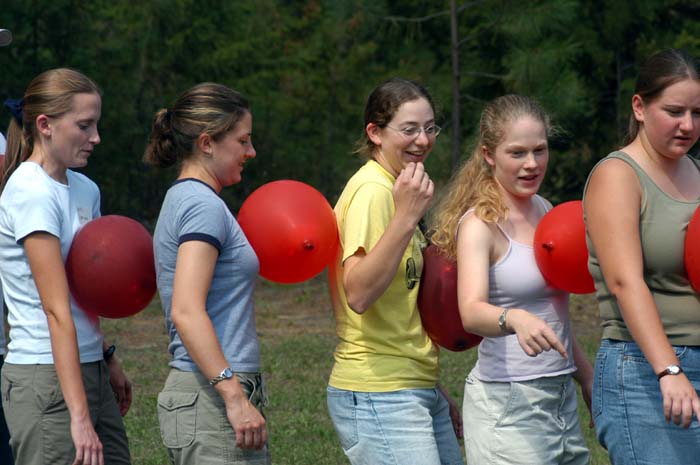
I’ve actually found and witnessed a few programs that start their seasons this way. (Sierra City College) In fact, when I coached for Santa Rosa Junior college in their 2012 season, we started our spring season this way. We took our girls up to Tahoe for a retreat. On the retreat we played games, and facilitated discussions so our players could truly get to know each other, we as coaches could get to know them, and they us. I’ve never been so moved. I went from barely knowing my players to really understanding who they were as players and where they come from. Their personalities and behaviors were finally linked to reason, rather than mere physical observations. One of the more popular activities we did, was a scavenger hunt. When I was a freshman at SRJC in 2008 our coaches put together a scavenger hunt for us as an end of the year “party”. We were sent out in groups of 3-4 all over Santa Rosa with a list of tasks to complete and a video camera. We had two hours to record as many tasks as we could. At the end of two hours we reconvened at our coaches house and viewed all the tapes to determine a winner. The footage was priceless. We were all hysterically laughing at eachothers’ success and failures. Some of the tasks included: leap frogging across a cross walk, belly flopping into a pool, eating an entire lemon, rubbing a bald persons head, eating a raw egg and so on. Inspired by my freshman experience I recreated it for my players. Again it was a complete success, they loved it, and really got to know each other as they worked through the tasks.

It is so important for players to connect with one another. It facilitates communication and trust on the field and off. Not only is it beneficial, it’s fun! Can’t wait to implement my own team bonding plan someday!

Quote of the day:

“The main ingredient to a players stardom is the rest of the team” – John Wooden 

Sh*t talking is effortless

Posted on

Excuse my french, but, It doesn’t take effort to “shit talk” about people like your teammates, it’s effortless.Image

When on a sports team you spend countless hours practicing with your teammates every day and can easily pick apart their personalities and tendencies finding things that are imperfect or outright annoying. Blabbing these bothersome habits to other teammates hoping to persuade them to notice the negative side of a player only fuels the irritation and does nothing constructive for yourself or the team. What does take strength is to ignore the imperfect habits of your teammates and find the piece of a person that does benefit your team; the part that makes them standout positively. Challenge yourself to embrace their strength and realize that they are a necessity to your team. Persuade your teammates to notice the positive qualities each player contributes to the team. Refusing to participate in conversations that are negative about specific players or situations makes you a better teammate and a better person. We’ve all had our moments of frustration or anger when we talk negatively about another player, but it’s never too late to make a change; don’t follow the pack, be a leader, benefit your team, don’t take the easy way out. Strive to be the best person for your team, rather than the best person on your team. Take the challenge, refuse to shit talk.

I wrote this while playing collegiate softball. I walked onto a new team with a bad habit of talking behind others backs. It was frustrating, and very unwelcoming. So I took my own challenge, to never talk badly about a teammate. It was one of the best decisions I’ve ever made. It kept me out of the drama, and focused on the field. I even had a teammate of mine tell me how inspired she was by my decision. She decided to take the challenge in her own life. I never thought I would have had such an impact on others. It wasn’t easy, but it was worth it.

Quote of the day:

“Ask not what your teammates can do for you, ask what you can do for your teammates.” – Magic Johnson

Self Confidence

Just a little information I learned in class that I passed onto my players over the summer.

Self confidence is the belief that you can successfully perform a desired behavior. When you don’t have confidence, you are creating a self-fulfilling prophecy. A self fulfilling prophecy is the phenomenon that happens when you expect something to happen, and it actually helps cause it to happen. If you have negative self-fulfilling prophecies, like expecting to swing and miss, you are creating psychological barriers that lead to a vicious cycle: the expectation of failure leads to actual failure, which lowers self-image and increases expectations of future failure.

Benefits of self confidence

Arouses positive emotions– when you are confident you are more likely to stay calm and relaxed under pressure, it allows you to be aggressive and assertive.

Facilitates concentrations– when confident your mind is free to focus on the task at hand, not distracted by self doubt, and worry that you aren’t playing your best.

Affects goals– confident people set challenging goals and pursue them actively.

Increases effort– when ability is equal, the winners of competitions are usually the athletes who believe in themselves and their abilities.

Games strategies– athletes who “play to win”, compared to athletes who play “not to lose”, take control of the competition to their advantage.

Psychological momentum– confident people view situations where momentum is against them as challenging and it motives them to work harder.

Affects performance– the confidence you have about your talents, affect how you showcase your talent on the field.

Although self confidence is important, there is a happy medium between over confident and under confident. We all know that players who are too confident tend to fail, and players who are under confident tend to doubt themselves, and also fail. The hard part is finding that perfect middle ground, “optimal confidence”. Optimal confidence means being so convinced that you can achieve goals that you will strive hard to accomplish them. It does not mean that you will always perform well, but it is essential to reaching your potential. A strong belief in yourself will help you deal with errors and mistakes effectively, and keep you striving toward success. Everyone’s optimal confidence levels are different.

Your expectations of others affect not only your own behaviors, but also the feelings and behaviors of others around you.  Look at it this way, for example; Kira is on a volleyball team, she spikes the ball despite a bad setup, the ball goes straight into the net. Her coach says, “Good try Kira, just try to get more elevation on your jump so you can contact the ball about the level of the net”. Janet on the other hand, spikes the ball on a bad setup and the ball goes straight into the net. The coach this time responds with, “don’t try and spike the spike the ball when you’re not in a good position. Janet you’ll never make a point like that.” See how this could affect a player? This goes the same for your team mates; you guys know that you can feel when someone doesn’t like you, or who thinks you aren’t very talented. Weather you think so or not, this affects how you play. So take notice and watch how you react to your teammates, and how you act towards them in general.

Never fear! Self-confidence can be built!

You can build confidence by:

Accomplishing a good performance- successful behavior increases confidence and leads to further successful behavior. (Beating an opponent or fully extending a knee in recovery) So, what if you haven’t been performing well? That’s why practice is so important, you can work on your skills and build confidence!  Create situations for yourself where you know you can succeed to build confidence.

Acting confidently– fake your confidence! Even if you aren’t feeling confident, pretend you are! Be an actress! Keep your head up after an error even if you want to throw your fist through a wall, just smile. It can actually affect the way you feel and play!!! It can also affect how your opponents play against you; it is harder to beat a confident team.

Thinking confidently- thoughts and self-talk should be instructional and motivational, not judgmental. While pitching, instead of saying don’t miss your spots, say keep this pitch off the plate. Instead of saying don’t swing and miss, say hit the middle of the ball. There should  be no “don’t” in your self-talk.

Using imagery– imagine yourself playing well! Use imagery create successful scenarios in your mind. Imagine yourself fielding a ground ball cleanly or hitting a line drive that falls into the gap.

Using goal mapping- a goal map is a personalized plan for an athlete that contains various types of goals and goal strategies as well as a systematic evaluation procedure to assess progress toward goals. Keep your goals performance and task oriented rather than outcome oriented; focus on hitting the middle of the ball rather than getting a hit every time you’re up to the plate.

Optimizing physical conditioning and training– staying in shape can help you feel more confident. That doesn’t mean killing yourself with tough workouts when you’re not playing, it means going for a little jog one once in a while, or lifting a few weights just so you can feel good about yourself.

Preparing– have a plan for the game. If you have a plan and are prepared you’re more likely to have success. Make sure, along with a plan, you have a backup plan if something doesn’t go as planned.

Fostering social climate– Be supportive of your team mates! Help to build their self-confidence too!

Quote of the day 

“Self-confidence is like a placebo, you can give people a sugar pill for extreme pain, tell them it’s morphine and it can produce as much relief as an actual pain killer. Give someone confidence in their skills, and they will perform better” -Foundations of Sport and Exercise Psychology
Breathe, Look, Talk. B.L.T.

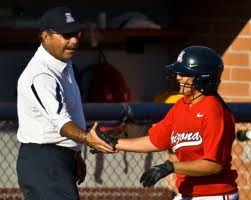
This past summer, I realized a lot of my players were performing in a very tense state on the field. Most of them looked like they were over exerting themselves, extremely anxious, and nervous. This is a strategy I created and presented to my players to aid them in remaining relaxed while competing.

There are three simple things an athlete can do to improve their focus and performance almost instantly. B.L.T. – Breathe, Look, Talk. In order to perform at our highest potential, we must be able to break the game down into simple moments that occur one after the other, rather than trying to take on the entire game at once. Doing these three things every pitch of every game will help to narrow your focus and keep your mind concentrated on positive key points.  This will assist you in performing without distractions, and achieve a successful performance.

Breathe.

In order for our muscles to work efficiently, one muscle must relax (lengthen) while its counterpart tightens (flexes). For instance: raise your hand to shoulder, while keeping your elbow close to your side.  Feel how your bicep flexes and your triceps lengthens. In competition, athletes tend to get anxious or over excited; in response all their muscles tighten up. This makes it hard for the lengthening muscle to do its job. Their bodies start to react like a rubber band that has been stretched too tightly; they snap. You may have felt this effect during a crucial at bat with two strikes. When that next pitch comes in, sometimes we panic, or “snap”, and just swing, even it it’s a bad pitch…strike three. In order to keep yourself in control, and your muscles working correctly, we must keep our bodies relaxed. We do this simply by deep breathing. Breathe in for 5 seconds, hold it in for two seconds, and then exhale slowly for 6 seconds. As you repeat this you should be able to feel your heart rate slow, and your muscles physically relax.

Look.

The mind is more powerful than you could ever imagine; it has been argued that it has more of an affect on your performance as an athlete than your physical ability.  Our brain is the control center to our body; it controls what our bodies do. Our body follows what our mind thinks. If we keep worrying about making errors, or striking out, chances are, our bodies are going to make the images we have in our mind a reality. This however, can work in our favor. If we look (think) in the direction we want to go, rather than in the direction we want to avoid, our bodies will positively respond. Picture the outcome you want. In your mind create an image of yourself having success; see yourself hitting a line drive into the gap, catching a fly ball, or throwing a breaking ball that causes the batter to swing and miss. By rehearsing the outcomes we want in our minds, we create a track for our muscles to follow. It’s like practicing, only it takes place in our minds. Don’t look where you don’t want to go.

Talk.

After taking a few deep breathes, and looking into the direction we want to go, we must pick a simple focus to say to ourselves. It should be something simple, direct, and positive. Make sure there is no emotion attached to the way you talk to yourself. For instance at the plate, one could repeat, “up the middle, on the ground”, or in a bunt situation one could repeat, “top half, ball down”. One or two things that create the outcome you want. A pitcher could say “lock, and lift” before throwing a change up. A fielder could say, “Charge and follow through”. Make sure in this statement you don’t include the word “don’t”. Our brains only see the big the picture, and tend to not pick up on the word don’t. For example if you say, “don’t drop your hands”, your brain only hears, “drop your hands”. Instead try flipping to, “keep your hands high”. This also follows the rule of don’t look where you don’t want to go, we don’t want to drop our hands, so we don’t want to think about it either. We want to think about what we want to do, keeping our hands high. It’s a simple point for your brain to focus on, keeping you in the game, and undistracted by pressure.

Before every pitch, breathe. Look. Talk. B.L.T.

Quote of the day

“Quality thoughts lead to quality actions”

Shake it off and Stay Positive


Playing tournament softball for 12 years of my life taught me one of my most important life lessons; to shake it off and stay positive. Playing tournament ball throughout my youth allowed me to spend my weekends playing 4-8 softball games. Over the course of a weekend tournament we would win some games and lose some games; I would play well in some games, and not so great in others. But no matter what the outcome of a game or appearance at the plate was, I was forced to shake it off and be prepared for the next game, or outing on the mound. It’s frustrating to go out and swing and miss at the last 9 pitches you’ve been thrown, or hit 4 of the last 5 batters you’ve faced, but getting angry, throwing your helmet, or crying won’t make your day any better for yourself or your team. As hard as that is to hear, it’s true. Do you think your team gets pumped up when you slam your helmet to the ground before running out to play defense? No. You just bring the rest of the team down with you and put the focus on yourself instead of the game. It may take some frustration out for you, but don’t be selfish, this is a team sport, it’s all about your team, not you. You have to learn how to constructively handle your failures. Softball is a game of failure; if you go up to the plate 10 times, get 4 hits and strike out 6 times, you are a damn good hitter. You would be batting 400. Failing is a part of this game, so learn from your failures and make an adjustment. Don’t dwell on the past, you can’t change it anyway. Instead of throwing a fit, try sprinting back to the dugout and screaming your head off for your pitcher or next batter up to the plate. This takes the focus off yourself and puts it back on to your team.  Don’t be selfish, give it all up for your team, always.

Quote of the day:

“Success is the ability to endure one failure after another with out the loss of enthusiasm” – Winston Churchill

Do Sports Build Character?

Do Sports Build Character? According to a Research Digest article entitled, “Sports and Character Development”, simply put, no. However, CAN sports build character? Yes. And I completely agree. In the article they identified three prominent aspects of character as; Perspective-taking and empathy, moral reasoning, and motivational orientation. So, someone with good character knows how to see the world through anothers’ eyes, and can empathize with their situation. They know right from wrong, and act accordingly. Lastly, they are motivated intrinsically; they strive to truly master a skill, rather than just to simply beat an opponent.

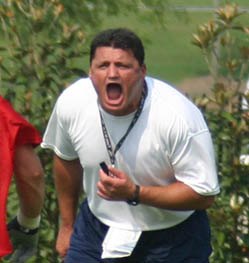
We can’t just throw youth into sports programs and expect them to emerge with a good stable character that will enable them to “live in fidelity with their moral values”.  To me, this point is obvious. For instance, look at our professional athletes, how many times have we seen our sports idols golic2caught up in a steroid scandal? If their history with sports had created a sound character for them, they would believe cheating was wrong, and wouldn’t be tempted to win by an unfair advantage. On the contrary, sports seem to be a big contributor to the good character displayed by players like Buster Posey and Greg Maddox. So what’s the secret?

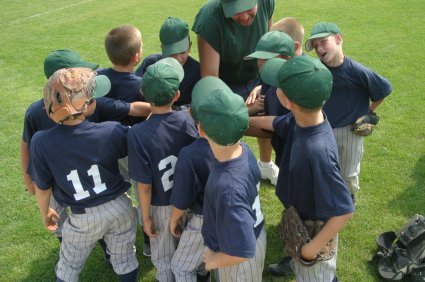
According to the article, coaches of sports programs have to consciously implement character building into their coaching philosophies and styles. They have to talk about, and discuss, the aspects of good character and how it relates to sports with their players. My favorite example of this strategy demonstrated how to bring awareness to the character trait of empathy. youth-sport-baseball-playersIt’s so common in sports to hear a coach say, “keep your head in the game” when an opponent gets injured. Empathy is almost shunned in the moment. But, after the game, coaches can ask their players to put themselves in the injured players shoes. Asking them, “How do you think suzy felt when she hurt her ankle sliding into home plate?”.  Coaches can open up the conversation, allowing them to realize that getting injured or losing, isn’t the easiest situation to be in.

As a coach, you have a huge impact over the “motivational climate” of your program. In the Sports Psychology world, it is common softball_pics_161knowledge that intrinsic motivation is more beneficial than extrinsic motivation in the long run. You want your players to strive to be the best they can be, not just better than their opponent. You want them to play the sport because it feels good on the inside, gives them a sense of compentency (internal rewards), not because they get to show off, or be considered a winner  (external rewards). Coaches can alter the “motivational climate” to breed intrinsic motivation. Make practices focus on giving your best effort, being better than you were the day before, and highlight the positive things.

Being a coach gives us such a unique avenue into shaping someones life, personality, and experiences. In learning and implementing strategies, like these named above, only increases my confidence of becoming the inspirational coach I want to be someday. One of the reasons I love Sports Psychology so much is that it seamlessly applies to my everyday life. I get to use these tools in my day to day life, nobody’s perfect, and I certainly am not. These are things I can talk about with my friends, or acquaintances, or even my kids one day. You don’t have to be a coach, or be in the sports atmosphere to apply these strategies. These are strategies I can use with my kids in the car some day. Just facilitate a conversation about one of their friends that got hurt, BAM, character building lesson right there in the car.

Just another tool to throw into my coaching, and everyday life, tool kit. Thanks for reading. 🙂

Quote of the day:

Be more concerned with your character than your reputation. Your character is what you really are and your reputation is merely what others think of you”- John Wooden.  

Read the full article, “Sports and Character Development” at

https://www.presidentschallenge.org/informed/digest/index.shtml

Baring it all

My world from my perspective.

One Game, One Love.

Coaching perspectives and life lessons of a Sports Psychology M.A.

Live Love Sport

Improving your mental game

Secret Life of a Startup

Some things you can't complain about at work

M I Initiatives

Belief in Human Potential